By Mcloyd Chilangiza:
Efforts to expand access to education through free schooling and early learning reforms could come under strain if funding for the national school feeding programme is not secured beyond 2026.
The World Food Programme (WFP) has warned that an $11 million shortfall may disrupt the programme from September 2026, affecting support for hundreds of thousands of learners.
According to the agency’s Malawi brief released last week, the programme could be suspended if the funding gap is not closed.
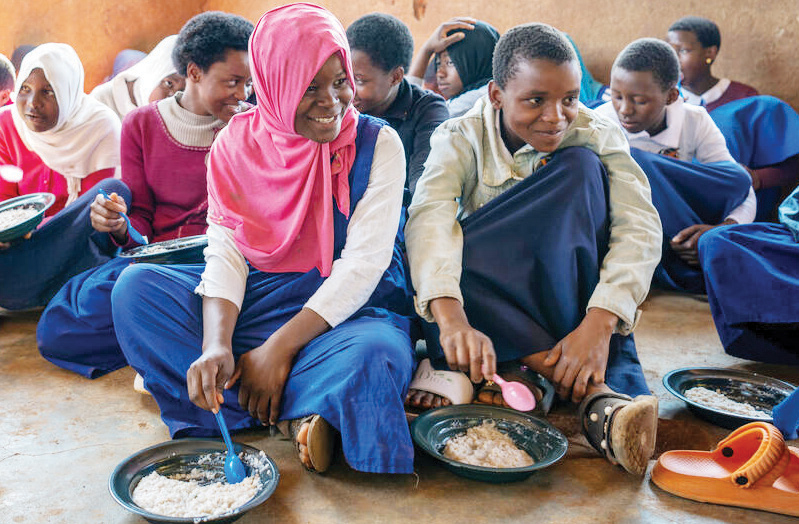
The initiative is currently supporting 769,150 learners across several districts, including Salima, Chikwawa and Zomba.
- Advertisement -
WFP said the shortfall could slow progress in improving school attendance and child nutrition.
“WFP remains committed to supporting the government’s goal of universal school feeding, but with coverage currently at only 44 percent, the funding gap threatens to significantly,” the report reads.
Ministry of Education spokesperson Lily Kampani asked for more time to comment on the issue.
A teacher from Salima District, who spoke on condition of anonymity, said the programme has improved enrolment and attendance, particularly among vulnerable children in rural communities.
- Advertisement -
- Advertisement -
“School feeding has encouraged many children to remain in school. Without it, some learners may stop attending classes, especially those from poor households,” the teacher said.

Civil Society Education Coalition Executive Director Benedicto Kondowe said the possible funding suspension could have serious implications for the education sector.
Kondowe said it could undermine government plans to introduce pre-classes in public schools, aimed at strengthening early childhood development and improving learners’ transition into primary education.
He also warned that the situation exposes Malawi’s heavy reliance on donor support in education.
In the 2026-27 national budget, the government allocated K1.28 trillion, representing about 11.7 percent of the total budget, to support the implementation of free public primary and secondary education.
According to the 2021 WFP School Feeding Programme Factsheet, the initiative has contributed to an increase in school attendance from 77 percent to 92 percent, and helped reduce dropout rates and improve learners’ concentration in class.
WFP, in partnership with the Malawi Government, has been implementing the school feeding programme since 1999.