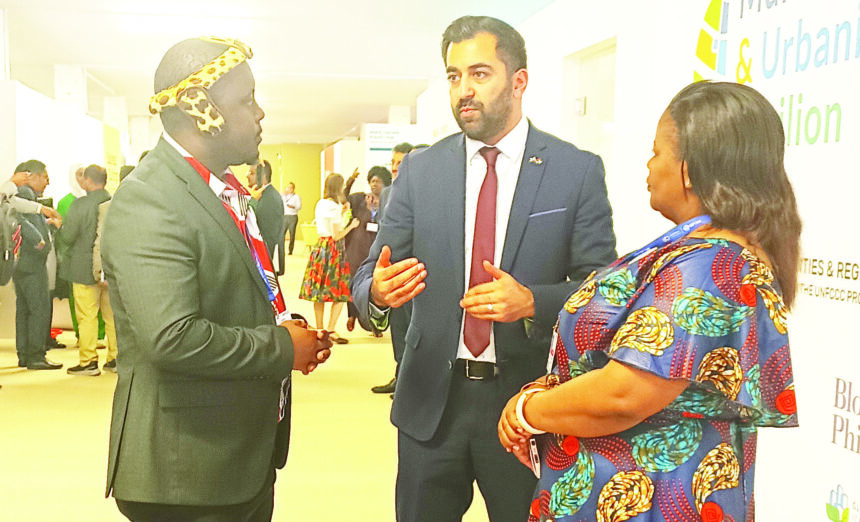
The Scottish government has pledged $2.5 million (about K5 billion) to 3,000 families that are bearing the brunt of Tropical Cyclone Freddy.
The cyclone made landfall in Malawi on March 11 and left devastation in its wake as it left 2,267,458 devastated.
Out of this figure, the Department of Disaster Management Affairs indicates that 659,278 people were displaced, 679 died, with 537 others missing and 2,178 getting injured.
In response to the catastrophe caused by the natural phenomenon, Scotland First Minister Humza Yousaf has announced that they will help Malawi with $2.5 million.
He made the announcement in Dubai, the United Arab Emirates, on the sidelines of the Conference of the Parties (CoP) 28. He said 3,000 families have been earmarked for the same.
- Advertisement -
“The injustice at the heart of the global climate crisis is why Scotland became the first country in the world to establish a Climate Justice Fund more than a decade ago and why we have led the way in being the first Global North country to commit funding to address loss and damage,” Yousaf said.
He said Scotland, which is Malawi’s long-time partner, has demonstrated how the recently adopted United Nations Loss and Damage Fund can be used to deliver cash directly to those on the frontlines of the climate crisis.
The Scottish government has partnered international charity GiveDirectly to launch the first ever cash programme using funds set aside to address the problem of losses and damages arising out of the climate crisis.
Meanwhile, Environmental Affairs and Climate Change Minister Michel Usi has said this is the first time for Malawi to directly benefit from the fund.
- Advertisement -
- Advertisement -
“This money is directly going to people who are still on campus, where they have been living since Cyclone Freddy [affected the country],” Usi said.
He said research shows that recipients of social cash transfer funds use direct cash transfers to improve their lives as well as those of other community members, thereby improving resilience.
Usi said the money has come at the right time as Malawi is in 16 Days of Activism against Gender-based Violence, indicating that the majority of the cash transfers will be made to female heads of households as one way of reducing intimate partner abuse and increasing women’s decision-making power.
Director of Advocacy and Safeguarding at Give Directly Caroline Teti said many Malawians are in extreme poverty and that they are still suffering from the effects of Tropical Cyclone Freddy “simply because they are too poor to afford to rebuild their homes”.
She said they are, therefore, optimistic that the initiative will go a long way in easing challenges affected people are facing.
“The cash transfer payments will save lives and help thousands of families thrive,” Teti said.