





By Yokoniya Chilanga:
A quick reading of the 2019-2020 manifestos of all the major political parties—including the new manifestos from other political parties for the 2025 general elections—reveal an utter disregard to a very important ethical and environmental issue—the welfare of nonhuman animals.
Election time presents a great opportunity for Malawians to assess their candidates’ commitments in animal welfare and the care for the environment. Canada, for example, which held its Federal Elections last April, and through organisations such as Animal Justice, Montreal SPCA and Animal World Organisation, hosted debates for all the parties to discuss how they plan to protect animals, prevent wildlife trade and protect the environment.
In the next cohort of political leadership after the September 16 elections, we will need leaders that recognise and understand the importance of prioritising the welfare of animals—as well as the protection of the natural environment.
In the 21st century, the issue of animal welfare and the general care for the environment cannot be avoided or sidelined.
- Advertisement -
The recent decades have seen an increased interest and study in the lives of animals. Although one of the earliest efforts at protecting the welfare of animals can be traced to the founding of the Royal Society for the Protection of Animals (RSPCA) in Wales and England, modern animal welfare ethics and advocacy were inspired by the publication of Peter Singer’s book Animal Liberation in 1975.
Singer’s book, and other publications such as Tom Regan’s The Case for Animal Rights, offered groundbreaking philosophical reflections on the moral status of animals. Various individuals, communities and civil governments started to seriously consider whether the treatment of animals is just and fair in various contexts.
These early philosophical reflections on the welfare on animals branched into two main approaches: the welfarist and the rights-based arguments. The latter base their claims for protecting animal welfare on the assumption that animals are rights holders—that some animals have self-awareness or a certain form of consciousness, necessitating legislation to protect those rights.
The welfarists argument also asks us to expand our circle of care to include nonhuman animals—to which we have emotional attachments—or, understand their needs, lack, pain and suffering. In this way, one imagines what the animal would wish at the particular time. For example, would the animal choose to get killed rather than live? Or, being confined in a cage forever than to roam freely?
- Advertisement -
The legal welfarist argument, on the other hand, broadly conceptualises animals as having interests, intrinsic or inherent value, dignity and as subjects-of-life. This approach compares some human features to non-human animals—their sameness with humans in terms of their perceived capacity to experience pleasure or pain—broadly termed as sentience in scientific terms.
The moral question that informs most of the reflections on animal welfare is how should we treat the animals we use? Or, should we using animals at all?
Various countries are responding to the rapid industrial and technological revolutions that have largely transformed the farming methods and practices. The various animal laws serve to address various forms of animal exploitation in factory farming, and the use of animals in nonhuman animals such as primates in scientific experiments and tests of medicines.
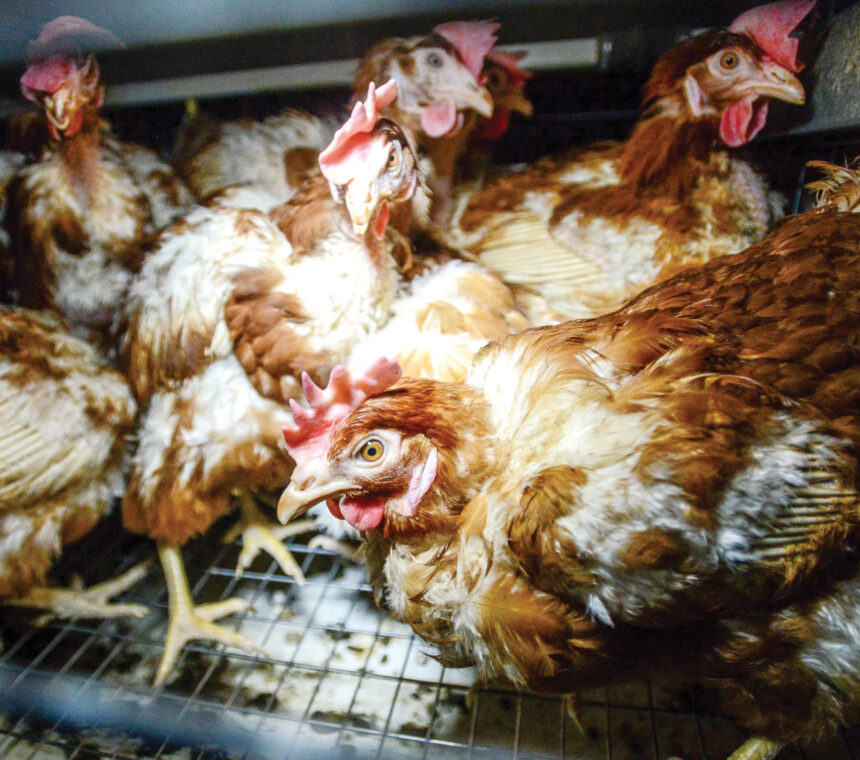
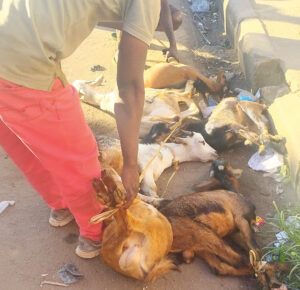
In Malawi, there are various forms of cruelty against farmed animals that range from individual abuse to institutional harm that cause various forms of animal suffering. For instance, it is very common to see on our roads goats, cattle or sheep heaped together in cars, and of chickens or goats or pigs, bound up and tied in lorries or on and bicycles or motorcycles heading to markets or our cities where they are brutally slaughtered.
Exposure to extreme weather conditions also subjects animals to suffering; overcrowding or confinement of animals which causes respiratory stress—and also restricts the animals’ natural behavior; digestive unrest caused by frequent supplemented feed; lethargy from unnaturally rapid weight gaining, among others forms of animal torture that cause both physical and psychological distress to animals, and affect, or curtail their general well-being.
International nonprofit organisations such as Mercy for Animals, Compassion in World Animal Farming, World Federation of Animals, Conservation Animal Welfare Foundation, Open Wing Alliance, Animal Equality, People for the Ethical Treatment of Animals (PETA), The Humane League, among other organisations have played a huge role in raising aware-ness on animal welfare and have also significantly contributed to the development of various laws to protect nonhuman animals.

The animal welfare movements have now reached Africa. Nonprofit organisations such as Animal African Advocacy, African Network for Animal Welfare, Second Chance Chimpazee Refuge Liberia, Thrive Africa, among others, are helping changing attitudes, and raising awareness about wild and farmed animal welfare among African populations; and encouraging adoption of plant-based diets and healthy foods.
In Malawi, nonprofit organisations such as the Lilongwe Society for the Protection and Care of Animals (LSPA), Lilongwe Wildlife Trust, Youth Network on Climate Change (NYNCC), and the Malawi government Department of Ani-mal Health and Livestock Development have been implementing various projects aimed at raising awareness on animal welfare and health. These organisations usually work with minimal resources and funding—and operate in environments where there is no proper and supportive legislation for the protection of animal welfare.
There have been recent and historic successes in animal welfare and rights campaigns worldwide. For example, recently, several countries and regions including the UK, Spain and the EU, have recognized animals as sentient beings—acknowledging their capacities to feel pain or experience pleasure. In addition, animal farming practices in Germany and France such as chick culling have been banned. The UK also recently banned live animal exports.
While Malawi depends on an outdated Animal Protection Act, other counties in Africa such as Tanzania, Kenya and South Africa, have some of the progressive and comprehensive laws on animal welfare. But as a country, we cannot afford to neglecting issues of animal welfare, since it is costly, even now, and more in future.
Already, various research peer-reviewed research findings have shown the increased factory farming is contributing to the global crisis of climate change. Globally, according to The Environmental Protection Agency (EPA) animal agriculture represents 14.5 percent of all human-caused greenhouse gas emissions. EPA further reports that massive industrial feed-production for cattle, pork and the poultry are significant contributors to air and water pollution as well as climate-warming emissions.
It is difficult to ascertain the extent of Malawi’s contribution to these global emissions—but it a fact that that both small-holder and factory commercial farming is rapidly increasing. It is therefore high time that our leaders started taking seriously the issues of animal welfare. With proper and strong laws in place, we can start to catch up with the progress that most countries have already achieved in animal welfare protection.