Nigerian police fired live bullets and tear gas to try and disperse thousands of protesters in the northern city of Kano.
The protesters were rallying against the rising cost of living.
Many businesses across the country closed as demonstrators in major cities chant slogans such as: “We are hungry.”
In Kano, which has seen the largest crowds so far, the gunshots were fired after protesters set alight tyres to make a bonfire in front of the state governor’s house.
Four wounded people were taken to hospital.
- Advertisement -
The protests have been organised via social media and inspired by the recent success protesters in Kenya.
The Kenyans forced the government to scrap plans to increase taxes.
Officers also sprayed hot water on the crowds in Kano, but the protesters remained on the streets.
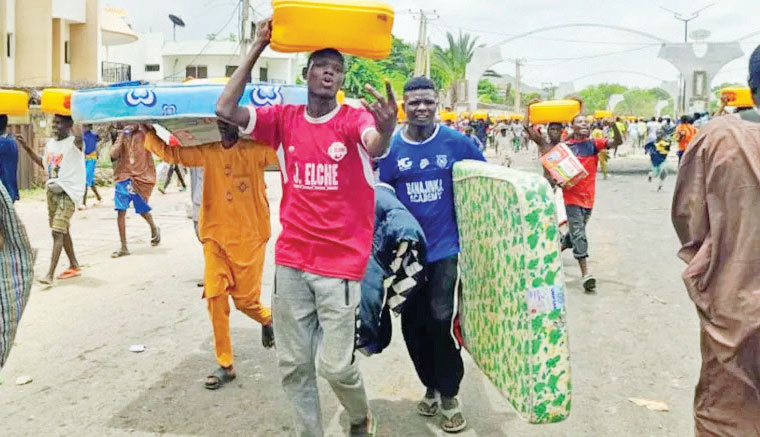
Looters also broke into a warehouse near the governor’s house and people were seen carrying away 25-litre cartons of vegetable oil and mattresses.
- Advertisement -
- Advertisement -
On Wednesday night, a court ordered that protesters in the capital, Abuja, to keep to the National stadium, which is located on the city’s outskirts.
But after gathering at the stadium’s gate on Thursday morning, the demonstrators—who have also been shouting the refrain “End bad governance”—began heading into the city centre.
This prompted police to fire tear-gas canisters to try and stop the procession, which is affecting traffic.
The security forces are deployed at strategic locations within the capital, where even banks are closed, and in surrounding towns.
In Lagos, Nigeria’s economic hub, the protest is slowly growing in strength.
Demonstrators are making their way to the area of Ojota, where the government said the protesters could gather, and have been shouting “ole”, meaning “thief” in the Yoruba language—in reference to President Bola Tinubu and his government.
Many are angered by Tinubu’s removal of a subsidy on fuel—announced with immediate effect during his inauguration speech in May 2023.
It was aimed at cutting government expenditure, but sent pump prices soaring with a ripple effect on other goods.
“Top on our demand is the subsidy removal. The government should reverse that decision,” Abuja protester Abiodun Sanusi told the BBC.
They also want the government to carry out wide-ranging reforms to the country’s electoral system and the Judiciary.—BBC