After serving time, one is supposed to get out of prison. But dozens of Ethiopians remain stuck at Mzuzu Prison after finishing their jail terms. SAMUEL KALIMIRA writes.
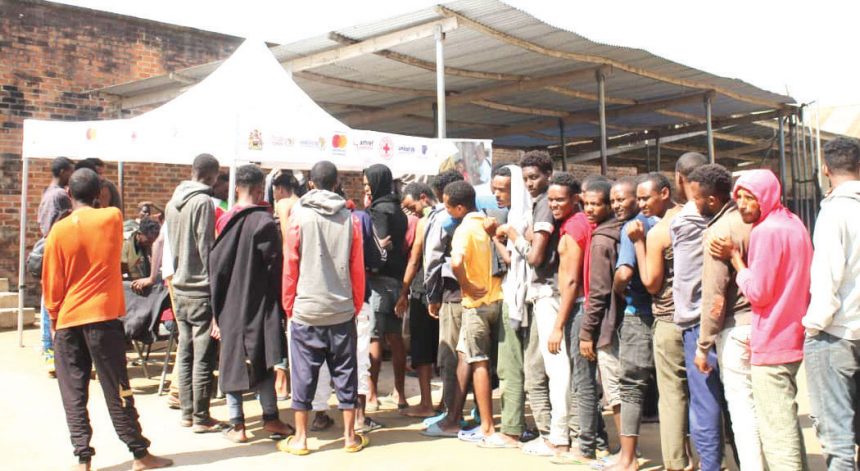
About 340 Ethiopians remain within the high walls of Mzuzu Prison despite that the time for most of them to remain in the correctional facility already expired.
They finished serving their respective sentences but cannot be released into the society they were driven out of.
The majority of these people, who got cornered as they transitioned through Malawi, reportedly intend to sneak into countries such as South Africa in search of greener pastures.
Our investigations found that Mzuzu Prison, which struggles with congestion challenges compounded by constant reception of irregular immigrants, received the first group of Ethiopians in June last year.
- Advertisement -
We also have it on good authority that most of them finished serving their jail terms.
At the Northern Region correctional facility, there are also those who have been on remand for over half a year, waiting for repatriation to their home countries.
Mzuzu Prison public relations officer Macbeth Wasambo only confirmed keeping Ethiopians but declined to divulge more information regarding delays to send them to their home country.
“It is true that we are keeping about 340 Ethiopians who are waiting for deportation,” Wasambo said.
- Advertisement -
- Advertisement -
Homeland Security Minister Ken Zikhale Ng’oma admitted the delay, but said this was because the Ethiopian Government wants to scrutinise the convicts before they are repatriated.
Ng’oma said while it is true that Mzuzu Prison is congested, government would not be moved to set free convicts who are not supposed to be in Malawi.
“We are keeping them because their government said they want to identify their people before taking them to their country.
“The problem is that others lie that they are from Ethiopia; that is why the Ethiopian Government wants to scrutinise them. Otherwise, we are supposed to repatriate them after they serve their sentences,” the minister said.
Ng’oma further suggested to civil society organisations advocating for the rights of the prisoners to also invest in infrastructure for the conducive environment of prisoners.
Executive Director for Centre for Human Rights Education, Advice and Assistance (Chreaa) Victor Mhango said the process of arresting foreign nationals and putting them in the country’s prisons is costing government “a lot of money”.
Mhango said feeding and transporting illegal immigrants to their countries using government resources is also “not pleasing” as the money can be used for infrastructure and other developments in prisons across the country.
“Some were in Malawi on immigration issues but it is us as the country who feel the pain,” Mhango said.
During our movements within the facility, we heard some prisoners shouting “tikuvutika muno. Tathinanamo muno [we are suffering here because the prison is congested].”
Mzuzu-based private practice lawyer, Christon Ghambi, warned that the Malawi Government risks being sued for ‘false imprisonment’ if it continues keeping in prison Ethiopians who have finished serving their sentences.
“These people were supposed to be repatriated soon after finishing their sentences. Keeping them is like forcing them to be in prison without committing any crime. This is dangerous to our nation,” Ghambi said.
He advised the Malawi Government to release the Ethiopians and keep them at Dzaleka Refugees Camp to avoid breaking the law.
Officials at Mzuzu Prison recently revealed their fears of contracting Covid from irregular immigrants who keep being sent to the facility, with the majority of them having not received Covid vaccines.
Several reports have indicated in the past that Malawi’s porous borders are major transit routes for refugees and irregular immigrants from other African countries such as Ethiopia.
The discovery of 30 bodies in a mass grave in a forest in Mzimba in November last year sparked concerns of a migration crisis requiring immediate attention.
The Immigration department said all the bodies were of Ethiopians.
The United Nations refugee agency, UNHCR, confirmed that Malawi is a transit route for foreigners being trafficked to countries such as South Africa.