
By Francis Belekanyama:
The most important day in an election is often not polling day. It is the day after.
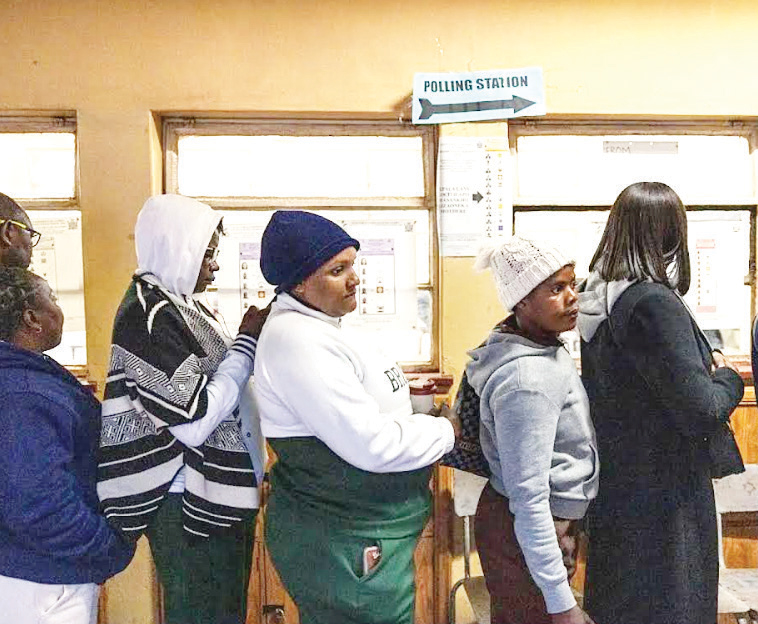
On polling day, citizens perform the most visible act of democracy: they cast their ballots. But once the polling stations close, democracy enters a more delicate phase; the counting, verification, aggregation, transmission and announcement of results. This is where confidence in electoral institutions can either be strengthened or begin to fracture.
Zambia’s August 13, 2026 general election provides Malawi with an important lesson, not because the two countries have identical electoral systems or political circumstances, but because developments after voting demonstrate how quickly electoral administration can become a test of public trust.
The Electoral Commission of Zambia temporarily suspended counting after reports of attacks on election officials and theft of marked ballot papers, before announcing that the security threat had been contained and allowing the process to resume. International observers have subsequently urged political actors to avoid making inflammatory statements while counting continues.
- Advertisement -
This deserves careful attention in Malawi. An election is not credible simply because voting was peaceful. It must also be trusted after the votes have been cast. That is where electoral trust becomes more complicated.
When official counting slows down, social media does not. Political parties publish their own figures. Candidates make claims. Supporters circulate screenshots and polling-station results. WhatsApp groups become unofficial tally centres. A constituency result can acquire the status of “national news” before the electoral authority has completed its verification.
This creates what might be called an information vacuum. And information vacuums are dangerous in elections. They allow suspicion to compete with evidence.
Zambia’s Electoral Commission has warned against premature declarations of victory while the official process continues. At the same time, opposition candidate Brian Mundubile has claimed victory based on his party’s parallel tabulation while President Hakainde Hichilema has called for calm and patience.
- Advertisement -
- Advertisement -
Neither side’s political claim should be confused with the official result. The lesson for Malawi is important: a political party’s parallel tally may be useful for checking an election, but it cannot substitute for the constitutional authority of the electoral commission to verify and declare results.
At the same time, electoral commissions should recognise that simply telling citizens to “wait” is no longer sufficient. Transparency must explain the journey. Citizens should be able to understand how a vote moves from the polling station to the final national result. That means timely access to polling-station result forms, constituency-level aggregation, explanations for discrepancies, clear procedures for resolving disputes and credible protection of election officials and electoral materials.
The principle is simple: The credibility of an election is determined not only by whether citizens trust the winner, but whether the loser can reasonably understand why they lost.
A losing candidate does not have to agree with the result. But if the electoral trail is sufficiently transparent, disagreement can be tested against evidence rather than sustained entirely by suspicion.
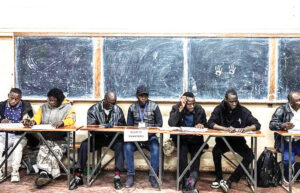
This is why Zambia’s temporary suspension of counting deserves attention beyond the immediate security incident. The African Union-Comesa observer mission noted that any interruption in counting can affect public confidence and that such interruptions must be addressed transparently and urgently.
There is also a lesson about speed versus credibility. An electoral commission should never rush verification simply because social media demands immediate results. Accuracy, security and proper verification matter more than satisfying online impatience.
But the opposite is also true. A delayed result is not necessarily a fraudulent result; an unexplained delay, however, can become a threat to electoral confidence. That distinction is crucial for Malawi.
Our country should therefore think about electoral transparency before the next election rather than during the next dispute. The Malawi Electoral Commission and political stakeholders could consider stronger mechanisms for rapidly publishing verified polling station results, improving public access to constituency level data and providing structured explanations whenever counting or transmission is interrupted.
Security must also be treated as part of electoral integrity. Attacks against election officials, interference with ballot materials or disruption of counting are not merely security matters. They potentially affect citizens’ confidence that their votes will be protected from polling station to final declaration. Zambia’s current experience illustrates why the security of the electoral chain deserves as much attention as the security of polling day itself.
Importantly, Zambia’s final historical judgement should not be made while the process is still unfolding. The country has a longstanding record of constitutional continuity and peaceful transfers of power, according to the preliminary AU-Comesa assessment. The responsible approach is therefore to observe how institutions complete the process rather than prematurely declaring either success or failure.
For Malawi, the deeper lesson is straightforward: Electoral trust is infrastructure. It must be built before votes are cast, protected while they are counted and defended after the winner is declared. Because democracy does not end when the ballot box closes.
It reaches its most vulnerable moment when millions of citizens are waiting for one answer: “Were our votes counted, verified and respected?”
The strength of an electoral system is ultimately measured not simply by how it produces a winner, but by whether those who voted—and those who lost—can still believe in the process that produced that winner.
*The author is a Member of Parliament