
By Cathy Maulidi:
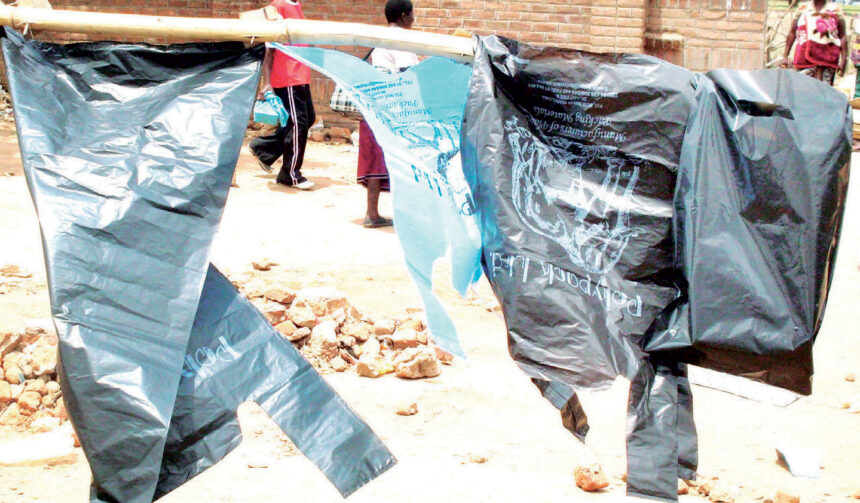
Despite the efforts and legal frameworks aimed at eliminating the environmental scourge of thin plastics, markets continue to be flooded with these prohibited materials.
A recent visit to various trading centres in Lilongwe painted a concerning picture of the ongoing challenges in enforcing the ban, highlighting a gap between policy and practice.
The question that remains, as persistent as the thin plastic bags themselves, is: Where are vendors still sourcing these banned products, especially after companies were ordered to stop production following a court ruling that banned the production, distribution and sale of thin plastics?
Conversations with several vendors shed light on a supply chain that continues to defy the ban.
- Advertisement -
Their accounts suggest a worrying reality: the same channels that once facilitated the distribution of thin plastics are still operational.
One vendor, Laiton Phiri, encountered at the busy Wakawaka Market in Lilongwe, said: “I am still sourcing the plastic bags from the same shops we used to order from at Bwalo la Njobvu in Lilongwe.”
This admission indicates that some wholesalers, or even manufacturers, may be circumventing regulations and continuing to supply banned products to eager sellers.
Upon arriving at Wakawaka Market, we were immediately approached by a number of vendors eager to sell their stock of thin plastic bags.
- Advertisement -
- Advertisement -
This aggressive approach underscores not only the continued availability of these items but also the confidence with which they are being traded.
A similar scene unfolded at Chinsapo Market, where numerous shops and street vendors openly displayed and sold the illegal plastic bags, seemingly undeterred by the ban.
With this trade going uninterrupted, it raises the question: Are companies secretly continuing to produce these plastics? And if so, who is producing them and where?
In an attempt to curb the production and distribution of these harmful plastics, the Malawi Environmental Protection Authority (Mepa) recently conducted raids on several plastic manufacturing companies.
The operation revealed mixed results. Some companies were found to be compliant, demonstrating commitment to the ban. However, others were found to be flouting the regulations.
At Qing Dao Plastics in Lilongwe, although no active production of thin plastics was underway during the inspection, large quantities of raw materials used in their manufacture were found.
Despite a truck loaded with such materials arriving at the company’s factory, the owners denied using them to produce plastics.
One owner explained: “These materials were ordered before the ban. We are just holding onto them because we cannot dispose of them. The deliveries were delayed. And who knows, perhaps the ban will be lifted and we can use them then.”
At the time, workers were unloading the materials into the factory, which was fully equipped with production machinery.
The company, which only produces thin plastics, still had workers on-site despite claiming no production was taking place.
Mepa Director General Wilfred Kadewa, in a statement following the raids, reiterated the government’s stance.
“The ban is in effect and our inspectors will continue to monitor the situation. If production continues, we have the authority to confiscate both the machinery and any materials produced,” Kadewa said.
He also urged manufacturers to transition towards producing environmentally friendly alternatives, such as biodegradable carrier bags or thicker plastics that comply with legal standards.
Despite these efforts, the widespread presence of thin plastics in the market suggests that this transition is far from complete.
This was further confirmed on January 31, 2025, when the High Court in Lilongwe lifted an injunction obtained by 11 plastic manufacturers in July of the previous year, thereby reinstating the ban and paving the way for renewed enforcement.
However, even with legal backing and enforcement actions, a recent study conducted by the youth-led network XYZ Dosgo Green Initiative highlights the challenges Malawi still faces in fully transitioning away from thin plastics.

Nyirenda led the fight against the injunction
The report, titled ‘Awareness, Distribution Channels, Access and Adoption of Eco-friendly Alternatives to Replace Thin Plastics’, offers valuable insights into the obstacles and opportunities that have emerged since the ban.
The January 2025 survey revealed a troubling reality: although the ban is in place, eco-friendly alternatives remain in short supply.
One key finding of the survey noted, “74 percent of respondents said eco-friendly alternatives were not readily available in their area following the ban on thin plastics.”
This lack of accessible alternatives has left a gap that continues to be filled by the illicit trade in thin plastics.
In light of these findings, Aubrey Taulo, research and programme coordinator for XYZ Dosgo Green Initiative, said that if Malawi hopes to follow in the footsteps of countries like Tanzania, Kenya and Rwanda in becoming largely free of thin plastics, it must intensify efforts to enforce the ban and ensure the availability of alternatives.
In recent years, an increasing number of African nations have taken bold steps to combat environmental degradation by banning the use of thin plastics, a major contributor to pollution.
The decision to outlaw plastic bags and other single-use plastics is said to reflect the continent’s commitment to preserving natural resources and promoting sustainable development.
Rwanda was the first African country to implement a nationwide ban on plastic bags in 2008, taking a proactive approach to protect its landscapes and wildlife.
Kenya followed in 2017 with a complete ban on the manufacture, sale and use of plastic bags, alongside severe penalties, including hefty fines and imprisonment for offenders.
Morocco introduced its ban in 2016 to curb plastic pollution while protecting its tourism sector.
With its stunning landscapes, including the Atlas Mountains and coastal cities, the government recognised the threat posed by plastic pollution to its tourism industry.
While these countries have made commendable progress in reducing plastic pollution, they continue to face challenges.
One of the most common obstacles is enforcing the ban in rural areas or regions with limited infrastructure.
Additionally, finding affordable and widely accessible environmentally friendly alternatives remains a major issue.