
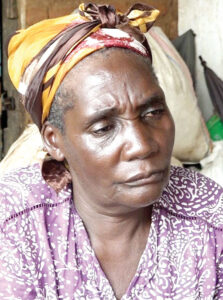
Elise Bwatalika, 80, lives in Chinsapo Township in Lilongwe and faces a challenging new chapter in her life, following the death of her husband several years ago.
Bwatalika is embroiled in a dispute over the ownership of her home after her husband’s death.
Relatives from her late husband’s side insist that she should vacate the property because it should belong to her husband’s children, given that she did not have any children with him.
“I feel deeply unsettled by the situation, especially since I am a widow. I don’t know what my future holds if I am forced to leave home,” she says.
Bwatalika has documents from the city council proving her right to reside in the house and finds comfort and support from the chairperson of the market and other community members who are backing her.
- Advertisement -
She alleges that her husband’s elder son may have manipulated the situation by taking the Bible containing her husband’s will, which apparently stated that she should not face problems regarding the property after his death.
Community members are urging government authorities to intervene and ensure she is not unlawfully evicted from her home.
They stress that, according to Malawian law, a widow has rights to her late husband’s property even if she did not have biological children with him.
Pipe Black, the chairperson of Chinsapo Market, confirms that while four individuals from the husband’s side approached him about selling the property, he advised them to negotiate with Bwatalika if she was willing to sell it.
- Advertisement -
- Advertisement -
“We want to sell the place. Our father sold everything in the village and came here to live with the woman; hence, the place should be sold,” Black explains.
He recounts that about 15 people came to the market to perform a ritual intended to justify moving the widow out.
However, he asserts that Bwatalika is the rightful owner of the property, as Malawi’s law supports the rights of widows even in the absence of children.
Chrisna Paulo, who conducts business with Bwatalika at Chinsapo Market, expresses concern over the elderly woman’s predicament.
“We want the government to intervene; she is being forcefully chased from her rightful home,” Paulo says, lamenting the broader issue of violence against women in the country.
Mark Benjamin Dzuwa, a family friend who introduced Bwatalika and her late husband to Chinsapo Seventh-Day Church, adds that he is aware of the will written in the Bible.
“I know Mayi Elise Bwatalika and her husband because they joined our church. The late husband showed me where he had written his will in the Bible, repeatedly asking me to inform others of its contents if he died,” Dzuwa explains.
However, when he saw the Bible with the will placed on the deceased’s chest in the casket, he was informed that the elder son had insisted on taking the Bible.
“I felt defeated; I knew something sinister was afoot. Ironically, they have many Bibles at home, but chose to bury the one containing the will and now they are claiming the property,” Dzuwa explains.
We visited Bwatalika’s sister, Bertha, in Mpingu location to hear her perspective. She explained that their attempts to resolve the matter locally were unsuccessful.
Kaka Rashadi, an elder at Chinsapo Market, stresses that Bwatalika deserves respect and assistance.
“She has been here for the past ten years, living and working with her husband. She is elderly and has been a good person,” Rashadi says.
He adds that the matter remains unresolved and that they are committed to supporting the widow regardless of the obstacles.
Legal Aid Bureau spokesperson John Namalenga confirmed that one of the deceased’s sons, William Duke, was granted legal aid.
The bureau had engaged both parties in mediation, which led to an agreement to sell the land and divide the proceeds.
However, Bwatalika later returned to the bureau, expressing her inability to sell the property due to her age and lack of alternative housing.
Namalenga further explained that if the matter goes to court, the land will be valued and letters of administration obtained to address the situation.
When asked if the bureau was aware that Bwatalika is illiterate, Namalenga stated that there was no indication of this in the documentation but affirmed that she has been informed of the process and understands it.
However, she is not currently represented by the bureau.
Malawi Human Rights Commission Executive Secretary Habiba Osman says Bwatalika cannot be legally evicted from her home.
Osman stresses that inheritance laws do not require one to have children to claim property.
Bwatalika and her late husband’s marriage lasted over 30 years.
In the wake of his death, she has not only had to cope with profound grief but also with exploitation attempts.
Richard Chinkho, a relative of the deceased, supports the claim that Elise’s husband sold land in their village to purchase the property in Chinsapo Market. He asserts that the property should belong to the children, hence the desire to sell it and divide the proceeds.
Minister of Gender Jean Sendeza has condemned property grabbing from the elderly and is committed to pursuing those who exploit vulnerable individuals. She emphasises that the law grants property rights to individuals married for six months or more.