By Cathy Maulidi:
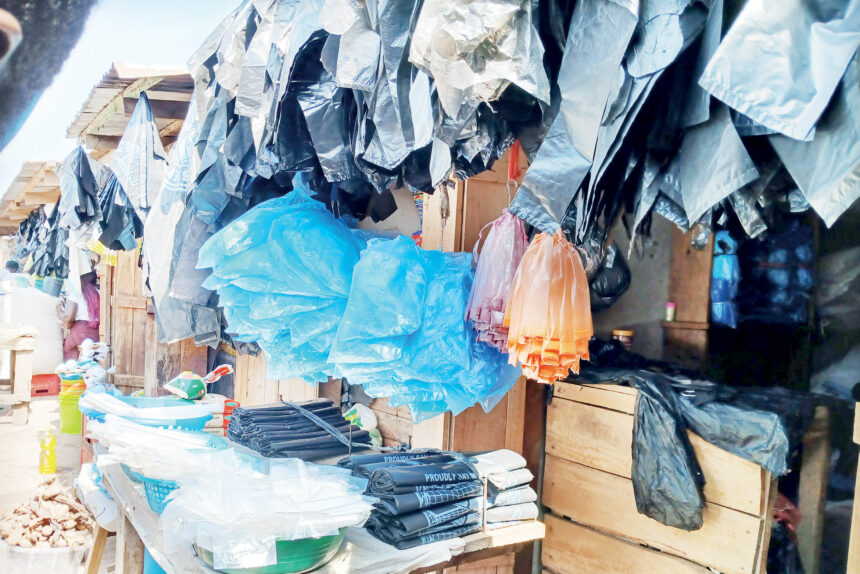
Despite Malawi’s recent ban on thin plastics, the country still faces significant hurdles in transitioning to eco-friendly alternatives, a study conducted by the youth-led network XYZ Dosgo Green Initiative has shown.
The report, titled ‘Awareness Distribution Channels, Access and Adoption of Eco-Friendly Alternatives that Replace Thin Plastics’, offers insight into the challenges and opportunities following the ban on thin plastics.
The survey reveals that there is still much work to be done regarding thin plastics as well as finding suitable alternatives.
The survey found that “74 percent of respondents reported that eco-friendly alternatives were not readily available in their area after the ban on thin plastics.”
- Advertisement -
“The survey reveals varying levels of awareness, limited distribution channels and inadequate access to eco-friendly alternatives. However, there is willingness among respondents to adopt eco-friendly alternatives and a clear need for targeted interventions,” the report states.
It also refers to the Sustainable Development Goals, which have an element that talks about reducing plastic waste in goal number 12.
It adds that some African nations such as Tanzania, Kenya and Rwanda have managed to become thin plastic-free nations following the set goals, while Malawi continues to struggle.
“With the recent removal of the injunction and the enforcement of the ban on thin plastics, Malawi has joined 38 other nations globally. This situation necessitates immediate action to promote sustainable practices in response,” the report adds.
- Advertisement -
- Advertisement -
However, the report indicates that 74 percent of respondents reported that eco-friendly alternatives were not readily available in their area, with 26 percent lacking knowledge on how to access the market for alternatives and only five percent mentioning the limited distribution channels.
“Sixty-two percent of household respondents reported that eco-friendly biodegradable alternatives were too expensive to buy, while 38 percent cited lack of availability as a barrier to accessing such alternatives.
“Ninety-six percent of vendors had no access to eco-friendly alternatives, such as newspaper, magazines and biodegradable materials, while four percent had difficulties accessing biodegradable materials,” the report reads.
On willingness to adopt other alternatives, the report states that 97 percent of respondents expressed a willingness to adopt eco-friendly alternatives, with 80 percent citing environmental concerns as the main reason for their adoption and 20 percent mentioning health benefits as a secondary factor.

The survey also highlighted the need for increased awareness about eco-friendly alternatives, as only 58 percent of respondents were aware of the benefits of using them.
As one way of ensuring environmental sustainability, the organisation’s research and programme coordinator, Aubrey Taulo, has called for a joint effort from the government, private sector and civil society to promote the use of recyclable and biodegradable materials.
Two weeks ago, the Malawi Environmental Protection Authority (Mepa) raided some plastic production companies, where it found that some were complying with the law while others were not.
During the exercise, Mepa closed Ocean Industries for non-compliance, while Qing Dao Plastics company was found to have materials used to produce thin plastics, but no production was underway.
Mepa Director General Wilfred Kadewa said: “Where manufacturing continues, there is provision to confiscate both the machines and the materials that have been produced.”
Kadewa advised manufacturers to switch to producing biodegradable carrier bags or thick plastics that are compliant with the law and do not harm the environment, though thin plastics are still presently on the market.
On January 31, 2025, the High Court in Lilongwe discharged an injunction that 11 thin plastic manufacturers had obtained last July, which had stopped the government from enforcing the ban, thereby putting the ban back in force.