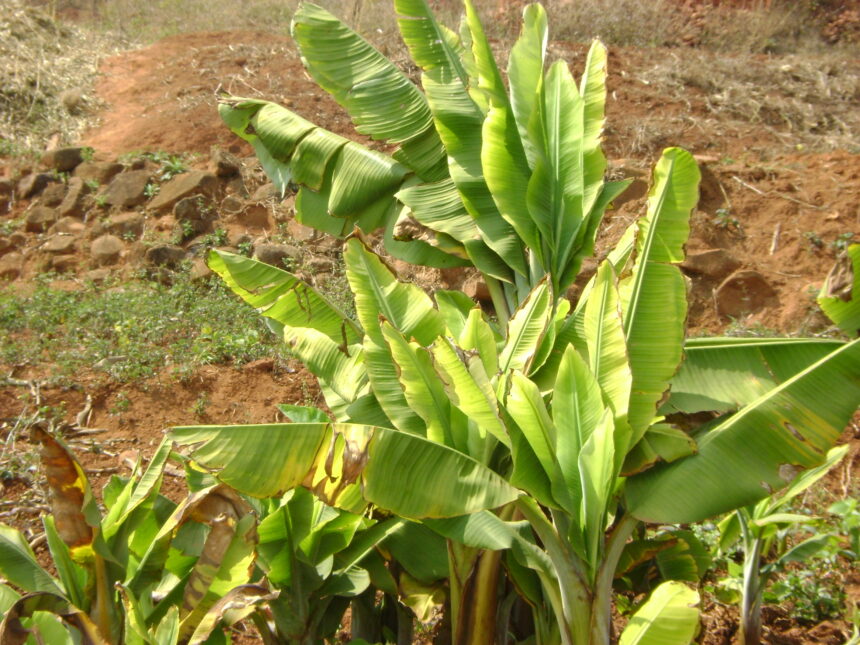

Elube Mamba Moloko, 68, still shudders whenever she thinks about how she lost two hectares of bananas on September 1, 2017.
That day, she, her nine children and six grandchildren watched helplessly as a fountain of tears run down her wrinkled cheeks.
“Before that calamity, I was an economically independent woman who could even support by children and grandchildren with cash. In a year, I could generate up to K2 million from banana sales. It was not small change, then,” Mamba Moloko, who is from Village Head Kalintulo in Malawi’s Southern Region district of Thyolo, says.
She immediately switches topics, not wanting to be reminded about a glorious past that has since turned into a painful reality.
In Group Village Head Maoni’s area, also in Thyolo District, Marita Salijeni sings the same song— one of painful memories and failure to recover from that calamity.
- Advertisement -
They are both victims of Banana Bunchy Top, a disease that wiped out hectares of bananas and people’s hopes.
In a ‘normal’ planting season, the crop and plant fields— from the districts of Nkhotakota to Mchinji, Nsanje to Chitipa— look almost ‘celebratory’, be it the staple maize, bananas, soya peas, pigeon peas, rice or beans.
Today, however, it is hard to look at some banana fields in Thyolo and other banana-growing districts without a creeping wonder: What went wrong?
Well, the situation started getting murky in April 2010. That year, a tense hush fell over the banana-growing districts, most notably Thyolo, as banana plants started crushing to the ground one after another after the ‘invasion’ of Banana Bunchy Top disease.
- Advertisement -
- Advertisement -
Banana Bunchy Top is transmitted from plant to plant by banana aphid (pentalonia nigronervosa) and spreads through movement of infected plant materials. It was first reported in Nkhotakota District in 1994, but things quickly fell under control as the disease did not spread to other districts. At least until 2010 when the first banana plant collapsed to the ground in October, especially in areas under group village headmen Kalintulo and Maoni in Thyolo District.
Today, farmers can still not get used to the idea of chopping down the very banana plants that have sustained them for ages.

According to Lilongwe University of Agriculture and Natural Resources (Luanar) lecturer Dr. Abel Sefasi, one of the factors that contributed to that is poor adoption of biotechnology among farmers. Otherwise, he suggests, some bananas could have been saved.
No wonder that, today, Sefasi is one of the people that are promoting the adoption of biotechnology.
In 2021, Sefasi came into the limelight when he was among people that expressed concern that Malawi was taming another problem; that of insatiable appetite for banana tuber imports.
He lamented that Malawi was importing 20,000 metric tonnes when it can produce its own bananas by adopting the right technology.
Speaking on July 2 that year, during the official launch of Tissue Culture Laboratory under Hortinet Foods Limited, Sefasi, who is the board chairperson, lauded the introduction of the factory.
“We, therefore, want to complement the government’s efforts by helping in the provision of proper seed systems, which are free from diseases, because, as things stand, the government is spending a lot of money on seedlings and banana sucker imports.
“Within six months, about one million plants will be produced at this laboratory, hence we are certain that we will help in meeting demand from farmers that are into banana cultivation,” Sefasi points out.
Today, farmers that have embraced biotechnology get tubers and other materials there, with some of them reaping the fruits through increased production, among other benefits.
One of the people that have been impressed with progress made is Lilongwe City Centre Member of Parliament Alfred Jiya, who says, through labs such as that launched in his constituency in 2021, prospects of banana production have improved, such that community members are becoming economically independent through the cultivation of improved varieties of banana and other crops.
“The country banks much on agriculture for its economic survival. As such, having a laboratory that is promoting biotechnology in the country is a plus,” Jiya emphasises.
And, according to the National Commission for Science and Technology (NCST), biotechnology has the potential to contribute to increased food production for improved social and economic livelihoods.
In a presentation titled ‘The Role of Biotechnology in Contributing to Increased Food Production for Improved Social And Economic Livelihoods of Malawi’, NCST says, since agriculture contributes up to 37 percent to Gross Development Product, such that any advances in it can be transforming, especially in a country that faces food and nutrition insecurity, culminating in poor nutrition.
Not just can agriculture contribute to food security, it can also help the country generate more, in terms of foreign earnings. At the moment, and this is according to the National Statistical Office (2013), the sector contributes 80 percent to the country’s foreign earnings while creating 64 percent of employment opportunities for the Malawi population.
However, according to the commission, the agriculture sector faces a number of challenges.
“The sector is facing many challenges currently as outlined below: Diminishing land for cultivation due to rapid population increases (10 million in 2000, 18 million in 2017 and 23 million in 2023); low yielding varieties; high pest and disease incidences; issue of climate change, which is bringing about drought in some cases,” it points out.
It is, however, quick to say biotechnology has already been changing all of this in other countries. It accredits biotechnology for major improvements in crop productivity and quality, citing strides made in potato farming.
“Early potatoes (tubers and leaves) were toxic, containing glycoalkaloids, which can attack the nervous system,” it says.
But after the adoption of technology, all this has changed.
“Therefore, Africa needs all the appropriate tools in science and technology to increase productivity and enhance food security,” it says.
In the Malawi context, it says, the application of traditional biotechnology in agriculture has had a positive impact, such that, through crossing and rigorous selection, scientists have been able to develop varieties that are high yielding, pest and disease resistant or tolerant and even those that offer some degree of tolerance to drought conditions.
However, current techniques have had their downside, notably because they are slow and time consuming, not specific and also because their effectiveness is limited to the genetic diversity and their relatives. Add the problem of unintended side effects from additional genetic changes introduced together with genes of interest and the situation becomes complicated.
That is where modern biotechnology comes in. The need for modern biotechnology became urgent in 2002, when Malawi and other countries were hit by a drought and required humanitarian assistance.
However, many countries in Southern Africa, including Malawi, did not want to accept genetically modified (GM) maize.
In addition, Malawi did not have a regulatory framework for biosafety on Genetically Modified Organisms (GMOs).
Now, as Malawi is embracing biotechnology, it stands to benefit through biotechnology’s precision and increased food security through development of disease and pest-resistant crops, according to the commission.
“As indicated, [the] agriculture sector is currently facing numerous challenges. Low cotton production and productivity attributed to boll worm damage, among others. [The] banana industry is nearly wiped out due to Banana Bunchy Top virus. [There are] high loses of cowpea from Maruca pod borer. [There is also] low cassava productivity due to cassava mosaic disease and brown streak diseases.
“In spite of these challenges, Malawi is making a lot of strides in an effort to improve the sector, [including the] development of relevant laws/regulations for safe conduction of modern biotechnology tests. [As for Bt cotton], efficacy tests under confinement [have been] performed, trait release [has been] done, [and is currently] on farm variety trials. [As for] Bt cowpea, efficacy tests underway. [As for] Bt banana, approval for confinement done. Structures are being constructed at Mkondezi. Efficacy trials under confinement underway,” the commission indicates.
There is also work on Bt maize and cotton in progress, a development that may reduce the damage caused by the stalk borer in maize and bollworm in cotton.
The adoption of biotechnology may also lead to reduced damage caused by Busseola fusca, which is a serious pest of maize in Africa, particularly in high-lying regions— with yield losses varying from 5 percent to 75 percent and even higher.
This, according to scientists, is compounded by the fact that insecticides are not widely adopted and, in addition, high costs and health hazards are blamed for the inappropriate use of cheap insecticides.
Fortunately, Malawi is already controlling the maize stalk borer through biotechnology.
“Scientists who use genetic engineering techniques for food production have the same goal as traditional breeders: making our food supply safer for consumers and the environment and less expensive to produce.
“An estimated 5.5 million farmers grow transgenic crops on 130 million acres in about 15 countries, led by the United States and Canada. Virtually all of the biotech crops on the market today were developed to reduce crop damage by weeds, diseases and insects,” the commission indicates.
“Biotechnology has great potential to increase agricultural productivity, improve food security, improve nutritional security, mitigate the effects of climate change, improve peoples’ livelihoods through improved income, employment, nutrition, food security, resilience to climate change, protection of the environment and good health,” it adds.
Fortunately for some people in Malawi, these benefits are accruing, especially for maize farmers and consumers, some of whom are embracing orange maize. The maize crop, ripe with its protruding eyes, often looks healthy, as if it grew somewhere and, by accident or design, fell to the ground in Malawi.
To crop experts, however, the orange maize is an improvised thing, a ‘child’ of science and product of latest technologies.
It is hard to look at five samples of mature maize without wondering about which country the produce came from.
To the experts, however, it is not the colour of the maize they are for; their target is to address one of the challenges facing Malawi: food insecurity.
With the red maize, researchers, all of them local, are so sure that the gulf between the haves and have-nots, especially as it relates to household and national food security, will be easily reduced.
Armed with this purpose, Malawian researchers at Chitedze Research Station in Lilongwe have been researching on three maize varieties in their bid to encourage Malawians to start cultivating and eating bio-fortified crops, notably orange maize, which has been touted for its rich content, including in Vitamin A.
Chief Maize Breeder and Action National Research Coordinator for Cereals Kesbell Kaonga says Malawians stand to benefit a lot from orange maize and other bio-fortified crops such as potatoes and beans.
“Apart from providing health benefits to under-five children, pregnant women and adult males, the improved varieties have the potential of growing the country’s economy. In fact, orange maize has the potential to become a vibrant industry on its own as it is a raw material for other products such as cornflakes. These crops, including orange maize, are a cheap source of Vitamin A in humans since maize is the staple food in Malawi.
“At industry level, its palatability makes it suitable for the making of feed for poultry to improve the quality of eggs in layers and, of course, it’s a major ingredient in the making of cornflakes. As such, there are a lot of benefits to Malawi if these crops are promoted,” Kaonga states.
Bio-fortification involves the incorporation of key micronutrients into staple food crops such as maize in order to address micronutrient deficiencies.
The targeted micronutrients include Vitamin A, zinc and iron, which are said to be essential for good health, human development and strengthening the immune system.
Not-for-profit organisation HarvestPlus has been assisting in the promotion of such crops in Malawi.
HarvestPlus Executive Director Dellings Phiri says biofortified crops can help Malawi address the twin problems of hunger and malnutrition.
“These crops are vital as they are rich in critical vitamins. As such, the more they are grown by farmers in the country and the more they are being consumed, the more we will see improvements in the health well-being of Malawians,” Phiri points out.
The Directorate of Nutrition, HIV and Aids in the Ministry of Health indicates that at least 800,000 people in Malawi are growing and consuming bio-fortified crops annually.
Surely, if others could join these 800,000 people in the country, most villages would be filled with the fragrance of newly cooked food, including orange maize, creating another positive story as Malawi embraces technology to solve some of its pressing challenges.

More so because, according to Dr. Dalitso Kafumbata, who works for the Department of Biological Sciences, School of Natural and Applied Sciences, at the University of Malawi (Unima), biotechnology can change the fortunes of Malawi.
In a paper titled ‘Opportunities for Malawian Scientists to Conduct Biotech Research for The Agriculture Sector’, he explains that biotechnology has been put to use by people for some time, citing traditional biotechnology, such that there is no need to resist it, as doing so only creates insecurity.
“Traditional biotechnology includes fermentation to produce common products such as vinegar, soy sauce and wine. Biopesticides, biofertilisers, tissue cultured plants and diagnostic kits are products of traditional biotechnology.
“Modern biotechnology, on the other hand, uses tools like genetic engineering to produce improved vaccines, organisms, plants and animals,” Kafumbata indicates.
He, however, says, since conditions change from time to time, yesterday’s solution can be today’s problems, necessitating the need for consistency in terms of innovation.
“There is no ‘silver bullet’ to overcome food insecurity and the challenges of agri-food systems in Africa. The right combinations of innovations, policies and actions could be an option
“Agricultural biotechnology has been beneficial in developing crop varieties to improve agricultural productivity and increase the resistance of plants to pests and diseases. Such technology includes tissue culture and micropropagation, molecular breeding of marker assisted selection, genomics, molecular diagnostics and genetic engineering,” the expert says.
Kafumbata further indicates that, for Africa, there cannot be struggles to put biotechnology to good use as GM crops already exist on the continent.
He adds that, in at least 12 countries, policy and legal frameworks governing GMO use exist at different stages.
“At the regional level, Comesa [Common Market for Eastern and Southern Africa] has a policy on biotechnology and biosafety. Common crops which are genetically modified include maize, cassava, rice potato, soybean and sorghum.
“Malawi also has a biotechnology/biosafety policy, along with Burkina Faso, Cameroon, Egypt, eSwatini, Ethiopia, Ghana, Kenya, Namibia, Nigeria, South Africa, Sudan, Tanzania, Uganda, Zambia and Zimbabwe. [However], most countries fall below the average in support towards policy framework to govern biotechnology,” Kafumbata explains.
He offers suggestions on what should be done for Malawi to reap the full benefits of biotechnology. These include strengthening existing institutions in terms of human and infrastructure capacity development, strengthening capacity in biosafety and generation of environmental and public health impacts, conducting surveys on potential contribution of biotechnology towards socio-economic development of the country, embracing specialisation by theme and area and pooling of resources accordingly.
The others are participation in regional and international networks and meetings; training in the areas of socio-economic, legal, policy aspects of biosafety; impact monitoring and evaluation, risk assessment, risk communication and information management, negotiation abilities; as well as sharpening stakeholders’ skills in communication.
Wisdom Changadeya, also of Unima, under its Biological Sciences Department, cannot agree more.
In his ‘Introduction to Biotechnology and Genetic Engineering’ paper, he indicates that biotechnology is useful because it entails using living things to make useful, and not harmful, products.
“Biotechnology is applied biology. Biotechnology is using any living system to produce something useful. [It is about] using the latest tools and techniques to improve life. These living things can be microbes, plants and animals. [In fact], biotechnology involves selection, breeding (of animals and plants),” Changadeya says.
He adds that biotechnology is put to other use, notably gene transfer, DNA detection, DNA fingerprinting, Genome analysis, Genome libraries, cell culture, tissue culture, gene cloning and gene editing, among others, areas he credits for modern advancements in life.
Changadeya says, since 1963, over 2,252 new plant varieties— notably wheat, barley, oats, rice, soybeans, string beans, navy beans, potatoes, onions, cherries, apples and grapes— have benefitted from advancements in technology.
“Biotechnology leads to improved resistance, quality, yield and adaptability,” he stresses.
He points out that, for an organism to be transformed, there is a need to have a host, which is the organism that is going to take up the DNA and be transformed. There also a need to have DNA, which is then transferred into the host.
“However, the host must be competent for transformation; that is, able to take up DNA,” he says.
In 2015, the global market value of biotech crop seeds was $15.3 billion (about K15 trillion), representing 34 percent of the $45 billion (about K45 trillion) global commercial seed market
In the same year, 18 million farmers in 28 countries are said to have grown GM crops on 179.7 million hectares.
Furthermore, of the $15.3 (about K15 trillion) billion biotech crop market, $10.9 billion (about K10 trillion or 72 percent) was in developed countries and $4.4 billion (about K4.4 trillion or 28 percent) in developing countries such as Malawi.
As at now, Malawi has been making progress, in terms of embracing biotechnology to improve production prospects for maize and even bananas.
In terms of maize, Tela comes to mind.
Sefasi, who is the team leader for the research in Malawi, says Tela maize can help the country meet its crop production needs, owing to the variety’s resistance to pests and some diseases.
“This is one of the solutions to food productivity challenges Malawi is facing,” he points out.
Agriculture Minister Sam Kawale is equally elated with the development, saying the government is committed to improving the food security situation in the country by, among other things, creating a conducive environment for players in the agriculture sector, including those that are into biotechnology.
“We are, therefore, calling for more partners,” Kawale explains.
Already, Tela maize work is being done using a public private partnership arrangement, meaning that, as Kawale indicates, the government, academic institutions and private sector players can work together to shore up animal and food production in the country.
Otherwise, problems such as malnutrition will continue to give people a headache in the country.

According to Luanar lecturer in the Department of Human Nutrition and Health, Lloyd Chauwa, districts such as Mzimba and Dowa have been registering high malnutrition levels, mainly due to poor food production hinging on crop varieties people there prefer.
“As such, the cost of treating malnutrition-related diseases is high. In fact, this is the reason we want to, in the next two years, conduct research to establish the impact of interventions by nutrition partners as cases of stunting remain high.
“The Malawi Demographic Health Survey of 2015-16, which the National Statistical Office conducted, indicates that the two districts have 39 percent stunting rates. We, therefore, want to gauge how players, including biotechnology advocates, are sharing roles to address the problem of malnutrition in the country. There could be something very crucial, maybe biotechnology, that is missed in addressing nutrition gaps,” Chauwa explains.
That way, win-win situations can be created; of course, with biotechnology at the centre of them.