
The cries got louder as pallbearers brought out the coffin from the hospital’s mortuary and put it at the concrete bay right outside the morgue.
Fellow students, clad in school uniform, teachers, neighbours, church members and relatives all came in their large numbers to pay their last respects to a promising life cut shot by an attempt to terminate pregnancy, which came after being raped by some thug masquerading as a Kabaza operator.
She was only 16 years old.
From the cry of her mother, it was evident that she was her only child.
As the church official tried to calm down the situation so as to announce travel arrangements, one could tell from the wailing of fellow students and teachers that Grace was a bright girl.
- Advertisement -
She had been given a concoction by a herbalist on the outskirts of Malawi’s administrative capital, Lilongwe, to terminate the pregnancy but things went haywire.
Twice she had gone to a government hospital to seek abortion services but she was denied treatment.
As the young man carrying a reed mat led the procession to a lorry that was waiting to carry Grace’s remains, the cries grew even louder.
The case of Grace is just an example of the challenges that many women and girls face in Malawi in an attempt to handle unwanted pregnancies.
- Advertisement -
- Advertisement -
In fact, a joint study by Malawi’s College of Medicine [now Malawi University of Health Sciences] and the United States-based Guttmacher Institute revealed more than 140,000 backstreet abortions take place illegally every year in Malawi, resulting in about 12,000 deaths.
Every month, in Malawi’s administrative capital Lilongwe, Bwaila District Hospital treats up to 270 women and girls that conduct unsafe abortion.
Briefing a delegation of members of the European Parliamentary Forum on Sexual and Reproductive Rights (EPF), Lilongwe District Nursing and Midwifery Officer Bertha Kaudza said mothers go to the facility with different types of abortions.
“For example, some of them come with incomplete abortions while others come with complete abortions,” she said.
The situation is even tough in Kasungu District, where female wards at Kasungu District Hospital are overwhelmed by women seeking post-abortion care.
According to the Director of Health and Social Services for Kasungu District Council Emmanuel Golombe, maternal death cases range from 28 to 30 in a year, with about five to 15 percent being caused by unsafe abortions.
“We are seeing issues of induced abortion and the cases are overwhelming us because 30 to 70 percent of our female wards are occupied by those that are coming for post-abortion care.
“So, in a month, we see quite a lot. For example, in 2022 we admitted more than 1,100 women who came for post-abortion care and the most worrisome thing is that we register high numbers of maternal deaths,” Golombe told the European lawmakers.
Malawi’s abortion law is one of the most restrictive in Africa, as it only permits termination of pregnancy to save a woman’s life.
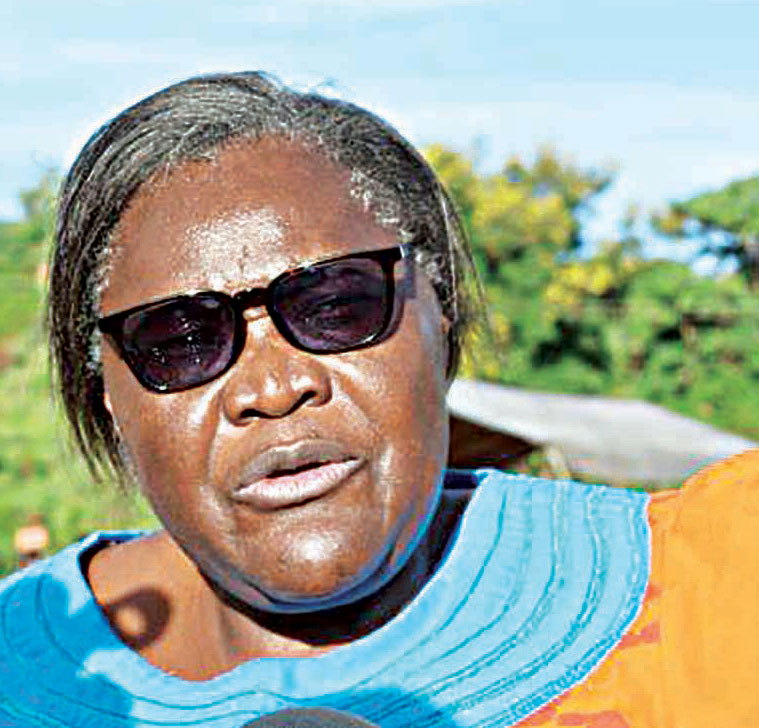
Emma Kaliya is Chairperson for the Coalition for the Prevention of Unsafe Abortion (Copua) and says, with current restrictive abortion laws in Malawi, the situation is increasingly becoming worrisome while most of the leaders just watch and pretend that they do not observe the extent of the problem.
“Women and girls dying from, say, unsafe abortion does not seem like an emergency to most policy makers in Malawi though, in my view, it qualifies to be a constitutional crisis because gender equality is enshrined in Section 13 of the Republican Constitution and Section (b) specifically provides for adequate healthcare, commensurate with the health needs of the Malawian society and international standards of healthcare,” Kaliya says.
She says data for post-abortion care collected from 31 district hospitals in 2022-23 revealed that 72,500 cases were handled at local facilities.
“However, this information is only from Public facilities and not private ones; worse still, those cases are not even reported to any health facility once they have successfully managed the abortion by themselves at community level or have died in the process of aborting,” Kaliya says.
According to a strategic assessment of unsafe abortion in Malawi— by Emily Jackson, Brooke Ronald Johnson, Hailemichael Gebreselassie, Godfrey Kangaude and Chisale Mhango— methods of unsafe abortion reported included the use of detergents, concentrated tea, Quinine, Aspirin, Tetracycline, Chloramphenicol, Ampicillin, SB-300, ground sisal leaves, aloe vera, Mtunda tree (ground bark/roots), fish poison, cassava stick, msatsi tree stem and others.
“When a woman dies of cholera, the Ministry of Health is shaken, but when a woman dies from unsafe abortion or abortion complications, no one is shaken,” the assessment quotes a clinical officer as saying.
It notes that healthcare workers reported that hospital and clinic staff might treat a patient negatively if they suspected that she had had or attempted an abortion, saying women who had abortions were described as sex workers or morally loose by community members.
The assessment says Malawi’s current law regulating abortion, a vestige of the antiquated British Offences against the Person Act 1861, imposed under British rule (1891-1964), allows abortion only for the preservation of a woman’s life.
In practice, the endorsement of two independent obstetricians is required before abortion can be performed, and spousal consent is necessary.
According to the law, any attempt to procure an abortion is punishable by seven to 14 years imprisonment
In recent years, there have been attempts to change the law to allow for additional circumstances through which abortion could be allowed in the country.
On May 11 2021, Parliament shot down a motion to allow Chiradzulu West lawmaker Matthews Ngwale to table the Termination of Pregnancy Bill which sought the authorisation of other circumstances for carrying out an abortion including on pregnancies that come as a result of rape and incest.
“That having noted that the Malawi Penal Code allows for the termination of a pregnancy only if the life of a mother is at risk, and observing that there are ever increasing numbers of justifiable situations for the termination of unwanted pregnancies which have not been covered by existing laws, this House grants leave to the Honourable Member for Chiradzulu West to introduce a Private Member’s Bill, Termination of Pregnancy Bill’ which, when passed by this House, would expand grounds for safe abortion,” the motion for the bill reads.
Religious leaders have been in the forefront of rejecting any attempts to increase the number of reasons for abortion.
For example, on September 14 2020, the religious leaders under the Episcopal Conference of Malawi, Muslim Association of Malawi, Quadria Muslim Association of Malawi, Malawi Council of Churches and the Evangelical Association of Malawi vehemently spoke against the proposal.
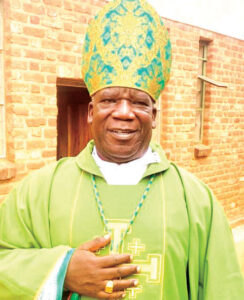
Led by Archbishop Thomas Msusa of the Catholic Church, the religious leaders called for a collective voice to all Malawians to stand up for life of all people, including the unborn child.
“No institution— including Parliament, courts, Executive arm of government and non-governmental organisations (NGOs) or foreign agencies— has the legal right to terminate life except God.
“Abortion is immoral and sinful because it is against God’s commandments,” Msusa said.
But, by any standards, 12,000 deaths per year is not a small number.
In 2020, Covid came, killed 2,686 up to 2022 and was declared a crisis.
In 2022, cholera came, killed 1,771 Malawians up to 2023 and was declared a national public health emergency.
What about the monster that claims the lives of 12,000 women and girls every year? Is that not a crisis?