By Alick Ponje in Belém, Brazil:
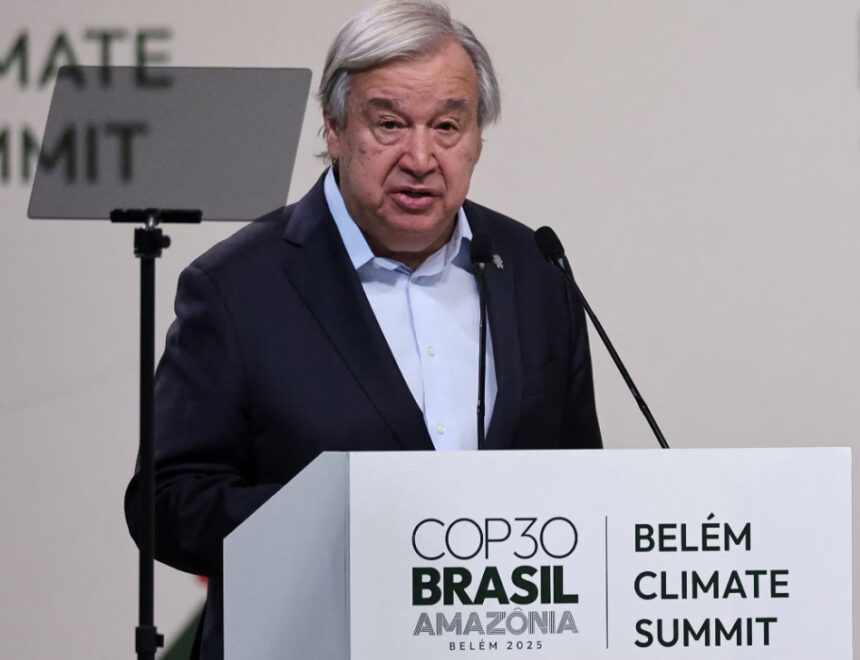
United Nations Secretary-General António Guterres has warned that the world has failed to keep global warming below the critical threshold of 1.5 degrees Celsius, a failure he described as both a moral and human tragedy that will hit the poorest nations the hardest, including Malawi.
Speaking during the Plenary of Leaders at the UN Climate Change Conference in Belém, Brazil, Guterres said scientific evidence now shows that a temporary overshoot beyond the 1.5°C limit, expected as early as the 2030s, is inevitable.
“It could push ecosystems past irreversible tipping points, expose billions to unliveable conditions and amplify threats to peace and security,” he said.
The UN chief warned that every fraction of a degree means more hunger, displacement and loss, particularly for vulnerable nations that have contributed the least to the crisis.
- Advertisement -
For many Malawians, that warning has long ceased to be theoretical as the country is already on the front line of climate change.
The past decade has seen an escalating cycle of floods, droughts and storms that have devastated crops and communities.
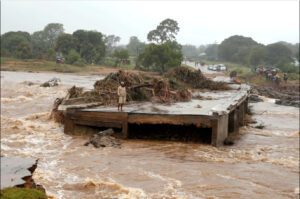
In 2023, Cyclone Freddy, one of the strongest storms ever recorded in the southern hemisphere, claimed more than a thousand lives in southern Malawi and left hundreds of thousands displaced.
Guterres described the global failure to meet the 1.5°C target as “deadly negligence”, calling on nations to take urgent, collective action.
- Advertisement -
- Advertisement -
“Even if fully implemented, current national climate commitments would put us on a pathway well above two degrees of global warming,” he said.
He outlined a three-part plan to limit the overshoot’s damage namely, peaking global emissions immediately, cutting them deeply this decade, accelerating the phase-out of fossil fuels, slashing methane and protecting forests and oceans.
COP30 is being billed as an “implementation COP”, intended to move from promises to tangible results.
For Malawi, that means better access to climate funding, renewable energy investment and support for adaptation in agriculture, housing and infrastructure.
For the first time, the conference is being held in the Amazon, one of the world’s most diverse and critical ecosystems, in the city of Belém.
This story was produced as part of the 2025 Climate Change Media Partnership, a journalism fellowship organised by Internews’ Earth Journalism Network and the Stanley Center for Peace and Security.