Billions of kwachas will soon begin flowing into constituencies under the newly reformed Constituency Development Fund (CDF).
And a growing chorus of lawmakers, civil society actors and governance experts is warning of a dangerous gap. The money will be moving but the rules are not.
As of Thursday, the government had yet to publish operational guidelines for the reformed CDF.
“This is chaos. The money will be channelled to councils but the councillor is not there, the Member of Parliament (MP) is not there. It is just the District Commissioner handling everything,” Lilongwe Msinja South legislator Francis Belekanyama warned in Parliament.
His remarks captured a broader concern that the absence of guidelines could open the door to abuse, misallocation and weak accountability at local level.
- Advertisement -
The current vacuum stems from a major legal and policy transition.
In June 2025, a Constitutional Court ruling invalidated the role of MPs in administering CDF, forcing the government to redesign the system.
Since then, authorities have promised new guidelines to govern the reformed CDF but say these will only be finalised after consultations with key stakeholders.
While consultations continue, implementation will not wait. The 2026–27 budget has already been passed, meaning the government is legally permitted to spend allocated funds.
- Advertisement -
- Advertisement -
Reports indicate that in some districts, officials are improvising, with councils, MPs and councillors uncertain about who has authority to approve expenditure.
The result is a patchwork system where decisions risk being made inconsistently or without sufficient oversight.
“CDF has a dark history of abuse and it was clear that guidelines should be in place well before rollout. The law is clear and the courts reinforced it,” Centre for Social Accountability and Transparency (Csat) Executive Director Willy Kambwandira says.
Kambwandira, whose organisation has monitored the fund for years, warns that the current vacuum risks reviving long-documented failures in its management.
He further cautions that the use of CDF resources without updated guidelines exposes public funds to misuse, weakens accountability and undermines value for money.
In earlier assessments during the transition, he warned that administering the K5 billion allocation without firm rules could bring chaos.
“Reliance on outdated or unclear frameworks risks political interference, weak accountability and misuse of funds, a combination that has historically plagued the programme,” he said.
These warnings draw on Csat’s previous reviews, which the organisation says describe a troubling pattern in how CDF has operated without strong controls.
“Generally, CDF has been fraught with abuse and substandard projects with no value for money,” Kambwandira said.
Among the weaknesses identified were ineffective grievance mechanisms and limited citizen oversight.
“There are no safe platforms for handling community grievances related to CDF projects or funds,” he said, adding that district councils often avoid monitoring projects for fear of political repercussions.
In some cases, this has led to procurement irregularities, according to Csat assessments.

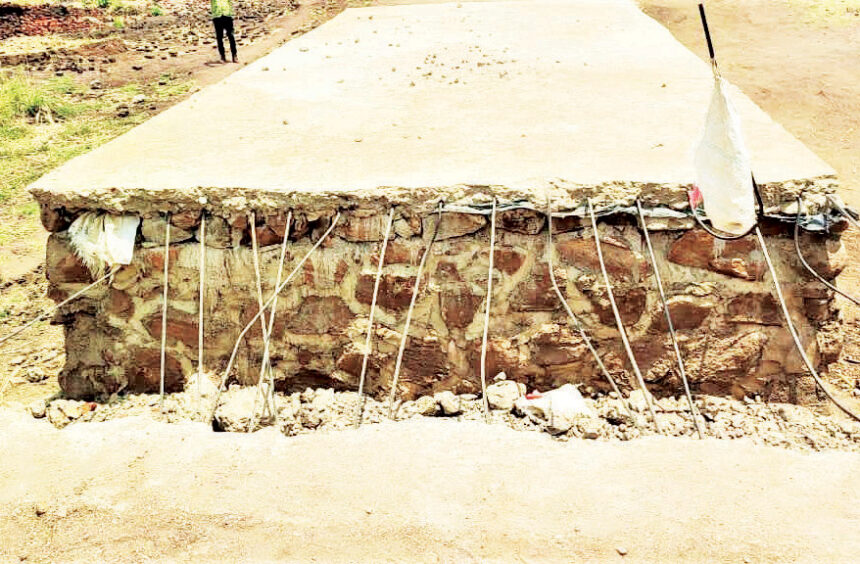
“Some MPs were single-handedly hiring contractors. This has resulted in substandard projects and we want that to change,” Kambwandira said.
Taken together, the findings suggest that without clear and enforceable guidelines, the same patterns of abuse, poor workmanship and weak accountability are likely to re-emerge.
Beyond policy debates and institutional warnings, the greatest stakes lie at community level.
With each constituency allocated K5 billion, the reformed CDF represents a significant injection of development funding into Malawi’s rural areas.
Observers say that, if properly managed, the fund could transform communities by building schools, improving health facilities, upgrading roads and supporting livelihoods.
However, in the absence of clear guidelines, that promise is overshadowed by concern.
Equally troubling is the risk of elite capture, where influential individuals or local power structures dominate decision-making and divert resources towards politically or personally beneficial projects.
“This must be addressed seriously because it has happened before. That is why we insist on having the guidelines,” Kambwandira said.
In Parliament, the lawmakers have already cautioned that the lack of guidelines threatens accountability and proper implementation across constituencies.
Apart from Belekanyama, others, including Dowa East MP Richard Chimwendo Banda, have described the situation as precarious and that councils are already handling funds without clear guidance.
“This is dangerous because controlling officers may find themselves in trouble for using the money without guidelines,” Chimwendo Banda said.
Civil society organisations have also raised concerns not only about the delay but about the process itself.
They have called for inclusive consultations, arguing that public participation is essential to prevent abuse and ensure the fund benefits communities.
For its part, the government has sought to calm fears, insisting that the delay is procedural rather than political.
“This is not a political issue. The government understands the importance of the guidelines and we cannot implement CDF projects without them,” government spokesperson Shadric Namalomba said.
Authorities maintain that consultations are necessary to produce a robust framework.
Yet this assurance sits uneasily alongside the reality that funds may soon begin to be accessed and used at council level