
By Thomas Chilaya:
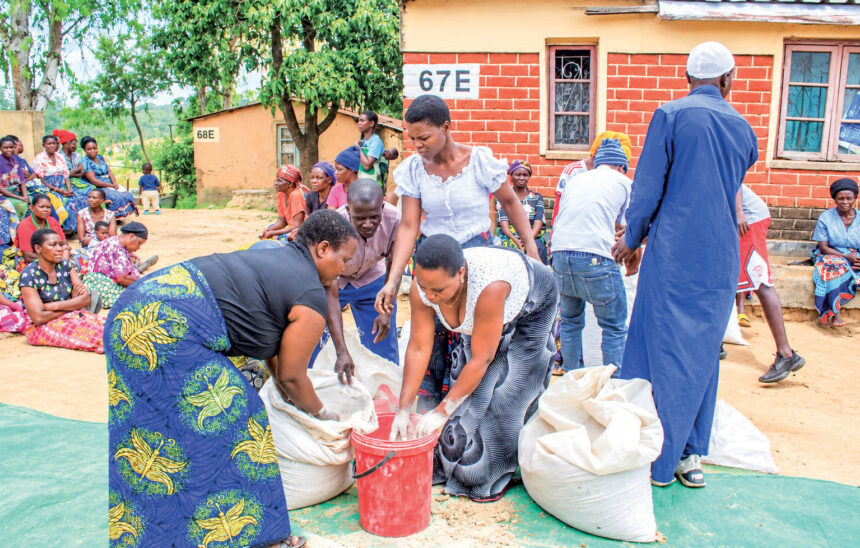
In Che Emma Village under Traditional Authority Kapeni in Ndirande, Blantyre, a group of farmers is demonstrating how simple ideas and locally available resources could transform smallholder farming.
Through the Ndirande Mountain Farm Organisation, farmers are learning to make Mbeya fertiliser by combining organic materials with small quantities of chemical fertiliser.
The organisation’s chairperson Ahmad Eleven says the initiative aims to improve soil fertility, increase food production and reduce the cost of agricultural inputs by making better use of materials available in local communities.
Eleven says the project was also designed to help farmers get greater value from the fertiliser support they receive.
- Advertisement -
“The initiative aims to improve soil fertility, increase crop production, strengthen food security and help farming families earn more from their produce,” he says.
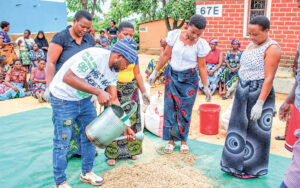
The organisation recently held a community farming event where farmers were trained to prepare and use organic fertiliser, with an emphasis on combining locally available materials with chemical fertiliser.
Eleven said the approach could enable a relatively small quantity of chemical fertiliser to benefit more farmers, with the organisation estimating that about 1,280 farmers in the area could benefit.
“Instead of sharing one 50-kilogramme bag of government-subsidised fertiliser between two farming households, we can use it to produce about 250kg of Mbeya fertiliser for farmers to use in their gardens,” he said.
- Advertisement -
- Advertisement -
Eleven said the approach could also encourage farmers to view fertiliser as an input for improving production rather than something to sell.
“When farmers see that they can use a small amount of fertiliser to produce more fertiliser and increase production, they may have less reason to sell their fertiliser coupons or inputs,” he said.
At the core of the initiative is the belief that farming communities can make better use of resources that are often overlooked.
Organic materials such as animal manure, maize husks and other farm waste can be incorporated into fertiliser production instead of being discarded.
This could help turn waste into a useful agricultural resource while returning nutrients and organic matter to the soil.

Village Head Che Emma, Jonathan Chizombwe, says the initiative is encouraging farmers to work together and make better use of resources available in their communities.
“The skills farmers are learning could help them continue making the fertiliser in future farming seasons. As farmers teach others, the practice could spread to more households and communities,” Chizombwe says.
He adds that the knowledge can also benefit young people growing up in farming families.
“Young people can learn that soil, organic materials and food production are connected, and that farming is not only about applying chemical fertiliser but also about taking care of the soil,” he says.
However, Chizombwe indicates that continued technical support will be important to ensure that farmers produce and apply Mbeya fertiliser correctly.
“Proper guidance on the materials, preparation and amount to apply will be important to ensure that farmers get good results without damaging their crops or soil,” he says.
Assistant Agriculture Extension Development Officer for Lunzu Extension Planning Area in Blantyre District, Mercy Mdyetseni, said the approach could significantly increase the quantity of fertiliser available to farmers.
“One 50kg bag of NPK, when mixed with organic materials, can produce about 250kg, or five bags, of Mbeya fertiliser,” Mdyetseni said.
She said the approach could help farmers reduce their dependence on purchased chemical fertiliser.
“What starts with a small amount of fertiliser and locally available organic materials could become an important step towards stronger and more sustainable farming communities,” she said.
Mdyetseni said the benefits of the initiative should be measured beyond the amount of fertiliser produced.
“The project is also about improving the condition of the soil, making productive use of organic materials and helping farmers reduce the cost of farming,” she said.
Healthy soil is critical to sustainable food production. When soil loses nutrients and organic matter, crop growth can decline, forcing farmers to spend more money trying to restore productivity.
Organic materials can improve soil structure, help the soil retain moisture and provide nutrients needed by crops.
For smallholder farmers who depend on their fields and gardens for food and income, maintaining soil health could therefore have long-term benefits.
The approach could also provide environmental benefits by allowing farmers to reuse animal waste, maize husks, ashes and other organic materials as agricultural inputs.
This creates a cycle in which materials produced on the farm are used to improve the same land that supports food production.
For farmers facing high input costs, such an approach could help them stretch limited resources further.
One farmer, Elube Damiano from Ndirande, said the training had changed the way she viewed agricultural inputs.
“Instead of seeing agricultural inputs as something that ends after one season, we have learnt ways of making those resources go further,” Damiano said.
She said the knowledge could help farmers reduce some of the costs associated with crop production.

For Sarah Jimu Kudyakukoma, another farmer who participated in the initiative, the greatest value lies in the knowledge farmers can retain and share.
“We have gained useful farming skills that we can continue using and also share with other members of our communities,” Kudyakukoma said.
The potential benefits extend beyond individual farms. Improved soil health could contribute to higher crop yields, while increased production could help households meet their food needs and reduce expenditure on food.
Where farmers produce a surplus, they could sell part of their harvest to generate income.
If the skills being promoted in Che Emma continue to spread from one farmer to another, the initiative could help build a culture in which farm waste is treated as a resource, soil health receives greater attention and communities become better equipped to produce food using locally available resources.