By Francis Belekanyama:
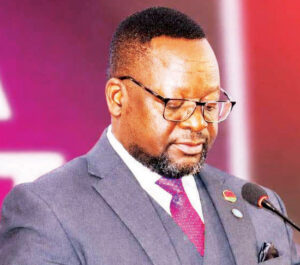
Sameer Suleman’s latest interventions raise an important question: Can a Speaker from the governing party exercise Parliament’s oversight mandate without fear or favour?
There are moments when parliamentary decisions become bigger than the individual issues that trigger them. The announcement by the Speaker of Parliament, Right Honourable Sameer Suleman, that Parliament has constituted 12 joint committees to investigate a range of public concerns is one such moment.
The inquiries cover matters involving National Oil Company of Malawi (Nocma), mining agreements, fertiliser coupons, Smallholder Farmers Fertiliser Revolving Fund of Malawi (SFFRFM), electricity, passport services, access to justice, prisons, pensions, fuel transportation, the Salima-Lilongwe Water Supply Project and procurement concerns at Blantyre Water Board.
These are not merely administrative matters. They concern public resources, essential services, economic opportunity and the daily experience of Malawians.
- Advertisement -
More importantly, they provide an opportunity to examine whether public institutions are functioning as they should and whether Parliament is prepared to exercise its constitutional oversight role with sufficient independence and seriousness.
The central issue, therefore, is not simply how many committees have been established; it is what this moment says about the independence of Parliament and, particularly, the office of the Speaker.
The answer must begin with the Constitution. The independence of the Speaker is not simply a matter of political courtesy or convention. Section 53(5) of the Constitution of the Republic of Malawi provides that: “The Speaker, the Deputy Speaker or any other presiding member shall discharge his or her functions and duties and exercise such powers as he or she has by virtue of that office independent of the direction or interference of any body or authority, save as accords with the express will and the Standing Orders of the National Assembly.”
Even more significantly, Section 53(6) provides that: “Notwithstanding that the Speaker, Deputy Speaker or any other presiding member has been elected as a member of a political party to the National Assembly he or she shall not be subject to the control, discipline, authority or direction of that political party or any other political party in the discharge of the functions and duties of that office and in the exercise of the powers of that office.”
- Advertisement -
- Advertisement -
That constitutional provision makes the present moment particularly significant. Right Honourable Suleman comes from the governing political establishment, yet his recent approach suggests that he is prepared to allow Parliament to ask difficult questions about the performance of public institutions, including institutions under the Executive.
That deserves recognition; not because the Speaker should be above scrutiny, but because parliamentary independence only has meaning when it is exercised precisely when scrutiny becomes uncomfortable.
The Speaker has also made an important distinction by emphasising that the allegations being investigated should not be treated as established facts. This is fundamental to credible parliamentary oversight. An inquiry is not a conviction. Oversight is not persecution. Accountability is not political punishment. The responsibility of Parliament is to establish facts, hear affected parties, identify institutional weaknesses and recommend corrective action.
The Nocma inquiry, for example, should establish how the reported transaction involving approximately K700 million occurred, who authorised it, what safeguards existed and whether those safeguards failed. The objective should not simply be to identify an individual to blame, but to determine whether the institutional systems protecting public resources are sufficiently robust.

The same principle applies to fertiliser distribution, particularly following the shift from the electronic system previously used to link beneficiaries to their National IDs back to the traditional printed coupon system. While the effectiveness of any subsidy programme ultimately depends on reaching the right beneficiaries with the right inputs at the right time, Parliament should now critically examine whether the return to printed coupons will strengthen or weaken transparency, beneficiary verification, distribution efficiency and accountability.
The key question is not simply how many coupons are printed or distributed, but whether the printed coupon system can deliver greater effectiveness, reduce opportunities for duplication and leakage, and provide better value for public resources than the electronic system it replaced.
Mining raises an even broader national question. Malawi’s mineral resources must generate lasting value for Malawians. Parliamentary scrutiny should therefore examine the transparency of mining agreements, revenue collection, environmental protection, community benefits and opportunities for Malawian businesses to participate in the value chain. The question is not only what Malawi exports, but what Malawi retains.
The electricity sector presents a similar challenge. With generation, transmission and distribution functions operating through separate institutional arrangements, Parliament should examine whether this structure remains the most efficient for Malawi. The key question is whether maintaining multiple institutions is delivering better value, reliability, affordability and access for households and businesses; or whether greater institutional consolidation could improve efficiency and accountability.
Water is equally fundamental. Concerns involving Blantyre Water Board and delays in the Salima-Lilongwe Water Supply Project demonstrate that accountability extends beyond major financial transactions. It also concerns whether institutions entrusted with essential services are being governed effectively and delivering for the people they serve.
For ordinary Malawians, government is experienced through water from a tap, electricity in a home, a passport application, a pension payment, a court case or the treatment received in a public institution. That is why parliamentary oversight matters.
The Speaker’s intervention regarding the Amaryllis Hotel inquiry reinforces another important principle: parliamentary oversight must lead somewhere. Parliament cannot demand accountability from the Executive while allowing its own inquiries to remain unresolved indefinitely. Reports must be completed, evidence assessed, recommendations considered and implementation followed.
At the same time, urgency must never replace due process. Parliamentary committees must remain professional, impartial and evidence based. Every affected party should have a fair opportunity to be heard and conclusions should follow evidence rather than political expectations.
Ultimately, the question is not whether the Speaker belongs to the governing party. The question is whether, once elected Speaker, he is prepared to act as Speaker of Parliament rather than as Speaker of the government. If he does so, he will not be weakening the government. He will be strengthening the institutions that make the government accountable, responsive and ultimately more effective.
A strong Parliament is not the enemy of a strong Executive. It is one of the foundations of one. The 12 inquiries, therefore, present an opportunity that goes beyond the individual matters before them. They offer Parliament a chance to demonstrate that oversight can be independent without being partisan, rigorous without being vindictive, and courageous without being reckless.
Malawians should neither celebrate prematurely nor dismiss the process as political theatre. Let the committees investigate without fear or favour. Let evidence determine conclusions. Let affected parties be heard. And, most importantly, let recommendations be implemented.
The Speaker has opened the files. Now Parliament must have the courage and independence to follow where the evidence leads.
*The author is a Member of Parliament