By Jimmy Chazama:
The mango tree at Chitowo Trading Centre in Dedza has seen many afternoons. It stands at the edge of a busy local market, its broad leaves casting cool shade against the glare of the sun.
Around it, the air is thick with the smoky aroma of roasted maize and the damp scent of rain-soaked earth.
Vendors shout prices, their voices competing with the laughter of children weaving through stalls stacked with ripe fruit.
Beneath the tree, men lean over a wooden bawo board, stones clattering in rhythm as they play the traditional game.
- Advertisement -
From a nearby shop, the familiar tune of Aumvere Fungo drifts out, its melody drawing gentle nods as the men sway while playing.
Then a girl in her wrapper and headgear walks past. The game stops. The stones fall silent.
“Miss Malawi is passing,” someone whispers. Another scoffs: “She cannot be Miss Malawi. She does not speak good English. She is just a village girl who can never be Miss Malawi.”
That silence under the mango tree is more than idle talk. It raises a question about who gets to carry the country’s crown and whether the nation’s beauty pageant still reflects the soul of its people.
- Advertisement -
- Advertisement -
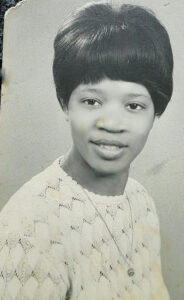
In the 1960s, the Miss Malawi pageant was more than a show. The country’s first president, the late Kamuzu Banda, took a keen interest in supporting it through his regime. Government financing and involvement ensured the pageant respected local norms.
Scouts travelled district by district, community by community, ensuring every corner of the nation was represented. Chiefs and officials sat on committees, giving the crown authority and reach.
The rules were strict. Miniskirts were banned and cultural respect was enforced. Yet the competition gave village girls confidence. It reflected their values rather than mocking them.
Edna Akuda, who was crowned the first Miss Malawi at the age of 19, remembers the experience vividly.
“Beauty pageants should provide opportunity for inclusive participation by working closely with government and respecting culture so that people from other countries can appreciate it,” Akuda says.
Akuda also urges organisers to exercise caution in how contestants are treated after the event.
She warns that the confusion that sometimes follows pageants can harm participants.
The former beauty queen adds that organisers must ensure contestants are not left vulnerable because of what they experience during preparation, the event itself and the aftermath.
“Sometimes people misinterpret the intention. Simply appearing on stage and presenting oneself can be wrongly interpreted as immoral, which is not the case.
“Organisers should manage the narrative because such perceptions can discourage girls from rural areas from participating. No one should feel afraid of taking part because of concerns about stigma or exploitation after the pageant,” Akuda says.
Mary Exilder Banda Tambala, the 1974 First Princess, echoes that memory.
“Beauty is what the girl carries in terms of Malawian culture. During our time, scouting was done in each district, then at regional level and finally at national level. There was fair competition. Even in dressing, contestants wore outfits that reflected our culture,” Tambala says.

Today, resources are limited and scouting does not always reach many rural districts.
Unlike during the Banda era, government support is not as visible, leaving gaps between rural and urban involvement. Yet the vision remains. Every district must be represented on the national stage.
The Miss Malawi Organisation, which currently spearheads the pageant, acknowledges the challenge.
Spokesperson Stephen Mdala says last year, they tried to reach as many districts as possible, but resources limited their efforts.
“Our vision is to see every district represented because Miss Malawi should be a crown for the whole nation, not just the cities. We are committed to making the pageant a symbol of identity, not imitation,” Mdala says.
He adds that with adequate resources, they would be able to reach every district in the country during scouting.
From Chitowo, Falida Maliseni voices the frustration.
“Our area has beautiful ladies, but because of lack of exposure, they cannot compete. We only hear about Miss Malawi on the radio. We do not have smartphones, only small keypad phones to make calls.
“Where can we read information about Miss Malawi? We think Miss Malawi is for urban people only, but I believe we should also be involved,” she says.
Village Head Chingalire, Ben Mankhamba, who is also a veteran musician and culturalist, believes chiefs can help bridge the gap.
“There are girls in villages who want to compete, but they do not know where to start. Others fear being laughed at when they return home. If organisers want the crown to unite the nation, they must involve culture in dressing and the catwalk. Beauty is not just about clothes, it is about how a girl carries herself with respect.

“If resources are a challenge, then let chiefs help. We can scout in our areas and ensure every district sends a contestant. That way the pageant will truly belong to Malawi,” Mankhamba says.
The younger generation sees the debate differently.
Memory Mike, a secondary school student, frames it as a clash of standards.
“A beauty pageant comes from Western culture; it is not a traditional practice. If the pageant requires contestants to follow Western criteria such as education, language or dressing, that could sideline certain individuals.
“I do not think that is the fault of the pageant. Rather, the country needs to meet certain standards to compete globally,” Memory says.
Her solution is practical.
“Introduce Miss Secondary School so that students become aware early. Winners could then have easier access to contest for Miss Malawi.
“On the pageant’s side, organisers could improve advertising and cater for expenses for those who want to contest but lack funds. This would promote inclusivity,” she says.
Jane Mwalwanda, another Gen Z voice, agrees but adds realism.
“Although we want village girls to be involved, we must remember the world is becoming modern. The queen needs to look confident because she represents Malawi outside the country.
“This can change through boot camps and other training before the grand finale. Contestants from rural areas can be polished and prepared while still carrying their culture with pride,” she says.
Some voices argue that if Malawi focused only on cultural dress and ignored Western fashion standards, the country might struggle to compete on the Miss Universe stage.
The pageant celebrates national costumes, but evening gowns and interviews often follow international trends. The challenge is to blend tradition with modernity and present Malawi’s identity without losing global appeal.
Another suggestion is to introduce a separate pageant called Miss Rural Malawi, where village girls could showcase their culture without the pressure of international standards.
Such a contest could celebrate traditional dress, language and values, giving rural communities pride and visibility while complementing the national Miss Malawi crown.