The passing of the Access to Information (ATI) Bill was supposed to mark the demolition of the frontier between citizens in general and journalists in particular and public officers who keep, on behalf of Malawians, information in their custody.
Instead, the opposite has happened, with a chasm created instead of a bond.
For the most part, this has been because some cantankerous public officials have chosen to remain steeped in their old order of selfishness.
This is despite that Parliament passed the ATI Bill in December 2016, when Peter Mutharika was in power.
The President then approved it in 2017.
- Advertisement -
However, it was clear, from the beginning, that there was some resistance to ensure that Malawians started enjoying the rights enshrined in provisions of the Act, such that four years elapsed before government officials could move a finger on the ATI Act; that is, before they could ensure execution of its provisions.
It was like giving with one hand while taking with the other.
Only after the June 23 2020 court-ordered presidential election did the government, now under the administration of Lazarus Chakwera, who succeeded Mutharika in the election, show interest in implementing the ATI law.
This happened on Friday, September 11 2020, when the Information Minister made an official publication of the law.
- Advertisement -
- Advertisement -
Finally, citizens in general and journalists in particular could breathe a sigh of relief.
The long wait between the passing of the ATI Bill in December 2016 and the granting of the President’s seal of approval— after he assented to it—was over.
Or so Malawians thought!
It had taken persistent efforts by Media Institute of Southern Africa (Misa)-Malawi for the powers-that-be to find sense in the argument that putting the Act into operation would be good for Malawi.
Lest we forget. Six years ago— in 2018 to be precise— Misa-Malawi had reached the enough-is-enough point and threatened to take the legal route to force the government’s hand on operationalising the law.
As such, when the-then Information minister Gospel Kazako indicated that President Lazarus Chakwera had decided to put the law into effect because he believed that easing access to information would feed into his administration’s development goals, some quarters received the statement with a pinch of salt.
They felt that his hand had been forced on the issue.
Maybe they were right.
Today, some public officials still view the news media with suspicion, such that they can afford to tell a journalist to “forget it because I do not answer to you” or because “I owe you no explanation”— and get away with it.
But that is not what the law says.
In short, the ATI law provides for a specified period of time during which public officials are under obligation to provide information.
In fact, the law stipulates that at the expiry of 15 days, the information seeker may take action if those who are in custody of the information do not provide a response or explain why they have not provided the information to the one who asked for it.
The case of Immigration Department
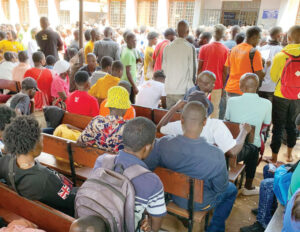
A typical case of such reluctance is what happened at the Department of Immigration and Citizenship Services when its passport issuing system malfunctioned but public officials there kept mum on the actual cause of the glitch.
When whistle blowers informed The Daily Times that the system had been hacked, the publication became a subject of vitriol.
To make matters worse, public officials at the department remained mum on the real cause of passport issuance delays, finding no problem in appearing to be somewhat detached from the problem.
This is despite that, for a month, the department had been experiencing network problems, prompting it to halt the provision of some of its services.
The department later issued a statement in which it indicated that it had suspended its operations to pave the way for maintenance works on the system.
But this publication finally let the cat out of the bag, revealing that the system had been hacked three weeks previously.
The hacking, according to ICT Association of Malawi President Clarence Gama, meant there was unauthorised access to the system.
“It means that someone who has no authorised access to a system has control over that system.
“The danger for an Immigration [Department] of any country to be hacked is that you are likely to have an unauthorised design or production of passports. The hackers can also steal or tamper with some important information and use it to their own advantage,” Gama said.
To buttress the precariousness nature of the problem, he said some hackers lock authorised users out of a system, some demand money such that they release the system after being paid while others completely destroy a system, such that recovering it depends on whether one has a backup system.
Still, Immigration Department officials felt no obligation to tell Malawians the truth.
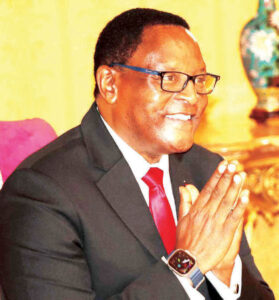
It took President Lazarus Chakwera to reveal to Malawians that digital mercenaries had infiltrated Malawi’s passport printing system and that they were demanding an unspecified ransom pay-out, a development that had resulted in the suspension of issuance of passports.
Chakwera disclosed this in Parliament when responding to concerns raised by Blantyre City South East legislator Sameer Suleman when he contributed to the State of the Nation Address that Chakwera delivered on January 9.
But the President said while Suleman was right to vocalise the frustration that Malawians were feeling from not being able to have their passports printed, it was unreasonable for Suleman to demand the heads of some Cabinet ministers.
“As such, since I was the one who called for seriousness in the way we address such matters, I am duty-bound to inform Malawians that the printing of passports has been suspended because the system at Immigration was hacked by digital mercenaries who infiltrated the system.
“This is a serious national security breach and though Malawi is not the first in the modern world to be the target of and suffer this kind of cyberattack, we have taken very decisive steps to regain control of the situation,” Chakwera said.
Gray spot
While Malawi has made strides in promoting press freedom, with Chakwera reiterating—when he hosted media practitioners to a breakfast at Kamuzu Palace in Lilongwe yesterday—that he values the same, challenges remain.

For instance, Misa-Malawi Chairperson Golden Matonga Thursday cited anti-press freedom laws that are still in the statutes in the country.
The other issue pertains to the allocation of enough resources to the Malawi Human Rights Commission (MHRC), which is the oversight body for ATI Act implementation.
Since the ATI Ac t was operationalised in 2020, MHRC has not been provided with enough resources.
And, just last month, human rights organisations lamented what they described as the deteriorating state of press freedom, citing arrests, intimidation and harassment of journalists.
They raised the sentiments following the arrest of journalist Macmillan Mhone over a story he allegedly wrote in August last year.
According to a statement released by Misa-Malawi, Mhone, who is now working for Nation Publications Limited, wrote a story on the Malawi24 online platform that pertained to businessman Abdul Karim Batatawala.
In the statement, the media body said police sources had claimed that the journalist had been charged with “publication of news likely to cause fear or public alarm”.
But, in a statement, Matonga said the media body did not believe that the story in question caused fear or public alarm.
“We, therefore, demand the immediate and unconditional release of Mhone and we believe that arresting and detaining a journalist over a story is a violation of media freedom and the public’s right to know,” Matonga said.
And, in another statement, Centre for Human Rights and Rehabilitation Executive Director Michael Kaiyatsa said the arrest, which followed the arrest of another journalist Gregory Gondwe earlier this year, sent a worrying message about the country’s commitment to human rights, including the rights of journalists to report freely ahead of the upcoming September 16 2025 tripartite elections.
“We, therefore, join Misa Malawi and other institutions in calling for the immediate and conditional release of Mr Mhone. We further urge the Tonse Alliance administration to halt its crackdown on independent journalists and to respect, protect and fulfill rights of journalists to carry out their work without fear of reprisals,” he said.
Hope
Whatever the case, Malawian journalists can, as they commemorate World Press Freedom Day under the theme ‘Guardians of Democracy: Championing Media Independence for Credible Elections’ today, hope for a better tomorrow as Chakwera has denied ever issuing orders to the Malawi Police Service to arrest anyone or a journalist in the country.
“I know that in the past year, some misguided law enforcement agents have tried to damage Malawi’s international reputation as a place where the press is free to publish what it likes, and some of you have fallen for the lie that such misguided police abuses are meted out with orders from here, but I can assure you that I have never once issued orders to the police to arrest anyone, much less a journalist,” Chakwera said.
Chakwera expressed displeasure at public servants who abuse his office or misuse his name to induce police officers to act on their behalf instead of acting in accordance with the law.
“So I want to say it again today, Malawi is a free country and its freedom includes that of the press, which is enshrined in the highest laws of our land. So, mine is merely an appeal to you, journalists, to use this freedom to tell better stories and stories that inspire the world to support our gallant fight against the monster of climate change,” Chakwera said.
Fine and well— just that nothing, not even words from the powers-that-be, can prepare citizens for how the President’s words end.
As they say, talk is cheap and, again, a promise is a house politicians can, at any time, break rudely.