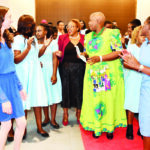
Minister of Finance Simplex Chithyola Banda on Friday signed a financing agreement with the European Union totalling €116 million (about K140 billion).
The package, according to EU ambassador Rune Skinnebach, focuses on two aspects: economic transformation and social protection.
Speaking after the signing ceremony that took place in Lilongwe, Skinnebach said the increasingly complex challenges that the country has been confronted with in recent years is what led EU to come up with the assistance.
“I sometimes wonder if these challenges are what a ‘perfect storm’ looks like. We’ve witnessed a combination of catastrophic weather events becoming more frequent, outbreaks of diseases like cholera and polio layered on top of the Covid-19 pandemic, and the repercussions of Russia’s invasion of Ukraine, which have affected the cost of essential imports.
“All of these factors have inevitably exacerbated several critical indicators, such as sluggish economic growth, soaring inflation, unsustainable debt levels, a widening fiscal deficit, and misaligned exchange rates. I’m not revealing anything new here,” Skinnebach said.
- Advertisement -
He then said the newly signed agreement will be part of the solution and a step towards addressing the pressing issues.
In the signed agreement, there are a set of measures which propose a gender-responsive social protection programme and a homegrown school-meals programme.
There will also be social safety net programmes not just aimed at shielding the most vulnerable from external shocks but also enhance their value as human capital in a more diversified economy.
Another action of this plan centres on improving the business climate and investment conditions, including efforts to combat corruption and enhance the management of public funds.
- Advertisement -
- Advertisement -
Chithyola Banda has since warned against abuse of the money.
“I’m urging those responsible for implementation of the programmes to make sure these funds are used prudently and for its intended purpose.
“To ensure that there is accountability, I have directed implementers to furnish my office with monthly and quarterly reports on how the programmes are progressing,” Chithyola Banda said.
He also took advantage of the ceremony to request the EU to resume direct budgetary support to Malawi.
“Our budget is always faced with a deficit, sometimes it is even up to 40 percent because our revenue and the resources we get cannot meet all budgetary requirements. We really need the injection from development partners and this is why I’m making that call,” he said.
Skinnebach said to get budgetary support Malawi will have to fulfill the eligibility criteria one of which is to enter the IMF’s Extended Credit Facility (ECF).
“We are very much aware of the situation in Malawi and the fiscal pressure,” Skinnebach said.
The European Union ceased direct budgetary support to Malawi nine years ago.