By Steria Manda, contributor:
At Namitete Trading Centre, located 49 kilometres west of Lilongwe, a group of three young agri-preneurs are doing their utmost to prevent an “agro brain-drain” by motivating young people to take up farming as a profession.
Malawi suffers a problem of brain drain as thousands of energetic and productive young people migrate to countries such as South Africa in search of greener pastures.
Even fresh graduates are leaving the country with skills needed to develop and sustain the economy.

But some are playing their parts in contributing to Malawi’s development. They include Montfort Kwatani, Mike Muwawa and Conscious Jabesi.
- Advertisement -
Through Mizu Organic Farmers, a yet-to-be-registered non-governmental organisation operating at Namitete Trading Centre, the three are demonstrating to communities and young people, in particular, that it is possible to earn a decent living out of farming.
They say their first mission is to meet a growing demand among middle and high-class citizens who want to eat good food and maintain their health.
“We were particularly concerned about the surge of cancer, diabetes, and other conditions associated with the consumption of chemically-treated foods,” Jabesi says, speaking on behalf of the trio.
Mizu Organic Farmers produces a wide range of seasonal high-value crops characterised by indigenous and exotic varieties, which include black jack, amaranths, pumpkin leaves, bananas, chard, kale, leek, beetroot, radish and lettuce on their approximately 2.5 acres.
- Advertisement -
- Advertisement -
The organisation has invested in both livestock and horticultural crop enterprises with over 10 different types of vegetables and seven species of livestock to produce globally-proven healthier, less toxic food under strict principles of organic agriculture.
They aim to expand and grow into a leading agribusiness market server for local and exotic organic food and ultimately into an ecological agri-tourism entity.
Jabesi says several factors motivated them to take this path, including the distaste for environmentally degrading farming practices and the negative impact of conventional farming methods on the environment.
Global trends towards organic and natural products also played a role in motivating the trio to venture into organic farming.
They saw organic farming as a way to promote sustainable agriculture and provide access to nutritious food options.
It was this desire that led them to apply for a call for young entrepreneurs that was presented by Access Agriculture.
The three were interviewed and later selected as one of the Entrepreneurs for Rural Access (Era) teams. They were trained in digital extension and equipped with a smart projector that has over 4,000 farmer-to-farmer learning videos on agroecology, which are available in local Malawian languages.
“We were awarded a smart and innovative projector that has an Android interface, which can access the internet and can be installed with educational applications,” Jabesi explained.
He further disclosed that using the Access Agriculture videos has helped them extend their services to youth clubs that expressed interest in commercialisation and community development through agriculture.
Being an ERA team has increased and enhanced these young men’s connections with countless potential clients, both individual farmers and farmers’ cooperatives. They have networked with international institutions like GIZ on the advocacy and implementation of sustainable agricultural related technical skills.
The trio has travelled and connected with vibrant rural a urban youth who share the same interest on entrepreneurship, leveraging the Access Agriculture library with its many videos in local languages, including Chichewa, that showcase innovative agriculture business ideas.
Recently, the team partnered with a Welthungerhilfe (WHH) project in Malawi and reached out to more than 3,000 farmers within four months showing the Access Agriculture videos.
This helped in raising awareness among the youth on the social and economic opportunities existing in the agriculture sector.
Jabesi revealed that they were overwhelmed with the response and requests from young people who wanted the team to visit them to showcase more videos on agroecology to their clubs.
Although this is good news, the group is struggling to keep up with demand because of limited resources.
Jabesi disclosed that the group does not have adequate land and they lack capital and market access to allow them to expand their services.
“Securing land for farming has been difficult due to land tenure systems, land fragmentation, and competing land uses such as large-scale commercial conventional farming close to our organic farm has posed a great concern and risk for our production system.
“Access to finance is another major hurdle. Our farm was established on a few savings and we lack savings or collateral required to obtain loans or invest in necessary resources such as land distant from other large-scale conventional farms and equipment,” he said.
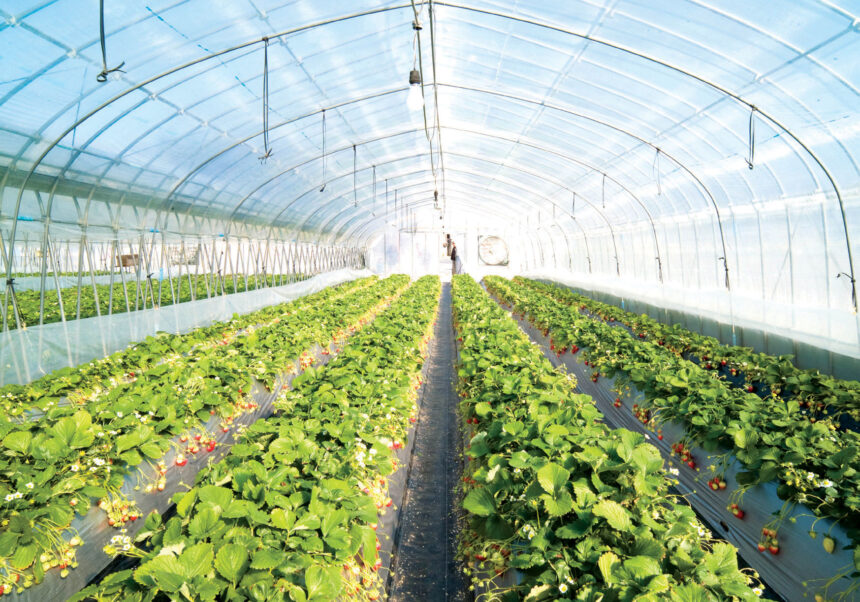
The group also lacks access to modern agricultural technologies such as irrigation systems, greenhouses and machinery, which can improve productivity and profitability.
The Food and Agriculture Organisation (FAO) of the United Nations notes that technology has the potential to not only enhance the production and safety of food, but also create employment opportunities for rural populations, particularly women and youths, and protect natural resources.
“Factors that reduce the availability of farm power compromise the ability to cultivate sufficient land and have long been recognised as a source of poverty, especially in sub-Saharan Africa.
“Increasing the power supply to agriculture means that more tasks can be completed at the right time and greater areas can be farmed to produce greater quantities of crops while conserving natural resources,” FAO says.
Jabesi suggests that government and development partners should expand access to finance for youthful farmers.
He also suggests that there should be a huge investment in modern farming technologies such as climate-smart agricultural practices and sustainable intensification techniques.
“The government should also strengthen agricultural market infrastructure, including storage facilities, cold chains, transportation networks and market information systems on organic agriculture, to reduce post-harvest losses and improve market access for youthful farmers,” he says.