






The way Malawian voters have been shunning Presidential, Parliamentary and Local Government elections, it is as if they have suddenly realised that polls are a mantrap—a way of making elected officials richer than the voters, most of whom languish in poverty.
For evidence that Malawians have been shunning elections, one only has to read Afrobarometer Dispatch No. 148, in which Joseph J. Chunga provides the summary.
The findings were published on May 30 2017
Its telling title is ‘Malawians Losing Confidence in Elections, Demand Reforms’.
For starters, Afrobarometer is a pan-African, non-partisan research network that conducts public attitude surveys on democracy, governance, economic conditions and related issues in African countries.
- Advertisement -
To come up with its findings, Afrobarometer conducts face-to-face interviews in the language of the respondent’s choice with nationally representative samples.
In Malawi, the Afrobarometer team is led by the Centre for Social Research at the University of Malawi.
In the case of the findings in question, researchers interviewed 1,200 adult Malawians in December 2016 and January 2017.
“A sample of this size yields country-level results with a margin of error of +/-3 at a 95 percent confidence level,” Afrobarometer indicates.
- Advertisement -
- Advertisement -
The key findings of the research were thus: “The proportion of Malawians who say elections are the best way of choosing the country’s leaders dropped from 71 percent in 2014 to 57 percent, continuing a decade-long decline. Four in 10 citizens (42 percent) now say the country should adopt other methods of choosing leaders because ‘elections sometimes produce bad results’.
“…Respondents say low turnout in by-elections is largely due to a combination of factors relating to dissatisfaction with elections and politics in general: lack of interest or voter fatigue (22 percent), the feeling that voting makes no difference (17 percent) and the belief that elections are not free and fair (12 percent).”
In short, voter apathy is real and, if the problem is not addressed, may continue to cast long shadows on Malawi elections.
This is an undesirable situation, considering that the country will, later this month, hold elections in some wards.
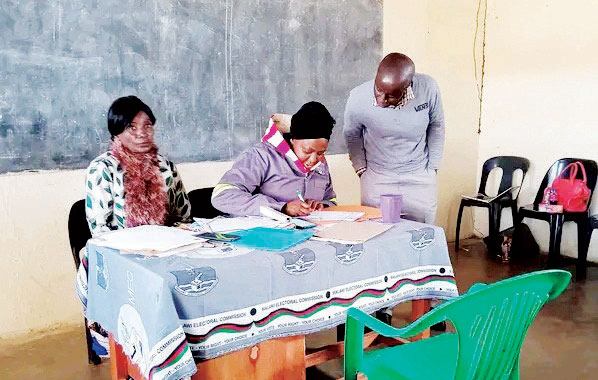
Late last month, the Malawi Electoral Commission (Mec) opened voter registration centres for voters’ register verification in Chilaweni Ward, Blantyre, and Mwasa Ward in Mangochi District.
Mec spokesperson Sangwani Mwafulirwa indicated, in a statement, that the exercise, which was being conducted from 8am to 4pm in the wards, was meant to give people a chance to participate in the elections.
“The Malawi Electoral Commission is informing the public that it will open voter registration centres in Mwasa Ward in Mangochi Municipality and Chilaweni Ward in Blantyre to allow new registered voters [to] inspect their details in the voters’ register. Registered voters that registered for the 2019 elections may also verify their names.
“Centres will be opening from 8am to 4pm on the following days: Chilaweni Ward from 23 to 24 June 2024 (two days). Mwasa Ward from 24 to 26 June 2024 (three days). All registered voters who lost their voter registration certificates are also encouraged to go to the centres where they registered to have their voter registration certificates replaced,” Mwafulirwa said.
That meant it was game on towards polling day in the two wards.

Shortly after, Mec Chairperson Judge Annabel Mtalimanja visited the wards as an expression of Mec’s commitment to ensuring that eligible voters exercise their right.
She urged eligible voters in Mwasa and Chilaweni wards to take the bye-elections seriously “by coming out in large numbers on polling day”.
Mtalimanja, who monitored the voter verification exercise at St Augustine Primary School in Mwasa Ward— which is in Mangochi North East Constituency—said Mangochi people could show the world that they take part in democratic processes such as voting. .
“Every election is important. As such, there is a need for people to participate in elections by voting because refraining from voting can compromise the quality of the electoral process.
“We, as Mec, are happy that people are coming out to verify their names, which is very encouraging, but, most importantly, we want them to vote on polling day so that they can elect their representative,” Mtalimanja stressed.
Her sentiments came when, recently, voter apathy marred by-elections in Dedza and Karonga districts, where less than 50 percent of registered voters participated in voting.
And, speaking when she visited some sites in Chilaweni Ward in Blantyre Rural East Constituency, Mtalimanja said there was a need to join hands in encouraging eligible voters to be turning up for voting on polling day.
Speaking at Mapazi Primary School, where nine people have expressed interest in vying for the vacant position of councillor, Mtalimanja said Malawians should take advantage of elections to express their innermost feelings.
In Chilaweni, candidates have been selling themselves to the electorate.
These are Reuben Lungu of the opposition Democratic Progressive Party, Mulira Junior Mulira Bello of Mubviwachilungamo Revolutionary Party, Maxwell Chipiliro Phiri (independent), Lucius Kasonya of Leadership With Compassion Party, Ted Knox Kaliati of People’s Development Party, George Chiluma (independent), Anthony Mitambo of United Democratic Front, Benard Gravel Nteche of Malawi Congress Party, among others.
Only one of them will make it to Blantyre District Council.
In March this year, Centre for Democracy and Elections (Cede) urged State and non-State actors to join hands in addressing the problem of voter apathy.
It cited political violence as one of the factors that contribute to voter apathy.
“This trend [of political violence] is worrisome because it creates political no-go zones for certain parties in some regions and districts of the country. This will also result in increased regionalism in voting, tension and divisions in the country.
“Violence negatively affects the participation of women, the elderly and people with disabilities in the electoral process. The police have to act professionally to safeguard the electoral process,” said Cede technical specialist Aloisious Nthenda.
Executive director for Church and Society of the Blantyre synod of the Church of Central Africa Presbyterian Reverend Master Jumbe concurred with Cede, saying State and non-State actors need to join hands in efforts aimed at empowering Malawians to appreciate the importance of voting.
Malawi Police Service spokesperson Peter Kalaya joined calls for violence-free elections.
He, therefore, asked politicians to tame youths that indulge in violence.
Meanwhile, Youth and Society Programme Coordinator Mwandida Theu has indicated that they are engaging the country’s youths with the goal of getting every young person who is eligible to vote interested in voting.
“We want to participate in efforts aimed at defeating voter apathy.
“The youth are central in elections and democratic processes. The 2025 Elections present the youth of Malawi with a great opportunity to meaningfully participate in choosing leaders of their choice. They have an opportunity to advance their agenda,” Theu said.
This is happening at a time the Malawi Union for the Blind (Mub) has accused Mec of sidelining its members, in terms of information dissemination on new electoral laws, a development it says may affect the turnout of its members.

Mub Executive Director Ezekiel Kumwenda said since the laws were passed by Parliament, the majority of people with visual impairment have had no access to the messages in braille format.
“We, as a union, heard about the new laws but the problem is that many people out there are not aware of the new laws, which may affect their participation in electoral processes,” Kumwenda said.
Of course, Mwafulirwa recently indicated that Mec was committed to inclusive elections, such that it targets everyone.
Mwafulirwa indicated that Mec would not solely rely on braille messages as not all visually impaired individuals read materials in braille format.
“So, apart from braille messages, we will include human visits. Mec will employ constituency civic and voter education assistants for all constituencies in the country.
“Their job is to conduct voter education and they will be based at [local] councils. One of their tasks is to visit marginalised groups, be it in their homes, and teach them about elections,” Mwafulirwa said.
Among other things, the new electoral laws stipulate that voting starts at 6am and closes at 4pm.
They further indicate that voting day is a public holiday.
However, talk is cheap. Only when Mec does the needful can people start believing that the days of voter apathy could be short lived.