
By Rebecca Chimjeka Matemba:
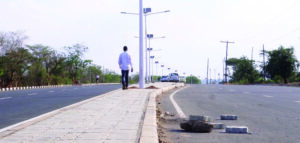
New roads, new street lights, new everything. That is the sight of modern Lilongwe as contractors finalise construction works on road projects that have been taking place in the administrative capital for the past three years.
But how long will this last, considering that just a few years ago, solar panels installed at the seat of government, Capital Hill, were vandalised in less than a year?
This occurred despite the tight security at Capital Hill, which is situated not far from the Malawi Police Service (MPS) headquarters in Area 30.
Many residents of Lilongwe City are hoping that the authorities will take necessary steps to safeguard the solar street lights and signposts being installed along Lilongwe M1 Road.
- Advertisement -
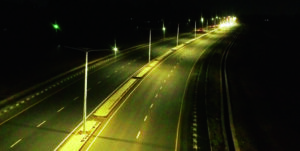
Investigations by Times show that Lilongwe City Council has no bylaws specifically targeting individuals caught vandalising road accessories.
In Malawi, vandalism is prosecuted under the Penal Code. Although the Penal Code does not contain a specific section titled ‘vandalism’, acts of vandalism fall under general offences.
Section 312 of the Penal Code addresses malicious damage to property. This section makes it an offence to intentionally or recklessly damage or destroy someone else’s property without lawful excuse, with offenders facing fines or imprisonment depending on the severity of the damage.
Motorcycle operator Jackson Banda from Chimoka expressed fears about vandalism and pleaded with those considering vandalising road signs and poles not to do so.
- Advertisement -
- Advertisement -
“For once, leave the solar panels and the poles alone. We cannot afford to lose such developments to vandalism,” Banda said.
He expressed concern that these developments may not last long due to rampant vandalism in the city, as many road signs have already been removed.
Banda suggested that the government should impose life imprisonment on individuals found vandalising poles and solar panels.
Pedestrian Mwawi Jere lamented several instances of vandalism concerning road signs. He suggested that the use of metal for signposts should be discontinued to deter vandalism.
“They should use composite road signs and cement-made electric poles,” Jere said.
Roads Authority (RA) spokesperson Portia Kajanga said these concerns are shared by many.
“RA is a service provider; we are not an enforcer. There are other institutions that play that role. Perhaps we can inquire from them on how they will protect these items,” Kajanga said.

Mayor of the City of Lilongwe, Ester Sagawa, mentioned that the council’s strategic plan is comprehensive, addressing both security and sustainability concerns for Lilongwe’s newly developed infrastructure.
“We will be partnering the Malawi Communications Regulatory Authority to install CCTV cameras for surveillance that not only deters vandalism or theft but also enables rapid response in case of incidents,” Sagawa said.
She disclosed that if vehicles were involved in accidents causing damage to the new infrastructure, their insurance companies would be engaged to ensure prompt repairs or replacements.
“This will foster responsibility among citizens and businesses while ensuring that the city’s infrastructure remains in good condition,” the mayor added.
MPS spokesperson Peter Kalaya said they are already implementing strategies to ensure the security of both new and old public property in rural and urban areas.
“Among the strategies, we will provide vehicle and foot patrols in these areas,” Kalaya said.
He added that it is their mandate to ensure such property is protected from vandalism and theft.
Furthermore, Kalaya reiterated that several strategies are being employed to ensure the safety of public property, including empowering community members to take care of such property in their vicinity.
He added that the police will soon begin raising awareness among the general public.
For example, at Capital Hill, where most government offices are located, all the electricity poles and their solar batteries were removed long ago and have yet to be replaced.
Times discovered that the vice president’s office and the main gate near the guardhouse had a pole and solar panel vandalised.
On a brighter note, the solar street lights along Area 49 Presidential Way have lasted because the solar panel and light are integrated into one component, leaving no separate battery component vulnerable to vandalism.
However, a logistics officer for China Civil Construction Corporation, which is working on one of the road sections, McDonald Chisale, said the composite road signs made of plastic may not complement the design of the new road.
“It is unfortunate that there have been deliberate attempts by locals to pull down the structures. This is why we have employed people who monitor the installation of the poles and road signs day and night,” Chisale said.
He indicated that vandalism has been rampant in the area due to scrap metal dealers who are entering the business without proper registration by the government.
Minister of Transport Jacob Hara recently announced that the government would install cameras in all designated areas across the country to enforce traffic regulations.
He added that this development was one way of ensuring road safety, thereby reducing road accidents.
RA recently indicated its intention to table a bill imposing tough penalties on those found vandalising road infrastructure.
The bill aims to reform and amend laws relating to the development, management and maintenance of public roads.
RA has identified the Central and Southern regions as major culprits in terms of road sign vandalism.
Kajanga stated that this practice is undermining the country’s development efforts.
“Vandalism of road signs and bridges is increasing; we are spending billions of Kwacha to replace road signs. We have tried sensitising the public through campaigns aimed at ending this malpractice, to no avail,” Kajanga said.
She added that vandalism is negatively affecting the country’s development progress.