For 23-year-old Madalitso Mbewe, pregnancy in 2024 was not a journey taken lightly. She attended every antenatal clinic, never missing a visit when health workers came to her village in Elunyeni.
She knew her expected delivery date, November 5, 2024 and prepared for it.
But life rarely follows dates on paper.
“On October 17, I started feeling labour pains,” Mbewe recalls.
Living at the foot of Zuwe Hills, she and her family scrambled in the night to find transport to Mpherembe Community Hospital, about 30 kilometres away. By the time they found transport, it was too late.
- Advertisement -
“We stopped by the roadside. That is where I delivered painfully,” she says.
At dawn, bruised and exhausted, she continued to Mpherembe.
“Luckily, doctors told me the baby had come out fine but it should not have happened that way,” she says.
Her story is not isolated.
- Advertisement -
- Advertisement -
Twenty-year-old Hope Ngulube also followed all guidance during her antenatal check-ups, held monthly in a small shelter in her area. Her labour, too, started earlier than expected.
“It was in the middle of the night. I was terrified being my first pregnancy,” she also recalls.
Her husband tried calling for a bicycle taxi but heavy rains had left the poor road nearly impassable.
With no transport and no skilled help, Ngulube delivered at home, assisted only by elderly women from the village.
When she later reached the hospital, she was fined K30,000 for delivering at home.
In Elunyeni, a Health Surveillance Assistant (HSA) estimates that at least seven women deliver at home or roadside each year.
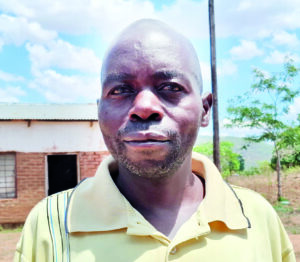
The HSA, Edward Nyondo, says the area has over 10,000 people and due to the distance to the nearest facility, it needs a hospital.
“When a woman delivers at home or on the roadside you cannot guarantee the survival of the baby or the mother. It is risky because the people helping them are unskilled,” Nyondo says.
In 2015, the community celebrated the start of an outpatient department (OPD) but construction stalled at window level three years later.
Today, the structure stands as a reminder of unmet promises, according to resident Rhoda Mkandawire.
Mkandawire, who chairs a local women-led vaccine advocacy group, said the lack of a nearby facility affects both expectant mothers and children.
“Imagine a child suffering from malaria or cough. We have to travel to Mpherembe. A bicycle taxi costs K15,000 one way. Many cannot afford that so they walk four hours and that is one way,” she says.
Mkandawire adds that women are willing to mould bricks and provide labour if resources are made available to complete the stalled hospital.
Another resident, Lexina Ngwira, states that the area has six HSAs, showing the size of the population that needs support.
Communication during emergencies is also difficult due to poor mobile network coverage.
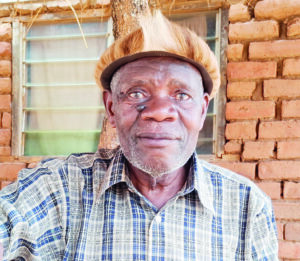
Local leader Inkosana Zebedia says several attempts to lobby for support have yielded no results.
“The OPD was started by the late Goodall Gondwe when he was member of Parliament for the area. We feel isolated but on this issue, we ask the new administration to help us finish the hospital,” Zebedia says.
Elunyeni is surrounded by two hills, Kalama and Zuwe, and two rivers, Gonela and Tchesamo, which flood and cut off roads, worsening access to healthcare.
Access to clean water is also a major challenge.
In 2007, a solar-wind hybrid system provided electricity to 150 households and 12 communal water points but the project failed and the equipment was removed.
A study by one Christopher Hara titled ‘An Overview of Community Energy Systems in Malawi’ attributes the collapse to poor maintenance, low community participation and an inadequate tariff system.
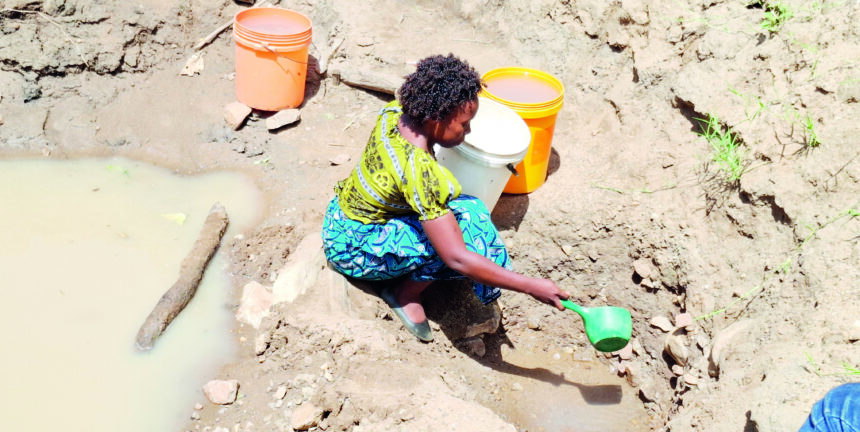
Today, most households rely on shallow wells.
When The Daily Times visited the area, three women were waiting to draw water from one of the wells, which they use for drinking, cooking and washing.
Nearby, cattle grazed and sometimes drink from the same source, according to Monica Nkhoma, one of the women at the well.
“We have one borehole but it is not enough. The population is too big. In 2008 we had clean piped water but that is gone. Only the structures remain,” Nkhoma says.
Mzimba North Health Promotions Officer, Lovemore Kawaye, acknowledges that hospitals in the district are not enough for the growing population.
Kawaye says a health facility should serve 10,000 people and be within five kilometres of the community.
“In most areas, the population is large and facilities are more than 10 kilometres apart. So, we provide outreach clinics in hard-to-reach areas because we cannot construct health facilities everywhere they are needed,” he says.
Commenting on the situation, Malawi Health Network projects officer, Kumbesi Gomile, says Elunyeni reflects a wider national crisis where health facilities are too few, too distant and severely under-resourced.
Gomile further says Malawi cannot claim progress towards universal health coverage when communities remain cut off from basic care.
“We call on the Ministry of Health, local authorities and elected representatives to act with urgency. People of Elunyeni have waited for too long,” he says.
Speaking in Parliament recently, Minister of Health Madalitso Baloyi said the government is committed to improving access to health facilities nationwide.
Baloyi said the population continues to grow while health facilities remain limited.
She said government will continue mobilising resources to upgrade existing facilities and construct new ones, and is assessing areas where people walk over seven kilometres to access services.
For many women in remote communities like Elunyeni, childbirth remains life-threatening.
The situation also challenges Malawi’s commitment to Sustainable Development Goal 3, which focuses on ensuring healthy lives and promoting wellbeing for all as 2030 approaches.