


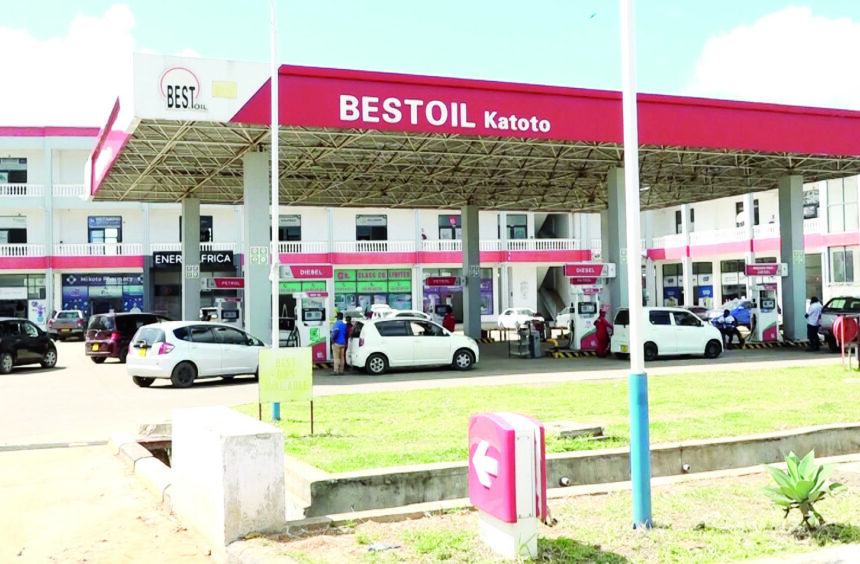
The fuel price increase by 41 percent has caused panic among consumers.
The Malawi Energy Regulatory Authority (Mera) has adjusted petrol prices from K3,499 to K4,965 per litre, and diesel will be selling at K4,945 per litre, from K3,500.
In a statement dated January 19, 2026, signed by Mera Board Chairperson Lucas Kondowe, regulator says the review was based on landed cost of both petrol and diesel for January 2026 which went beyond the trigger threshold, necessitating the upward adjustment to sustain importation of the products.
Mera said the decision also followed the abandonment of the Automatic Pricing Mechanism (APM) for fixed pricing regime over the past three years.
The regulator said the latter proved commercially unsustainable and resulted in trading losses, fuel import challenges and failure to remit critical levies such as the Road Levy and Rural Electrification Levy.
- Advertisement -
“Under the APM, petrol and diesel qualify for price revision for the month of January 2026, since the landed cost of both products is beyond the ±5% trigger band. Therefore, to sustain importation of petrol and diesel, pump prices of these petroleum products have been adjusted upwards effective 20th January 2026,” reads the statement in part.
But reacting to the price adjustment motorists and consumers say while the fuel price jump was expected, the 40 percent margin should have been implemented gradually to cushion poor Malawians from imminent reciprocal price increases in household commodities.
“We agree that fuel prices have been artificial in Malawi and an upward change was imminent, but there was need to exercise caution because this will affect people. The salaries we receive have not changed but this increase will also mean increases in other household needs. For example, sugar prices will also go up, soap prices will also go up because transport prices will increase,” Victor Kimberly Sangaloti, a Blantyre-based motorist, said.
Another motorist, Aphia Lionde, said preparing consumers for an imminent fuel price rise and gradual implementation of 10 percent monthly would have been ideal.
- Advertisement -
- Advertisement -
Minibus Owners Association of Malawi National Chairperson Felix Mbonekera cautioned transport operators against exploiting the situation through excessive fare hikes.
“While the increase is huge, operators should be reasonable. As an association, our guidance is that prices should be adjusted in a staggered manner, ideally between 10 and 15 percent, to safeguard the welfare of Malawians,” he said.
Economist Mervin Banda said although the price hike was anticipated, the government should have considered spreading the increase over time.
Banda said it is unfortunate that this would trigger non-food inflation to start elevating at a time food inflation was slowing down.
“There was no requirement to hold fuel prices only for them to skyrocket. What has happened now is going to put extremely vulnerable people in great challenges. It is also important to remember that we have been operating in an environment that has been highly speculative especially in the maize prices. So, to see nonfood inflation increase it is something that is shameful. This is because when we were dealing with food inflation, the expectation was that interest rates would also drop, but this cannot happen when non-food inflation is elevated,” he said.
Economics Association of Malawi President Bertha Chikadza has called on government to adopt a gradual and predictable fuel price adjustment mechanism to avoid sudden shocks to households and businesses, warning that without adequate cushioning and complementary policies, fuel price hikes risk doing more harm than good to economic stability and social welfare.
“Malawi adopted market liberalisation and as such, prices adjust accordingly. However, how much the increase would be passed on to Malawians is something government can consider mitigating against by putting cushioning mechanisms.
“How and when these adjustments are made matters greatly. Our advice to government would be: Adopt a gradual and predictable adjustment mechanism to avoid sudden shocks to households and businesses like what we have experienced now. Strengthen social protection measures to cushion the most vulnerable groups. Improve transparency and communication so the public understands the economic rationale behind the adjustments,” Chikadza said. Mera increased petrol and diesel pump prices by an average of 33.16 percent in October 2025, three days before President Peter Mutharika was sworn in.