By Imam Wali:
The air at a notorious drinking joint in Dedza is thick with the fermented tang of kachasu.
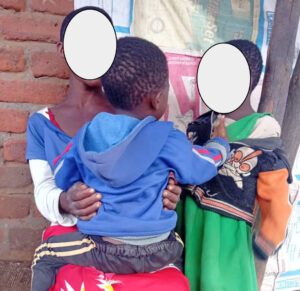
Here, three-year-old Nelson is being silenced by her mother, Namakwasa, with a sip of the local spirit. It is a haunting image of a stolen childhood, but also a data point in a much larger, more clinical tragedy.
“Of course, he is at the stage where he is supposed to be in pre-school. But I am struggling to feed the family and finding it even more difficult to send the child to school,” Namakwasa laments.
The single mother of two shifts the blame to government.
- Advertisement -
“It is unfair to blame me for negligence because in the area where I come from, there is not a single community-based care centre [CBCCs].
“Private CBCCs are available, but the challenge is tuition fees. Government has to construct centres for our children to access education at an early stage,” she says.
While the Tashkent Declaration sets a global benchmark of 10 percent of a national education budget for early learning, Malawi’s commitment is negligible.
In the 2025-26 fiscal year, the allocation was a paltry 0.08 percent of the sector. Out of the K90 billion required to reach international standards, the government provided just K1.06 billion, a massive shortfall that left the state spending only K353 per child for the entire year.
- Advertisement -
- Advertisement -
The situation has deteriorated in the newly presented 2026-27 national projections.
Despite a record total expenditure of K10.978 trillion, funding for Early Childhood Development (ECD) service delivery was slashed to just K300 million.
This represents a collapse to 0.023 percent of the education budget. At this level, the state is effectively investing only K100 per child per year.
Today, 81 percent of Malawian students suffer from learning poverty.
Like nine-year-old Abigail, they are physically present in school but unable to grasp basic literacy by age 10.
They are casualties of a silent sabotage where only 30 percent of the country’s 13,213 childcare centres are purpose-built and the rest are dilapidated structures.
Abigail has repeated Standard 2 twice. She sits among 144 other children in a single classroom at Nadzitheme Primary School, struggling with a curriculum that assumes she already knows how to hold a pencil.
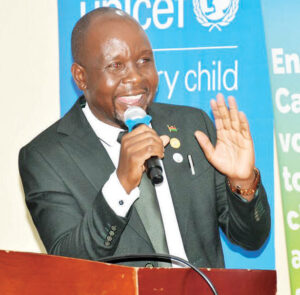
Because the nearest centre was five kilometres away, a distance impossible for a toddler, Abigail missed the critical developmental window before the age of five.
“Because of the distance, we had no choice but to keep her at home until she was older. Now she is paying for those lost years,” her mother laments.
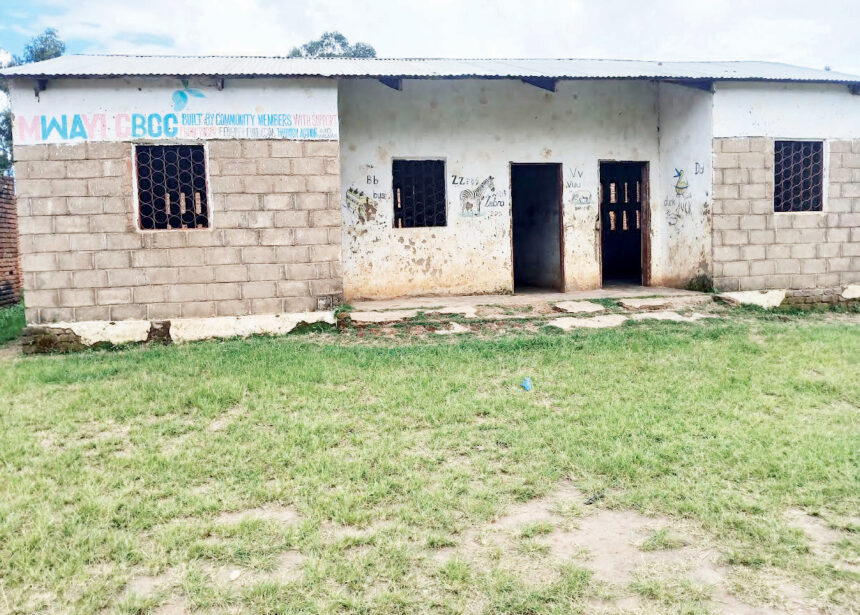
In the jurisdiction of Senior Chief Kachindamoto in Dedza, Mwayi CBCC has been turned into a Sunday church where the community prays for the hope the state has failed to provide.
Senior Group Village Head Hinda admits the community reached a breaking point before the facility was closed.
“The caregiver left because the village was struggling to pay her. We had no books, no pens and no toys. Then the hunger came. We could not even offer a cup of porridge to keep the children going,” he recalls.
The 49,000 caregivers, the frontline workers against learning poverty, are largely untrained and unpaid.
Chifundo Kalichero, a former caregiver, says the situation became untenable.
“The authorities kept promising us a stipend but never fulfilled it. Nurturing children is a calling, but caregivers also have to feed their own families,” she says.
Naine Mkandawire, a Unicaf University lecturer, argues that while Malawi’s policies are sound, they suffer from a large implementation gap.
Mkandawire proposes strategic shifts including transitioning from a volunteer model to a stipend-based system, replacing one-off workshops with continuous local training and establishing a professional certification ladder.
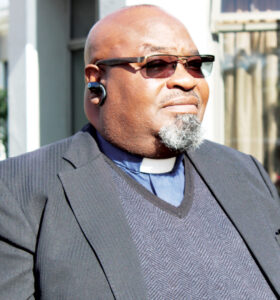
Chairperson of the Early Childhood Advocacy Taskforce, Reverend Nase Chunga, has expressed dissatisfaction with the 2026-27 ECD allocation of K300 million, describing it as a non-child-centred plan.
“Several issues worry us. The latest national budget presented by the Minister of Finance has increased by 49 percent, yet instead of seeing a proportional rise for sub-sectors such as ECD, our funding has declined,” Chunga says.
Chairperson of the Parliamentary Committee on Social and Community Affairs, Savel Kafwafwa, has promised to push for more resources.
“This sector needs K90 billion annually to function effectively. We will engage the Ministry of Finance to address the funding gap and ensure child protection is taken seriously,” Kafwafwa said.
During the recent ECD Advocacy and Awareness Week, Minister of Gender, Children, Disability and Social Welfare Mary Navicha said government remains committed to implementing the National ECD Policy by strengthening coordination, professionalising ECD caregiving and expanding community-based services, particularly in rural and underserved areas.
She described ECD as a key priority in Malawi, saying it is foundational to the country’s human capital and long-term progress.