Sustainable Development Goal (SDG) 4 talks about achieving quality education and ensuring inclusive, equitable and quality education that promotes lifelong learning opportunities for all learners by the year 2030. However, as CATHY MAULIDI writes, some things are better said than done.
Quality education entails having qualified teachers, sound curricula and, most importantly, a good learning environment.
Despite that this is the goal, this is not the case at Mthawira Primary School in Ntchisi District, as SDG 4 sounds like wishful thinking to those that are conversant with what takes place at the school.
The school, which has 1,665 learners, has eight classroom blocks only.
To make matters worse, head teacher for the school Mcloyd Mchizampheta admitted that the blocks are in bad shape.
- Advertisement -
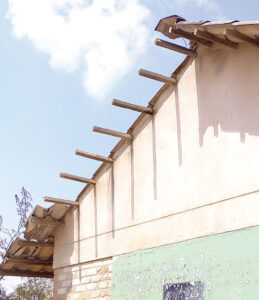
The school, which is 20 years old, has dilapidated tiled roofs, which are posing a threat to the lives of learners.
As the head teacher narrated, the tiled roofs, which are also broken, have been falling on learners, threatening their lives, a development that has increased the number of learners dropping out of school.
“The tiles are, as you can see, broken and since they are heavy, they fall on learners when there is a crack. Just months ago, they injured one of the learners, who was hospitalised for days on end after tiles broke his arm,” Mchizampheta said.
The head teacher further said the broken tiles are disturbing classes as whenever there are heavy winds, learners are sent home to avoid a disaster.
- Advertisement -
- Advertisement -
“We cannot let children learn in those classes when there are heavy winds; that would be dangerous because the tiles are blown off by the winds and, in some cases, fall into the classroom. So, to avoid accidents, we send the learners home, a thing that disturbs learning,” he said.
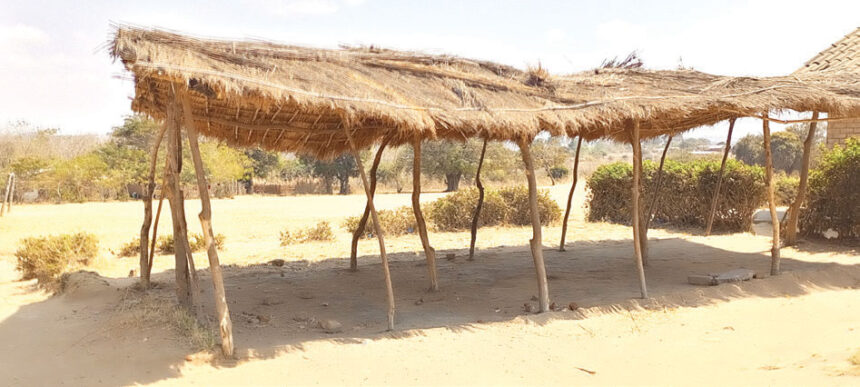
A visit to the school also established that school authorities and parents have erected a grass structure which is being used as a classroom for standard 1 to 3 learners.
According to the parents teacher association (PTA), the structure was erected to keep junior learners safe.
“They are little kids and having them in the tiled roofed classes may be putting their lives in serious danger because they can’t protect themselves in times of danger,” said a member of the PTA.
According to the head teacher, the other reason they erected the grass structure was to beat the problem of shortage of learning space.
“We have 1,665 learners and eight classrooms, meaning that one classroom has to accommodate over 200 learners, which is not possible as the blocks are designed to accommodate 60 learners,” Mchizampheta said.

Thirteen-year-old Innocent Kalengenya, who was in standard 7 in the previous term and is now going into standard 8, said the school’s poor shape has affected their education.
“The dilapidated roof tiles have affected us because whenever there are heavy winds or rains, we are told to leave the school premises for our safety. So, most of the time, we stay home while learners in other schools continue learning.
“This, in the end, affects us as we fail to do well in examinations. First of all, we need to be safe for us to learn but learning in this type of environment affects us mentally,” Kalengenya said.
He appealed to the authorities to help renovate the school, which is now chasing away many learners as they continue to drop out.
“Government should help us. We really want to learn but this environment is not safe. A month cannot go without a roof tile accident. This is sad; we want to have this roof taken off and replaced with a steel roof. This roof is dangerous. One or two learners do not return to school after classes resume from a suspension,” he said.
PTA member Faida Chawina said the poor state of the school has affected learners’ performance.
“The learners are no longer doing well since they miss most classes. I’m talking about the rainy season, when learners are sent home each time there is rainfall. Sometimes when there is a dark cloud, teachers are afraid and just send the learners home. So, they are missing out on lessons,” Chawina said.
Our visit to the school also established that the school structure had cracks.
Learners at the school also fear that school blocks may one day collapse due to serious cracks on the walls.
Through a project being supported by Norwegian Church Aid and Dan Church Aid, called ‘Enhancing Citizen Participation in Local Governance and Development Process’— and whose main goal is to contribute to the fight against inequality through enhanced pro-poor budgeting, allocation and expenditure in the sectors of health, education and social protection— community members, learners and teachers summoned officials to seek answers to problems they are facing.
Those summoned included Ministry of Education officials, council officials and social and community development officers.
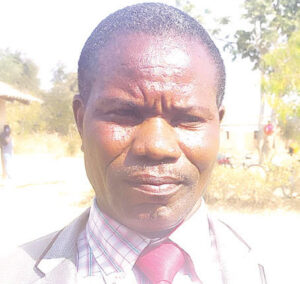
Primary Education Adviser in the Ministry of Education Emmanuel Chimombo represented the District Education Manager for Ntchisi at the meeting.
Chimombo said the ministry is aware of the problems the school is facing and that action will be taken.
“This school was constructed by the Department for International Development (DfID). As such, we informed the ministry’s headquarters to write DfID to inform them about the school’s condition and that was done.
“Problems facing this school have been there for some time. We are waiting for a response from DfID,” Chimombo said.
Meanwhile, District Community Development Officer for Ntchisi Emily Chipata has called for concerted efforts to assist the school walk out of its serious problems.
“The council is trying its best to source funds to help the learners,” she said.
Malawi Human Rights Resource Centre Capacity Development Associate Noel Msiska has since described the situation as a threat to the education of learners.
“It is pathetic to see the school in this condition in the 21 century. This school is in a dilapidated condition and can’t achieve quality learning outcomes. Learners here are being denied a quality learning environment. Something has to be done,” Msiska said.