Sub-Saharan Africa bears the highest global burden of HIV, accounting for nearly 65 percent of all people living with the virus.
Historically, access to HIV treatment in the region has relied heavily on imported medicines and diagnostic tests produced abroad.
To strengthen supply chain resilience and regional self-sufficiency, the World Health Organisation (WHO) has supported the development of locally manufactured, quality-assured health products.
This initiative is being implemented in collaboration with national governments, African manufacturers and global health partners including the Global Fund and Unitaid, a global health initiative that works to improve access to treatments, diagnostics and preventive tools for major diseases.
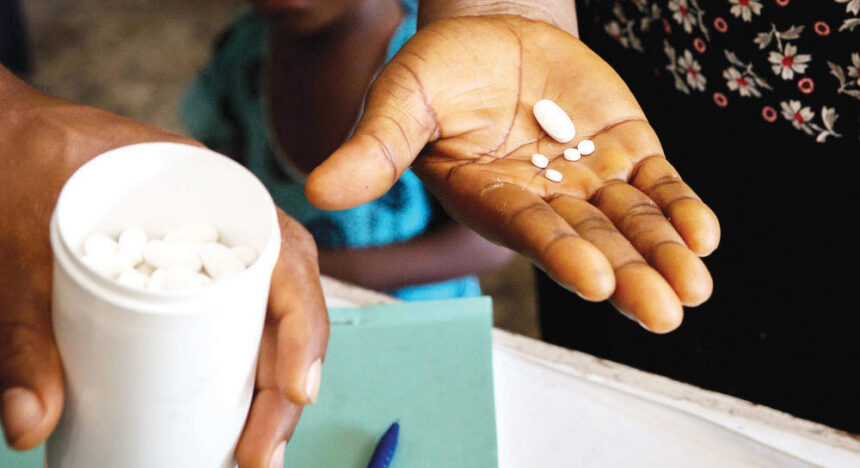
In 2023, Universal Corporation Ltd (UCL), a pharmaceutical company based in Kenya, became the first African manufacturer to receive WHO prequalification to produce tenofovir disoproxil fumarate, lamivudine and dolutegravir (TLD)—a WHO-recommended first-line antiretroviral therapy.
- Advertisement -
“Local production of quality-assured health products is an urgent priority. Each African manufacturer meeting WHO prequalification brings us closer to a more resilient, self-reliant and equitable health system,” WHO Director for Regulation and Prequalification, Rogerio Gaspar, says.
The Global Fund has begun procuring UCL’s TLD for use in Mozambique, marking the first instance of TLD being produced and supplied within Africa through a global procurement mechanism.
According to WHO, this forms part of the Global Fund– WHO collaboration under the NextGen market-shaping initiative, aimed at improving access to essential HIV services.
“The Global Fund’s procurement of African-manufactured first-line HIV treatment for Mozambique is a milestone in strengthening Africa’s supply chain systems.
- Advertisement -
- Advertisement -
“It will help ensure continuous treatment for people living with HIV,” WHO Director of Global HIV, Hepatitis and STIs Programmes, Meg Doherty, says.
WHO stresses that sustaining this progress requires more than local production. It depends on mechanisms such as advanced market commitments, equitable procurement policies and ongoing technical support.
The agency continues to advocate for a global health landscape where all regions can access essential medical technologies.
“Further progress hinges on prioritising African manufacturers within global supply chains and ensuring access to technologies that meet international standards of quality, safety and performance,” WHO adds.
The UN agency also recommends adopting low-cost, prequalified HIV rapid diagnostic tests (RDTs), particularly for the first test in national algorithms, to reduce costs while maintaining diagnostic accuracy.
Codix Bio, a Nigerian in-vitro diagnostics company, has received a sublicense to manufacture HIV RDTs using technology transferred from SD Biosensor.
This was facilitated by WHO’s Health Technology Access Programme and the Medicines Patent Pool.
“Local production of HIV RDTs will increase affordability and address vulnerabilities in the supply chain and delays in access,” Doherty explains.
To further mitigate stockouts and health workforce shortages, WHO encourages the integration of HIV self-testing into national strategies.
In its HIV response, Malawi has achieved the global 95–95–95 targets a year ahead of the 2025 deadline; an accomplishment hailed as a major milestone in its fight against HIV.
Chief Executive Officer of the National Aids Commission, Beatrice Matanje, recently announced the achievement at the launch of the UNAids Joint Programme Plan for Malawi 2025–2030 in Lilongwe.
She credited the progress to what she called strong political will, community leadership and international support.
The 95–95–95 targets refer to 95 percent of people living with HIV knowing their status, 95 percent of those diagnosed receiving treatment and 95 percent of those on treatment achieving viral suppression.
Matanje reported that, beyond meeting these goals, Malawi has seen a marked decline in HIV prevalence and Aids-related deaths.
However, she expressed concern over paediatric HIV treatment, saying only 58 percent of HIV-positive children aged 0–14 are currently receiving antiretroviral therapy.
“We must prioritise investment in paediatric HIV programmes,” she urged, calling for targeted support where the need remains greatest.
The UNAids Joint Programme Plan seeks to consolidate Malawi’s gains.
It aligns with the country’s National Strategic Plan for HIV and Aids (2023–2025) and comes amid mounting economic pressure, including a reduction in United States funding, Malawi’s largest HIV donor.
Matanje warned that continued progress could be jeopardised without sustained financial support.
“A sustainable, nationally owned HIV response depends on full implementation of national strategies, especially in the face of declining external funding,” she said.
Minister of Health Khumbize Kandodo Chiponda described the new plan as timely and strategic.
“It will help us safeguard our progress in HIV prevention and treatment while promoting national ownership and financial leadership,” Kandodo Chiponda said.