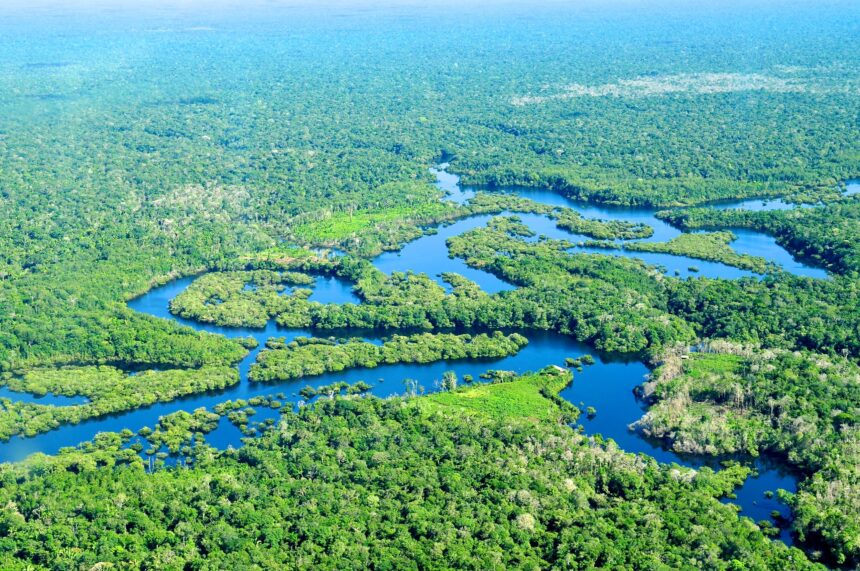
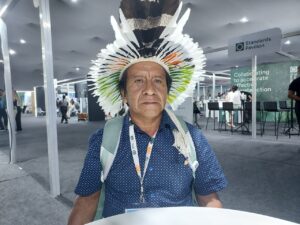
Indigenous communities have staged multiple protests at the UN Climate Change Conference in Belém, Brazil, calling for urgent action to protect their lands and livelihoods. ALICK PONJE, reporting through the 2025 Climate Change Media Partnership fellowship organised by Internews’ Earth Journalism Network and the Stanley Center for Peace and Security, spoke with Indigenous leader Sou Telmo Ribeiro Paulino from the Raposa Serra do Sol territory in the Amazon. Paulino shares how climate change is affecting their daily lives and why their calls for action can no longer be ignored.
Q: How have these protests at COP30 reflected the urgency of the challenges your communities are facing?
A: The protests show that we can no longer wait for change. We are raising our voices because the destruction of our lands is immediate and the effects of climate change are already affecting our communities. It is urgent that governments and organisations listen and act, not just discuss.
What the Indigenous people have done to conserve the environment is a great deal of work; we are very careful. We use the forest, but in a sustainable way.
Q: Could you explain how these sustainable practices are taught or passed down through generations?
- Advertisement -
A: Our knowledge is shared through daily life, by observing the forest, farming, hunting and fishing responsibly. Elders guide the young people, teaching them which areas to use and which to leave to regenerate. Every action is part of learning to live in harmony with the land.
When we work with small plantations, we farm in one place for two or three years and then we move to other places. We call these areas fields. The places we have used are left to reforest and over time the forest regenerates.
Q: What lessons from your conservation practices could countries like Malawi apply to protect their own forests and water sources?
A: Other countries can learn that sustainable use of land is possible if people respect natural cycles. Rotational farming, protecting springs and managing forests carefully can ensure that the land continues to provide food, water and resources for future generations. These lessons show that development does not have to destroy nature.
- Advertisement -
- Advertisement -
The springs of the igarapés (streams) are also important. We have several perennial igarapés in the region and in Indigenous territories. We take great care to ensure that they do not die or disappear. Over time, they will disappear if we do not look after them.
Q: How are communities responding to the pressures that put these springs at risk?
A: We monitor the springs constantly and educate everyone on their importance. We prevent pollution, control access carefully and resist outside interference that could damage them. Protecting water is as important as protecting the forest.
So, environmental conservation on Indigenous land is done in this way: taking care when using fire, taking care when managing the forest, so that not only we as human beings, but also the animals, can live in these areas, where we hunt and fish. Environmental conservation, for us, is therefore a way of working sustainably.
Regarding the climate, there have been many changes, largely because farmers once lived on Indigenous lands. They deforested and introduced cattle in areas where perennial springs had never dried. Because of the cattle trampling the soil, the springs died. Then the weather began to warm. Life within the communities changed. Rain no longer came at the right time. All this is the result of climate change. Human beings caused these changes.
Q: What long-term impacts have these climate shifts had on daily life within your communities?
A: Food production is less predictable, hunting and fishing patterns have changed, and water has become scarcer. Our traditions and routines are being disrupted, which affects not only survival but also our cultural and spiritual connection to the land.
In our lands, pollution was also an issue. Before the demarcation of Raposa Serra do Sol, our waters were contaminated with mercury and there were many diseases. We fought hard so that we could have an area where today we work on conservation and sustainability.
The climate will continue to change if we allow the deforestation of fields and rivers, and if we allow devastation of the forest through large-scale plantations. We have not done this and we are very careful so that, in the future, our people—our children and grandchildren—do not suffer the consequences of climate change caused by accepting large mining companies, soy plantations, rice farms and so on.
Q6: What message do you hope future generations will carry forward from the struggles and conservation efforts of today’s Indigenous leaders?
A: I hope that our children and grandchildren will understand that the forest, rivers and all life around us are not separate from us; they are part of who we are. I want them to continue caring for the land with respect and wisdom, to keep practising sustainable ways of living and to remember that protecting nature is not only for our survival, but for the wellbeing of the entire world.
We fight and work today so that the future generations can live with dignity, have clean water, healthy forests and a connection to the life that gives us everything.