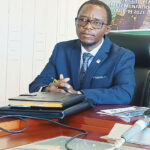



Today, I would like to celebrate Mussa Chiwaula, a patriotic Malawian and renowned disability campaigner. He is a rare gem and humble gentleman who continues to dedicate his life to the cause of fighting for the rights of persons with disabilities.
My earlier interaction with Chiwaula was during the formative years of my career, a couple of decades and half ago. As a young man who was in the process of curving out a niche in communications and public relations, I learnt a lot from him. That time, I was working at Malawi Council for the Handicapped (Macoha), now called Malawi Council for Disability Affairs.
One day, he invited me to accompany him to Gaborone, Botswana, for a weeklong international conference on disability. Little did I know that this development was going to be a turning point in my career. The trip accorded me an opportunity to get a global perspective on how to handle communications related to disability issues. Apparently, this was my first time to travel outside Malawi. In a plane for that matter!
Chiwaula was that time Executive Director for the Federation of Disability Organisations in Malawi (Fedoma), an organisation he helped found and served for over 14 years. Chiwaula now heads Southern Africa Federation of the Disabled (Safod), a leading Southern African disability-focused network engaged in the coordination of activities of organisations for disabled persons in the Southern African Development Community (Sadc) region. As director general, Chiwaula heads the Gaborone-based Safod secretariat, overseeing 10 Sadc countries including Malawi, Mozambique, Zambia, Zimbabwe, South Africa, Lesotho, Botswana, eSwatini, Angola and Namibia.
Over the years, Chiwaula has undertaken a wide range of disability-related research activities while championing disability issues across the Sadc region and beyond.
- Advertisement -
Despite all this, one would expect Chiwaula to be bragging about the high-profile post he holds. Probably, he knows that doing so would be a futile effort, especially in a society which has a penchant for looking down upon the achievements of persons with disabilities.
Years ago, in one of our rare interactions, Chiwaula shared a moving story about an athlete with disability who went abroad to compete in Paralympic Games. No one gave him a chance of even reaching the quarter finals. But this determined athlete made it up to the finals. He got a gold medal for his stellar performance. Local newspapers in the country where the Paralympic Games were held reported extensively about the exploits of this Malawian.
On the eve of departure, the athlete imagined the heroic welcome he was going to be accorded back home. He rehearsed on how he was going to conduct himself on arrival, possible questions that sports journalists were going to ask him and the type of response he was going to give. He was over the moon.
He arrived at the airport on a Saturday afternoon. The athlete disembarked the plane, flashing his gold medal while excitedly waving at the imaginary crowd at a distance. To his dismay, he was only welcomed by a handful of his relations. He was not accorded the heroic welcome he expected.
- Advertisement -
- Advertisement -
After narrating the story, Chawaula posed for a while, probably to gauge my reaction. In his usual calmness and baritone voice, he told me that one would have expected this athlete to be accorded a hero’s welcome. But his success story was hugely diminished by his disability, Chiwaula told me.
Chiwaula’s story may sound fictitious but it is a harsh reminder about how we, as a society, tend to downplay each other’s efforts, especially those of persons with disabilities in various spheres of life. We rarely laud each other.
On a number of occasions, the Malawi leader, Lazarus McCarthy Chakwera, has even lamented this attitude, asking Malawians to be lauding one another. Instead, we oftentimes focus on negativity. But psychologists contend that motivation is one of the driving forces behind human behaviour. We all want to be praised when we do something commendable. Compliments— be it in a family, group or at the workplace— help to motivate people, enhance one’s self-confidence and self-esteem as well as improve communication and relationships. For people with disabilities, compliments promote social inclusion.
While we continue to celebrate Malawians who have helped in boosting the image of the country through their exploits both within and abroad , let us also celebrate the success stories of people with disabilities.
On the other hand, we, as a society, should also strive to remove barriers— be they physical or psychological— which deter most people with disabilities from excelling in various spheres of life.
Above all, let us promote social dialogue among ourselves to avoid situations where other sections of the society might feel sidelined or discriminated against. Those in authority should strive to promote and embrace inclusive policies to fend off elements of favouritism, bias and nepotism
When all is said and done, it has to be reckoned that a country’s reputation is, among other factors, enhanced depending on how inclusive its policies are when it comes to rewarding or recognising the efforts of its people.