There are a couple of indicators that this year’s Affordable Inputs Programme (AIP) will be another disaster.
Crucial elements about the programme are still not clear a month away from the rainy season.
By the time this piece went to press, there was no indication of how much farmers who will benefit from the programme will be forking out for the inputs.
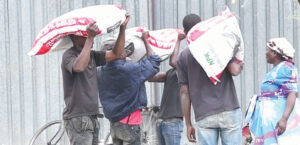
In fact, even before that, the list of who is going to access subsidised fertiliser, seed and livestock is not yet out.
Every vulnerable farming household is just hoping they will not be left out. Well, the scaling down of the number of beneficiaries, as announced recently by government, clearly shows that some of those who benefitted during the previous farming season will not benefit this time.
- Advertisement -
So, it was only necessary that the list was released early enough so that farmers can properly plan how they will access them.
There is another crucial element about the programme that is quiet unclear. We do not know how much farmers who will be considered to benefit from the subsidised inputs will be contributing.
The Ministry of Agriculture recently announced that the contribution will depend on the commodity prices and what is available for government to contribute.
The ministry went ahead to say that that farmers’ contributions would be announced soon.
- Advertisement -
- Advertisement -
The rainy season is approaching, but it appears not everything is already in place for the programme to roll out.
The Farmers Union of Malawi is worried that government’s failure to announce important decisions on AIP in time is putting farmers in a difficult position in terms of planning for the season.
It appears AIP will never be implemented without any hurdles.
For years now, we have been seeing a programme that is being marred with irregularities which end up disenfranchising vulnerable farmers, leading to food insecurity.
There have been cases where some farmers have ended up accessing the subsidised inputs way into the growing season, after their maize—the main crop for which AIP fertiliser is provided—has grown to the size where applying fertiliser will be a useless activity.
All this points to poor planning on the part of the Ministry of Agriculture. It is as though they are not aware that there is an important programme which they need to work on.
The ministry had earlier indicated that distribution of inputs under AIP would commence at the start of this month.
The truth is that those responsible for managing the programme are doing a really bad job at that. It could be that resources are not made available in time, but there are also issues which can be addressed even before the availability of resources.
That is what planning is all about. After all, there already is a budget for the inputs in the national budget and everything is supposed to be done in line with the allocation.
It is strange that authorities seem to be learning nothing from previous AIP crises; because if they did, we would by now already know who is going to benefit from the hugely funded initiative.
In fact, we would be seeing farmers already rushing to selling points to purchase their fertiliser and seed ahead of the rainy season.
A programme that drains billions of kwacha should surely be better managed than what is currently happening.
Year in year out, we see that the majority of households that return with begging bowls to government after failing to harvest enough are those who benefitted from AIP.
One of the contributing factors is poor management of the programme, as some farmers access the inputs so late that properly utilising them becomes difficult.
Perhaps, it is high time the programme was abandoned altogether.
Various stakeholders have times without number expressed their views on why the programme fails to make economic sense.
An assessment by a food policy organisation found that it is in fact cheaper to import maize into the country than to grow it, particularly under AIP, where economically vulnerable households fail to maximise production.
Of course, it is clear that programmes such as AIP are sustained for political reasons. It, thus, requires tough decisions to deal with issues of abandoning them.
The current administration had all the chance to significantly revamp AIP, including phasing it out altogether, way before the next election if it really wanted to.