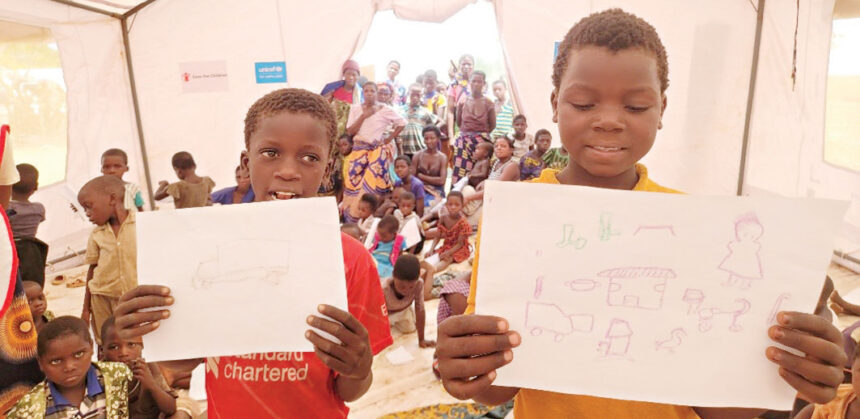
Nyamithuthu Camp in Nsanje is home to thousands of children who have escaped the post-election violence in Mozambique. Unicef is supporting the Government of Malawi, UNHCR and partners to provide protection and hope to the children there.
By Rogers Bekisa Siula:
The last few months of post-election violence in Mozambique forced thousands of families to flee across the border to southern Malawi, mostly to Nsanje District.
Among the most affected are children, as seen at Nyamithuthu Camp, located about 200 kilometres from Malawi’s commercial capital, Blantyre.
Thousands of people are in the tightly-packed camp, sweltering in the intense heat – either in tents or sitting under the scorching sun, a common feature of Nsanje District.
- Advertisement -
Emotions in the camp are mixed due to the uncertainty the displaced people are facing in a new environment; however, the smiles on the faces of the children diffuse the despair.
Excited voices of children echo throughout the tents. This is the children’s corner at the camp, where seven-year-old Davido and nine-year-old Loyce are finding solace in the colours of their drawings.
Davido and Loyce are facing similar issues to those of over 2,600 children who have been residing in Nyamithuthu Camp since January 12, 2025.
They fled Mozambique after their lives were destabilised by post-election violence.
- Advertisement -
- Advertisement -
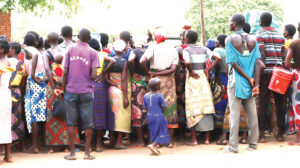
Their arrival at Nyamithuthu Refugee Camp in Nsanje, a temporary home to over 7,000 displaced individuals and families, marked the beginning of a new lease on life.
Unicef, in collaboration with United Nations High Commissioner for Refugees (UNHCR) and other partners such as Save the Children, established a children’s corner to provide support and a semblance of normalcy for the young ones.
The children’s corner became a haven, allowing the children to share their experiences in a nurturing environment, supporting their well-being amidst this emergency situation.
As part of the activities in the children’s corner, children were encouraged to express their feelings through art. Davido and Loyce picked up crayons and paper, pouring their hearts and souls into their drawings.
“I drew my family in a car. I miss my home, but I am happy to be with friends here,” Davido said.
Loyce added: “I drew a girl with a suitcase because we had to leave everything behind. I hope we can go back someday.”
When they shared their artwork, Davido depicted a scene of his family fleeing in a vehicle, while Loyce illustrated a girl holding a suitcase, symbolising their journey.
Their drawings not only provided an outlet for their emotions but also helped them connect with other children facing similar hardships.
Unicef Malawi Emergency Specialist Estere Tsoka emphasised the importance of these creative spaces in fostering healing, allowing children to process their trauma through play and expression.
“The stories of Davido and Loyce are not just tales of survival but also of courage and creativity. As they continue to heal, their artwork serves as a powerful reminder that every child deserves a safe space to express themselves and dream of a better tomorrow,” Tsoka said.
Unicef, with support from the United Kingdom’s Foreign, Commonwealth and Development Office (FCDO), United States Agency for International Development’s Bureau for Humanitarian Assistance, Japan and Canada, is working with various partners to support the Malawi Government in its response efforts.
“Interventions include the provision of water, sanitation and hygiene facilities, a child protection centre, nutrition screening items, recreational acceth supplies. We strive to ensure every child thrives,” Tsoka said.
Nsanje District Commissioner Dominic Mwandira applauded the collaborative efforts in the response so far.
“We are massories and heal
king a difference in the lives of these vulnerable children. Through collaborative efforts, the camp stands as a testament to resilience, community and the unwavering spirit of children,” he said.