The use of the arts to communicate medical messages is being hailed as an effective tool for spreading health awareness.
This came to light on Tuesday when lecturers and students from the Malawi University of Science and Technology (Must) and its sister universities held a symposium at the institution’s City Campus in Blantyre.
Held under the Medical Humanities Project, the symposium ran under the theme “Rethinking the Language of Science: Communication, Meaning and Understanding in Malawi’s Healthcare System.”
It sought to highlight the need to rethink health communication approaches in Malawi by exploring how arts, humanities and social sciences can be integrated into medical care.
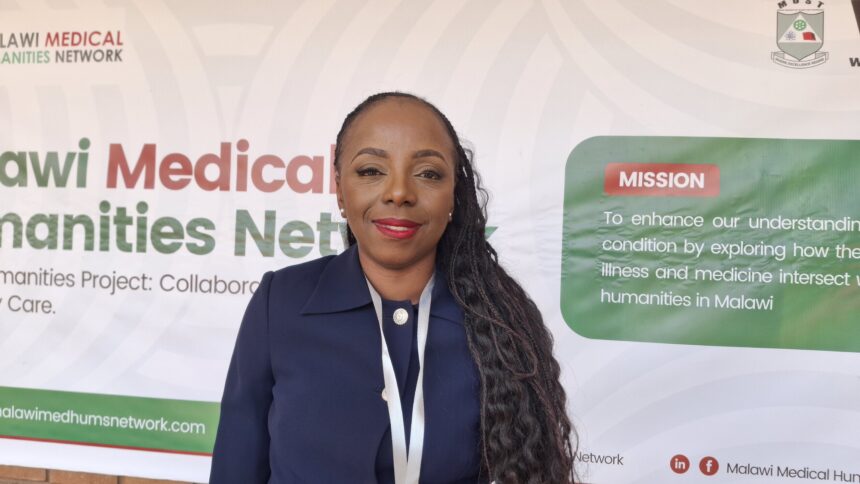
Executive Dean for the Bingu School of Culture and Heritage, Atikonda Akuzike Mtenje-Mkochi, said papers presented focused, among others, on Covid-19 messaging and the use and interpretation of technical medical terms into local languages.
- Advertisement -
Mtenje-Mkochi added that the Medical Humanities Project will also pave way for an enhanced network between research practitioners.
“We are thinking of creating a network of researchers and stakeholders who will work together on health-related issues, and how arts, language, communication and indigenous knowledge can be integrated into the medical sector,” said Mkochi.
Former Must student Shadreck Mweso presented findings from his research, which examined the critical role arts played in enhancing public awareness during the Covid-19 pandemic.
Mweso’s study analysed linguistic strategies used by music artists to disseminate pandemic-related information through easily understandable songs.
- Advertisement -
- Advertisement -
“It was important for people to understand issues surrounding Covid-19, and artists delivered the messages in a very relatable way by using Chichewa. As a result, the information reached a wider audience,” he said.
The research recommends that stakeholders prioritise music when developing communication strategies, while also incorporating other art forms such as animation.
“Music is a powerful health communication tool, we need to intergrate it in strategies and consult artists when developing them,” Mweso said.
Guest of honour Alfred Maluwa from the Malawi University of Business and Applied Sciences said the symposium was a step forward into finding ways to narrow the language gap between medical personnel and patients.
“Our medical doctors possess scientific knowledge, but patients and guardians often struggle to understand it. We are here to find ways of interpreting scientific knowledge into local languages, while aligning it with Malawian cultures and lived experiences,” Maluwa said.