We pull back the veil on Nkhata Bay’s illicit Indian hemp trade—a crucial yet dangerous livelihood for many. With unique access, we uncover the hidden network of farmers, dealers and users, exploring the complexities of the industry and its defiance of the law.
In Nkhata Bay, where the tranquil waters of Lake Malawi meet rolling mountains, a low-key but thriving illicit business flourishes.
It is a trade that has become a way of life for some, existing on the fringes of legality and morality.
Though the picturesque landscapes of the lakeshore district suggest calm and simplicity, behind the scenes, this illegal operation thrives.
The trade is a multi-layered network, involving everything from the cultivation of the hemp, locally known as chamba, to its sale and eventual use by locals.
- Advertisement -
Dealers, such as those who transport the hemp from distant fields to smokers, remain unmoved by the negative connotations it attracts.
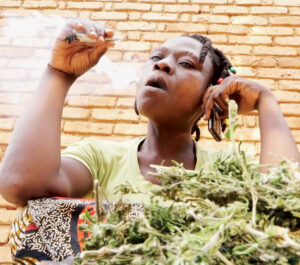
“The journey is not easy, but it is a path I have walked countless times. I know the risks—every step is dangerous—but the reward is worth it,” Hildah Phiri, also known as Baby Rasta, explains as she rolls a joint to share with her customers.
The sellers often undertake arduous journeys to reach the areas where the hemp is grown—far from their homes.
They must travel miles through treacherous terrain, winding paths and narrow ridgelines to reach the remote farms where the plant thrives.
- Advertisement -
- Advertisement -
It is a dangerous route, one that tests their resolve—and ours, too, as we join them on the trip to the hidden chamba fields.
Hildah has a steady stream of customers, both regulars and newcomers, who knock on her door each morning. They soon become like family.
“I have built a reputation for providing the best and when they come to me, they know they are getting something tried and trusted,” she says, letting out a dry, raspy chuckle.
Hildah’s small house, perched on the edge of a modest trading centre, is more than just a home. It is a hub of trust, connection and ritual.
Surrounded by a warm, earthy atmosphere, the air hums with the distinctive scent of burning Indian hemp.
Smoke curls lazily in the breeze, mingling with the fresh, green fragrance of hemp buds and flowers—the potent parts of the illicit plant that produce the sought-after psychoactive effects.
Unyielding to the law
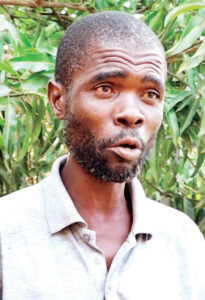
Jones Chirwa, a lifelong smoker, is a regular visitor. He is drawn not only by the comfort of Hildah’s company but by the way the smoke seems to slow time, allowing his thoughts to settle into a tranquil rhythm.
“There is something about the plant that soothes my mind and opens up my senses. It leaves me feeling whole,” Chirwa, in his late fifties, says, a lazy smile flickering on his bearded face.
He often boasts about how he started smoking chamba as a teenager, claiming that the hemp—what he calls herb—helped him focus in ways he cannot explain.
Today, at Hildah’s home, he reminisces about those moments as he takes a slow drag of the illicit plant, the rich flavour filling his lungs, a smile tugging at his lips.
“When we come here, it is not just about getting high. It is also about connection. All the people you see here are peace lovers.
“You never hear that we have been involved in physical altercations because chamba brings about peace among people,” he says, attempting to emphasise his belief that the plant has been unjustly demonised.
Chirwa views chamba as more than just a source of escape or leisure—it is also a symbol of defiance, a natural ally with untold benefits.
While the world around him casts a wary eye, labelling his passion as criminal, he stands firm in his belief that Indian hemp offers far more than meets the eye.
“Yes, there are risks, but I am not blind to that. I have smoked for decades and I have never seen it as just something to get high. It is part of my culture. I believe it can do a lot for society if given the chance,” he says, defiantly.
A divisive debate
In Malawi, the debate surrounding Indian hemp has become increasingly divisive, with some seeing it as a harmful vice, while others view it as an integral part of their culture and daily life.
For Chirwa, chamba has been both a companion and a subject of controversy.
With decades of experience, he acknowledges something few are willing to admit—that the plant carries certain risks, such as mental health challenges.
Yet, he maintains that its benefits—the sense of freedom, the calm it brings and the connections it fosters—are undeniable.
“People should be free to smoke openly, without fear of criminalisation,” Chirwa asserts. “The government is criminalising something that has been part of our culture for generations.”

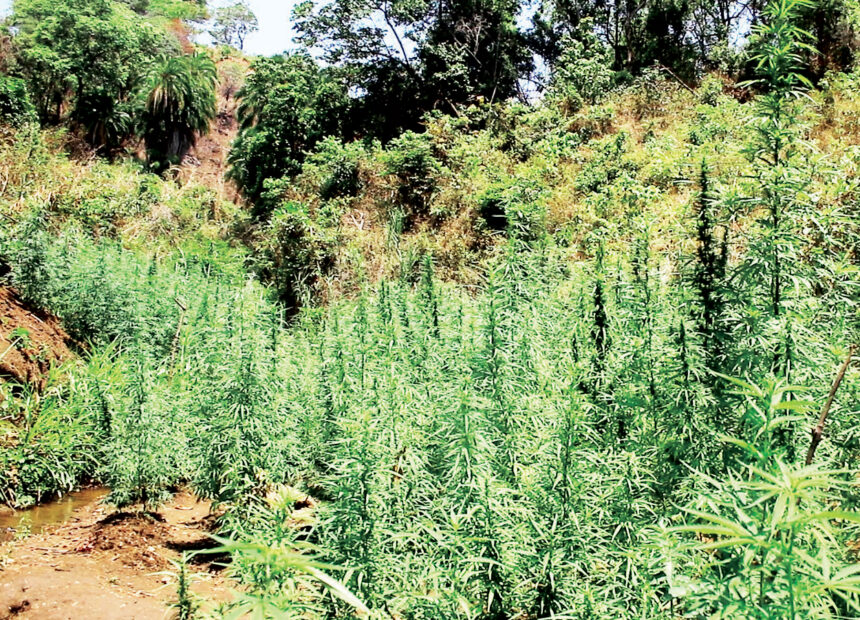
In the shadows of the hills near the border between Nkhata Bay and Nkhotakota, James Mphakati and many others cultivate what has become a lifeline.
They are the growers—perhaps the ones taking the greatest risk in Malawi’s underground chamba trade.
Mphakati, like so many others, works in hidden locations—remote hillsides and forests where the reach of law enforcement is limited.
Yet, the dangers of betrayal, violence and discovery are ever-present.
‘Cornerstones of the trade’
For the smokers, traders and everyone relying on the ancient plant for their livelihood, the growers are essential.
But for Mphakati and several others, cultivating chamba is a lifeline—a means of survival in a world where poverty forces them to the margins.
“Chamba is profitable, unlike other crops, which struggle to grow due to our uneven and rocky terrain. The land here is perfect for hemp. This is how we feed our families,” he says, his calloused hands deftly picking the mature buds from the dense green bushes that line the slopes of the hill.
His movements are practised, each bud removed with care to ensure only the finest, most potent flowers are harvested for customers like Hildah, as we watch.
He wipes sweat from his brow, takes a deep breath and informs us that one field, less than half an acre, is enough to showcase his trade.
“Trust is expensive. At least you have seen where we cultivate the hemp. There are more fields but it might be dangerous for you to get there,” he says.
We agree.
While he sticks to the crop, the world around him has changed. Still, while many would seek to leave this life behind for something simpler, Mphakati feels no such urge.
The profits keep coming and the land—far from people—is perfect for growing this illicit crop.
“Yes, growing the local variety of hemp is illegal. But you have to understand that we don’t have many choices. What else can we do? The profits come with risks,” he says.
Out of the police’s reach
The extent of this underground chamba network presents a constant challenge, even for the police.
Police raids and crop destruction are part of efforts to curb the trade but the sheer scale and secrecy of the illicit fields make these efforts a never-ending game of cat and mouse.
The demand for chamba, both locally and internationally, continues to fuel its growth.
The illegal growers, many of whom operate in society’s shadows, always seem to stay one step ahead.
But the law enforcers insist they are intensifying their efforts to eliminate the illegal business by dismantling the networks that cultivate and traffic the plant.
“For instance, we recently uprooted seven acres of chamba in Nkhotakota after we were tipped off by the public,” Malawi Police Service deputy spokesperson Harry Namwaza says.
He acknowledges that the terrain is a big advantage for the growers, making it difficult for law enforcement to eradicate all the crops.
The growers have built their lives in the far corners of untamed wilderness, in the depths of the wild, where they seem to be safe, at least for now.
“The areas are not easy to penetrate. For example, we have had reports of illegal chamba cultivation inside wildlife reserves.
“It is not easy to reach such areas. There are also places in the mountains where ‘normal’ people cannot go for a year,” Namwaza explains.
To legalise or not to legalise?
Amid the shadows of Malawi’s thriving illegal chamba trade, a growing conversation is emerging—one that calls for the government to legalise the plant that drives underground economies in many places.
For those who smoke, the argument is clear: why should something used for centuries, both medicinally and recreationally, remain illegal?
They argue that the government could regulate and tax chamba, just like alcohol or tobacco.
“This is a multi-billion-kwacha industry, with growers, dealers and smokers operating in the shadows. People like me continue to be labelled criminals, yet we harm no one,” Chirwa says, frustration written all over his face.
For Hildah, the law may label her a criminal but she is steadfast in her belief that the real crime would be allowing her family to suffer.
In the meantime, her hope, like Chirwa’s, is to see the local variety of hemp legalised in Malawi—a plant deeply ingrained in her community’s culture.
“Only then can the government also benefit from this industry. It has been there since time immemorial and it will not end even if it remains criminalised,” Hildah says rebelliously.
She then gathers bundles of freshly harvested chamba into small, carefully measured batches—just the right size for her customers, many of whom are already gathered in a small room, the air thick with smoke.
In this place, the chamba trade persists, hidden in plain sight.
Its underground market continues to thrive, shaping local communities and, in many ways, influencing Nkhata Bay’s socio-economic landscape.
While the battle between the police and the illegal trade rages on, for many in this lakeshore district, chamba is more than just a trade.
It is a way of life, a lifeline and a symbol of resistance.