



By Nelson Gonjani:
Every morning, 10-year-old Standard 7 learner Shwester [the name has been changed to protect his identity] prepares to learn in an unfinished and crowded classroom at Boma Primary School in Kasungu District.
He has other fears, too.
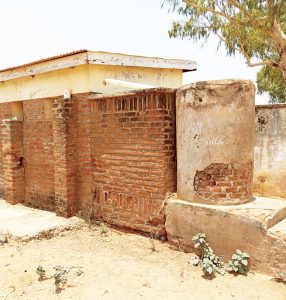
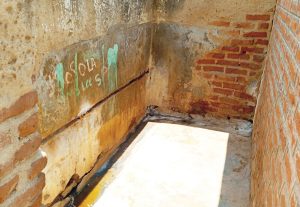
The unfinished classroom block, commonly known as Chingalawa, exposes learners to disturbances and insecurity during school hours.
“We are being disturbed by this classroom block. Badly behaved young people sometimes come here to smoke cannabis and drink beer while classes are in progress. They also intimidate us and sexually harass girls. This makes us fear for our safety, while the school continues to suffer damage,” she says.
- Advertisement -
For Shwester and fellow learners, the situation has affected their ability to concentrate on their studies, as the fear of harassment and insecurity continues to overshadow their learning experience.
When The Daily Times visited the school to assess the challenges affecting learning, it established that the unfinished classroom block was only one of several infrastructure problems confronting the institution.
The school’s sanitation facilities were also in a poor state, raising concerns about hygiene and the risk of disease outbreaks among learners and teachers.
The situation is particularly worrying for the teaching staff, with 90 teachers reportedly sharing one toilet, highlighting the pressure on the school’s already inadequate facilities.
- Advertisement -
- Advertisement -
Kasungu District Council Director of Education, Youth and Sports Zimulange Mhango acknowledges the challenges, saying they are negatively affecting the learning environment and the delivery of quality education.
According to Mhango, Boma Primary School has an enrolment of about 4,000 learners, a figure that has contributed to overcrowding.
“It is true that every classroom should accommodate about 60 learners.
“However, at this school, the number sometimes exceeds 130, which is abnormal,” he says.
Mhango also confirms that there are sanitation challenges, noting that the shortage of toilets has forced about 90 teachers to be sharing one facility.
He further observes that the incomplete classroom block has become a gathering place for some badly behaved youths from surrounding communities, disrupting learning and compromising learners’ safety.
“Young people from the surrounding communities misuse the unfinished classroom block. This disrupts the learning environment for our learners,” he says.
Mhango, therefore, calls on development partners to support efforts to address the challenges, expressing hope that the Constituency Development Fund (RCDF) will help resolve some of the infrastructure problems.
“We are calling on government stakeholders to support efforts to address the challenges facing this institution. We are also working closely with our Member of Parliament to resolve some of these problems through CDF,” he says.
In response to the challenges, the school’s management sought assistance from development partners who are operating in the district, among them Shayona Cement Factory.
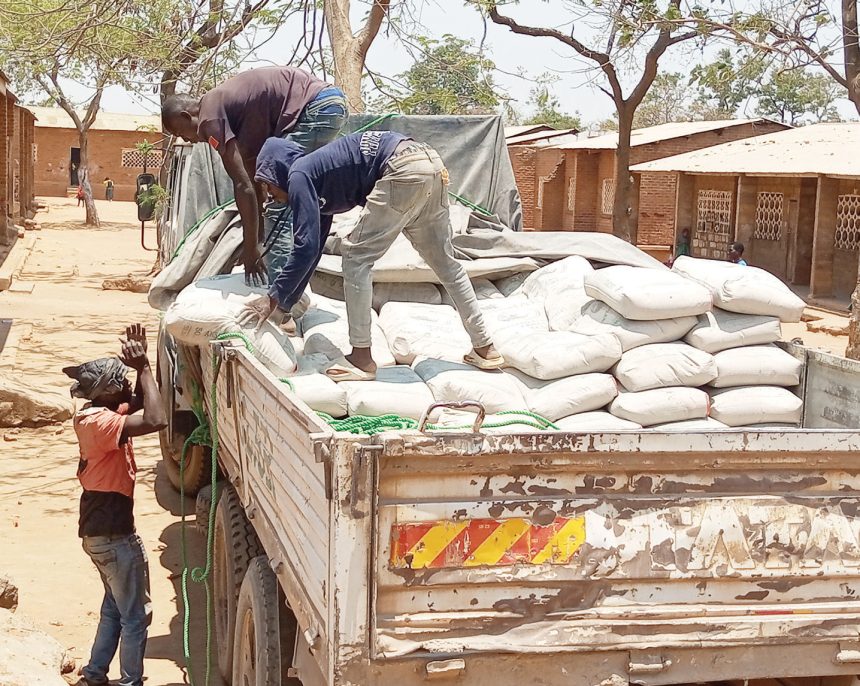
The company’s management responded by donating 250 bags of cement, valued at more than K10 million, to help complete stalled development projects at the school.
The donation has brought renewed hope to learners such as Shwester, who believe that completing the classroom block will improve their safety situation and provide additional space for teaching and learning.
For him, the support represents more than building materials; it offers the possibility of learning without the fear and intimidation that have become part of her school experience.
“This support will make us feel safe and concentrate on our studies because the classroom block will be completed and put to proper use.
“Those who have been taking advantage of the situation to harass us will no longer have that opportunity,” Shwester says.
Mhango shares Shwester’s sense of optimism, saying the government is grateful for the company’s intervention and believes that completing the structure will help ease classroom congestion.
“We, as government, are delighted to have received this support from Shayona. We believe that once the classroom block is completed, it will help ease congestion,” he says.
Shayona Cement Factory Human Resource and Administration Manager said the company decided to support the institution after learning of its need for assistance to complete stalled development projects.
“Let me make it clear that we are willing to provide further support, but that will depend on how this donation is utilised. We will visit the project once work begins to assess how the materials have been used,” he said.
Kasungu District has 395 government primary schools.