Lenjemesi Catchment covers about 377.5 hectares of land in Group Village Head Chilipa, Kadewere and Makata in Traditional Authority (TA) Makata’s area in Blantyre.
The area lies in hilly terrain and just a few years ago it had lost most of its 21.5 hectares of forest cover.
This was due to rapid cutting of trees to produce charcoal and other human-induced activities. The bare ground also caused loss of fertile soil, with deep gullies and trenches formed, destroying the area’s landscape.
As a way of restoring the environment, the Climate-Smart Enhanced Public Works Programme (CS-EPWP) focuses on restoring the environment through community participation.
Under the project, communities get paid an amount of money at the end of every month for the work they do in, among other activities, planting trees and practising good land management.
- Advertisement -
Chrissy Yasin, 45, is a single mother from Masilikali Village, TA Makata and she is now a proud owner of several businesses in her area.
Hers is a story of rags to riches as she now has assets worth over K1 million through CS-EPWP.
Just before 2022, Yasin was in dire poverty as she was penniless, with no business or prospects of owning any assets.
“I was constantly depressed as I had no food and was relying on piece work to survive with my children. To make matters worse, this area receives erratic rains because the environment had been depleted, making it hard to harvest enough food,” Yasin explained.
- Advertisement -
- Advertisement -
However, seeing her today, one might think she is narrating the story of a completely different woman.
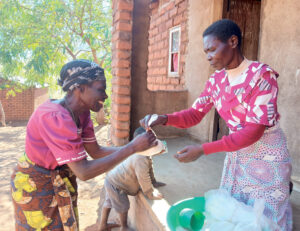
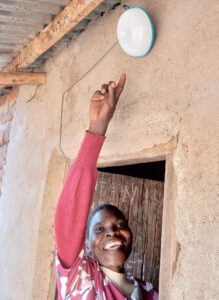
Yasin now boasts a rice-selling business in her area, she has installed a solar system in her house and has electricity, charging other members in her area about K200 to charge their phones.
She also has chickens and is thriving in her onion-cultivating business which makes her over K200,000 in a season and she is able to do this several times a year.
Apart from this, she also has shares in the Village Savings and Loans (VSL) group where she saves over K150,000 a year. This is due to the interventions under the project.
“When the project started in 2022, all beneficiaries who had been identified were encouraged to participate in activities to restore our environment.
“These include restoring the area’s vegetation by planting and taking care of trees, constructing gullies and trenches, and practising land and water conservation farming methods,” Yasin added.
After doing this work for 30 days a month, she received K28,800 every month when the project began but the amount has now been adjusted to K48,000 per month, paid through an e-payment system.
The communities are also expected to do 10 days of community work as their contribution towards environmental conservation.
Yasin says she started saving part of this money and in her first year she saved K150,000, of which she used K120,000 to invest in a solar system.
However, the project is not only benefiting women and older people but the youth are also not being left behind.
Kumbukani Snowden from Kadewere Village in the same area has a similar story and the same impact. He too now has assets worth over K1 million.
Snowden, 28, is married and has one child. He graduated from Soche Technical College where he studied ICT but was unable to secure employment and was idle at home, where he saw his peers engaging in substance abuse and behaving unruly, even towards their parents.
To him, the CS-EPWP was a life saver and his way of not falling into the same trap of destruction that his peers had fallen into.
“After I was identified as a beneficiary, I saw this as a lifetime opportunity to come out of poverty while conserving our environment.
“At first, I was always complaining about how my life was but when this project came, my life completely changed as I began receiving money at the end of each month after working in various climate smart initiatives.
“I started saving part of the K28,800 I was receiving every month at the time through a VSL group which we formed as we had been encouraged to do. I started investing part of the money I was saving through Comsip into farming and buying farm inputs as most of us in this area are farmers,” Snowden said.
Snowden has also increased his winter cropping. Before the initiative, he was only able to cultivate a packet of tomatoes but now he is cultivating five times more.
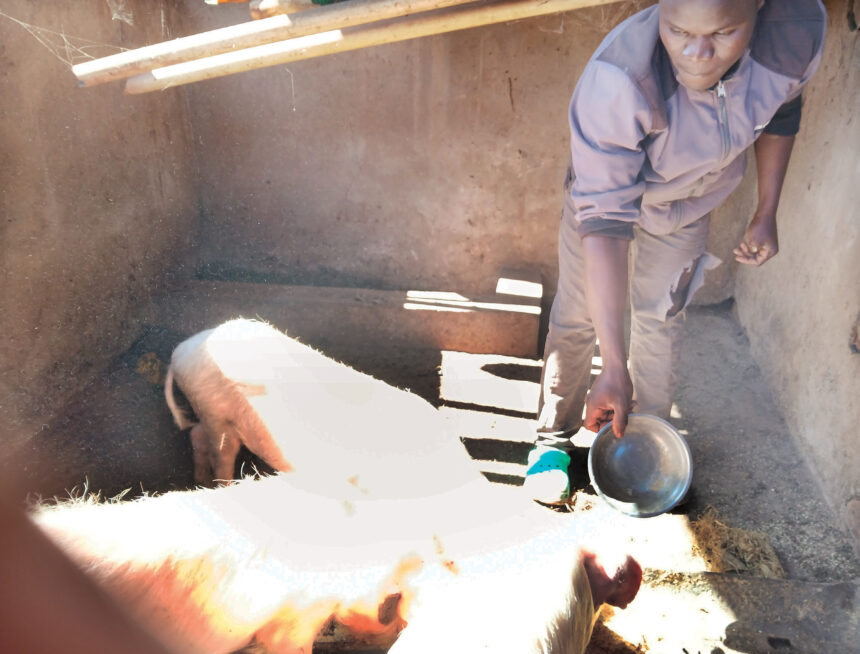
Today, he owns pigs valued at around K500,000 each, and he is expecting to make not less than K400,000 from his onions which he will be selling in a few weeks. He also has chickens and now plans to buy some goats.
“My investments will continue to grow as my livestock multiply. I also use the pig droppings to produce manure,” Snowden said.
The project has not only benefited Yasin, Snowden and the other beneficiaries in the area. Lenjemesi Catchment is now a transformed area.
Samson Nakhwala is the extension worker in the area and says there are 500 beneficiaries with seven VSL groups.
Nakhwala says the project has been going well and communities are restoring the tree cover in the hills surrounding the area and that about 12.8 hectares of the 21.5 hectares of forest land in the area has been restored.
“285.8 hectares of this land is ideal for cultivation, both rain-fed and irrigation, and out of this, 156.7 hectares has been conserved through soil and water conservation structures, vegetative barriers such as vetiver grass and agroforestry trees and river bank protection,” Nakhwala explained.
He added that 57.9 hectares is composed of mountains and that 28.6 hectares of this has been conserved through natural regeneration, tree planting and soil and water conservation structures.
Nakhwala also said 12.3 hectares of the area is gully and 7.2 hectares has been reclaimed through check dam construction along the gullies.
He said all these are success stories of how communities have worked through the project to restore the area to its former glory and also achieved improved social and economic status.
Aubrey Jazza is the District Project Facilitator for the CS-EPWP in Blantyre and says there has been tremendous progress in the 15 areas the programme is targeting in the district.
“As the environment has been restored, we have also seen communities establishing businesses, buying livestock, sending their children to school and improved food production through the projects,” Jazza said.
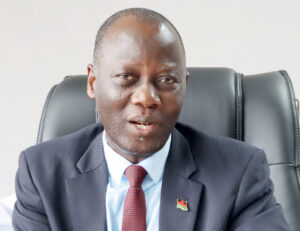
And District Commissioner for Blantyre, Alex Mdooko, said Blantyre is on track with the implementation of the CS-EPWP, which is meant to restore degraded landscapes and improve livelihoods among rural households.
“The project has created tangible assets during the programme’s execution which are commendable and I thank all key stakeholders for their dedication to the success of the initiative,” Mdooko said.
As the project winds up in 2026, both Yasin and Snowden are optimistic that their livelihoods will continue as they have graduated from poverty and have experienced firsthand the benefits of having a flourishing environment and its impact on their livelihoods through increased food production and nutrition.