
In September 2021, Malawi hit global spotlight in illegal wildlife trade crackdown when it jailed Lin Yun Hua, a Chinese kingpin of a notorious gang operating in Southern Africa. But, unknown to many, behind the case, there were high level machinations that threatened to scupper the case
By Charles Mpaka
Two years after Malawi sent to jail Chinese national Lin Yun Hua over wildlife trafficking crimes, Malawi is still basking in the glory of being recognised globally as an example of how to fight illegal wildlife trade.
Lin was not a small man in the trade.
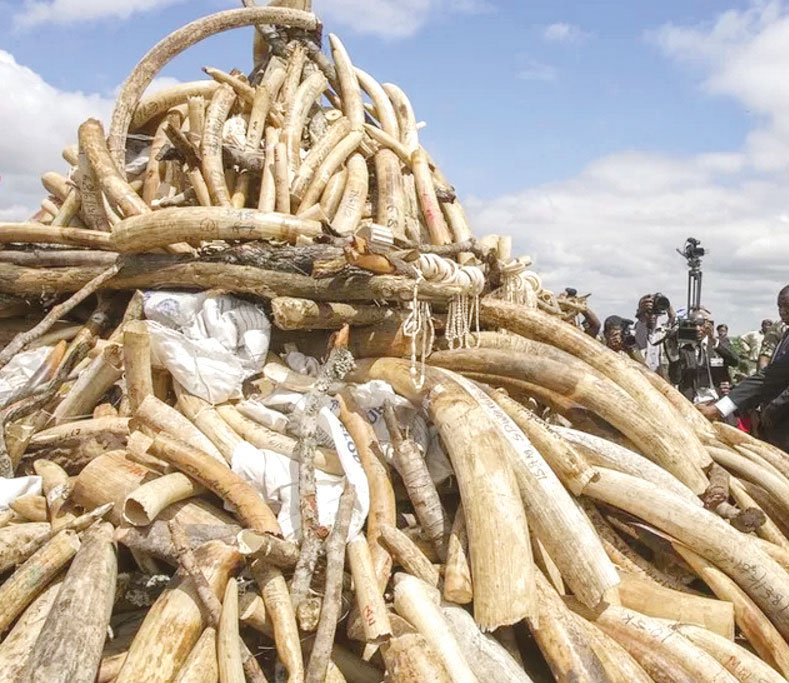
He was a lynchpin of a wildlife crime syndicate that had operated in Southern Africa for close to four decades, smuggling ivory, pangolin scales and rhino horn, among other wildlife products, and helping to drive poaching in the region.
- Advertisement -
His arrest in August 2019 at his base in Lilongwe after a three-month manhunt was therefore a big catch, an issue of regional and global interest.
The trial of Lin and 14 members of his gang —10 Chinese and four Malawians — went on for two years until September 2021 when the Magistrate Court in Lilongwe handed the 14-year jail sentence.
Malawi received worldwide acclaim. The US Embassy in Malawi, for example, commended Lin’s conviction and sentencing.
“The United States congratulates Malawi for taking a hard stance against wildlife trafficking. Yun Hua Lin’s 14-year sentence will deter wildlife poachers and traffickers, and is an excellent step towards protecting Malawi’s spectacular natural heritage and wildlife,” it said on its twitter page.
- Advertisement -
- Advertisement -
However, glorious as the outcome of the case was, in the shadows, that case was besieged by counterplots that threatened to topple it.
In an investigation report released in April 2023, the Global Initiative Against Transnational Organized Crime (GI-TOC), a network of experts working to counter criminal networks, says those two years “severely tested the integrity” of Malawi’s criminal justice system.
According to the report, there were “corrupt approaches, high-level interference and implicit threats of violence to key witnesses in the case”.
In one of the cases of corruption around the trial, an associate of Lin reportedly offered $30 000 to a key government investigator in a bid to foil investigation and prosecution of the case.
“They were trying everything to stop the case,” says the investigator in the report titled ‘Convergence of wildlife crime and other forms of transnational organised crime in Eastern and Southern Africa’, a product of a 30-month investigation between January 2021 and August 2022.

GI-TOC investigation findings supports earlier observations by Mary Rice, Executive Director for London-based Environmental Investigations Agency (EIA).
In an email to this reporter in the week Lin was jailed, Rice said the case had been besieged by endless adjournments, efforts behind the scenes to influence and corrupt the prosecutorial process, missing witnesses and endless technical challenges.
Director of Department of National Parks and Wildlife (DPNW), Brighton Kumchedwa, told Malawi News last week that the State paraded eight witnesses in total but “unnecessary objections” by the defence team in court dragged the matter.
But the case had a high profile and international interest and it was not going to be frustrated.
To counter the threats, Rice said, each court hearing was attended by independent “monitors” and interested parties “which made any filibustering efforts of obstruction more difficult”.
The GI-TOC report says these monitors of court proceedings included ambassadors from other countries who were physically present in court on key occasions.
The interventions further included providing private security for key witnesses and assigning private sector prosecutors to support the government prosecuting team.
As Kumchedwa puts it, the presence of ambassadors and other senior authorities from the international community made sure “there was no one who could try to play games on this case”.
“We had support from non-governmental organisations who provided guidance throughout. The police and DNPW were always on top of the case and shared any relevant information timely,” he said.
The case also had the support of the office of the Director of Public Prosecutions, he said.
At one point, the department had to bring in a witness from South Africa to testify on the DNA analysis of the rhino horns Lin is said to have been possessing as the report she produced was sent without authentication, hence the need for the witness to fly in to present her report.
“This also helped a lot because she had clearly presented to the court the exact number of rhinos that were killed and where they were killed.

“A big lesson in this case is that multi-sectoral approach to handle cases of this nature is the best way to go,” Kumchedwa says.
GI-TOC shares this view.
It says Malawi’s ability to successfully investigate, prosecute and convict Lin resulted from earlier joint effort that had helped to strengthen DPNW’s intelligence capacity to carry out investigations and build cases against organised wildlife traffickers.
Rice said courtroom monitoring has been proven to increase transparency, enhance the prosecution process and improve conviction rates.
“It ensures that efforts to corrupt the prosecutorial process cannot hide behind endless adjournments, “missing” witnesses, technical challenges…
“All too often the tactic has been successfully applied to draw the process out so that people give up or lose interest and cases which are technically still have long since withered on the vine,” she said.
With consistent and close monitoring, this is less likely to happen and questions can be asked if the process keeps being dragged down the road.
“Unfortunately many countries do not have the resources to apply to what is effectively a time-consuming undertaking which is why grants for initiatives such as this are critical,” Rice said.
She cites corruption as a big albatross in the fight against illegal wildlife trade and requires an intelligence-led approach if the fight it to be successful. Criminal groups take advantage of weak governance and law enforcement and identify individuals who they can use to facilitate their clandestine operations.
“Often, these people have limited employment opportunities, but they are ultimately the ones taking the most risk and most likely to get caught… The tendency to get a quick win at this level of the criminal chain (arrest, prosecution, fine) does not result in effective disruption… a more intelligence-led approach is required,” she said.
Lin’s syndicate trafficked pangolin scales, ivory and rhino horn from across the region and exported them to major markets in Asia.
The network started operating in Southern Africa from 1980s but Lin started leading it around 2014, with Lilongwe being his base.