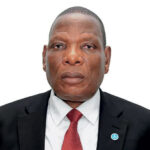
Finance Minister Joseph Mwanamvekha has warned that the government will apply haircuts on domestic debt, particularly targeting inflated projects and dollar denominated promissory notes, as part of debt restructuring efforts.
A haircut in debt restructuring means creditors agree to accept less than the full amount owed.
Speaking during a 2026-27 pre-budget consultation meeting in Blantyre, Mwanamvekha said the government had discovered huge arrears accumulated over the past five years, most of which emanating from inflated projects and promissory notes.
He cited examples of road projects that started with initial costs of K50 billion, now hovering around K130 billion, and promissory notes in United States dollars being offered at local interest rates of 12 percent to 18 percent.
“When you hear us talking about having a haircut, this is where maybe we’ll do more haircut, because the haircut will depend on the size of the hair. If it’s longer, we’ll cut it more.
- Advertisement -
“I am sure you and I know that a dollar-denominated instrument cannot apply [to] local rates because, normally, we use either LIBOR (London Interbank Offered Rate) or nowadays it’s called SOFR (Secured Overnight Financing Rate) [or other mechanisms],” Mwanamvekha said.
He said the government was discussing the issue of arrears and would work with creditors on a case-by-case basis, with the haircut size depending on individual circumstances.
“I am glad to report that some of the investors already expect a haircut. They know it, that there will be a haircut.
“We’ll do it in a manner that doesn’t affect the economy. We’ll do it in a manner that no stakeholder should suffer or banks should suffer just because of restructuring. We’ll do it in a manner that everyone, at the end of the day, is happy,” Mwanamvekha said.
- Advertisement -
- Advertisement -
Recently, economic experts told the government that extending debt maturities offered the most practical option for easing fiscal pressure.
Economics Association of Malawi President Bertha Bangara Chikadza said in a recent interview that maturity extension was the most common and practical tool as it alleviates immediate budget pressures and reduces rollover risk without destabilising the financial system.
“Interest rates are easing off and bank rates may go down, making borrowing cheaper while not making banks and capital owners worse off,” she said.
Chikadza said domestic debt restructuring alone could not solve unsustainable debt problems and must be combined with stronger fiscal discipline, improved revenue performance and broader economic reforms.
Economist Marvin Banda said the effectiveness of any restructuring framework would depend on key variables including debt size and structure, maturity profile, coupon rates and present value considerations.
He said options such as extending maturities or reducing coupon rates would still impose costs on banks, particularly in the near term.
“Shareholders would suffer immediate loss from delays in unrealised profit. Banking sector provision of public debt would also reduce unless broad money is still being created at the same, or faster, pace,” Banda said.
Malawi’s public debt stands at K22.4 trillion, with 65 percent of it being domestic debt.