The World Bank says although the new administration has taken meaningful early steps to strengthen expenditure controls, increase revenue collection, bolster debt sustainability and restore policy discipline, deeper structural and macroeconomic challenges remain unresolved.
The bank has made the observation in its latest Malawi Economic Monitor (MEM), titled ‘Getting Reforms Right’.
MEM was released in Lilongwe on Tuesday.
The report says Malawi enters the post-election period with a clear mandate for reform, but the macroeconomic environment remains fragile.
It says growth prospects are subdued despite modest gains, with real gross domestic product (GDP) expanding by 1.9 percent in 2025 and projected to edge up to 2.3 percent in 2026, largely on the back of a partial agricultural recovery supported by improved rains.
- Advertisement -
However, the bank notes that persistent forex constraints limiting access to inputs, alongside structural bottlenecks, are expected to continue weighing on output and job creation.
It says growth is forecast to rise to 2.7 percent in 2027, the first time in five years that GDP expansion would outpace population growth.
“However, this pace remains insufficient to generate meaningful improvements in household incomes,” the bank says.
The Breton Woods institution adds that inflation and exchange rate pressures remain acute.
- Advertisement -
- Advertisement -
Headline inflation averaged about 28.4 percent in 2025 and is projected to ease to 22 percent in 2026, but will likely stay elevated due to ongoing supply-side constraints and high money growth.
“Despite the introduction of expenditure control measures, and additional tax increases in the mid-year budget review, fiscal pressures remain acute. In 2025, the overall fiscal deficit stood at 9.3 percent of GDP, driven by expenditure overruns on wages and salaries, public debt interest, general election spending and domestically financed projects.
“The deficit is projected to further widen to double digits by the end of the 2025- 26 financial year. Depleted fiscal buffers, persistent current account deficits and low official reserves leave the country vulnerable to external shocks. The administration is also faced with the challenge of fulfilling the budgetary commitments undertaken during the electoral period, which continue to pose risks of fiscal slippage,” the bank says.
On the external front, MEM warns that an overvalued exchange rate undermines export competitiveness and subsidizes imports, worsening current account imbalances, while persistent foreign exchange shortages and tight controls have weakened trade and investment.
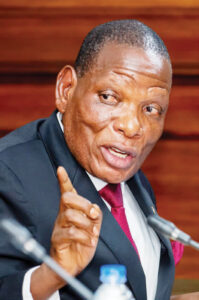
for reforms is now
“However, Malawi’s own experience shows that determined policy action can reverse severe macro-fiscal crises. The current juncture presents an opportunity to build on this institutional legacy to sustain reform efforts…,” the bank says.
Finance Minister Joseph Mwanamvekha said the government was determined to turn around the economy.
Mwanamvekha cited the “strong economic management team” that President Peter Mutharika has assembled, including seasoned technocrats such as Reserve Bank of Malawi Governor George Partridge, Industrialisation Business, Trade and Tourism Minister Symon Itaye and his deputy Edgar Tembo, among others.
“I don’t think we could have a better team than we have now and I think we will have no excuse if we don’t do things right. And this is the time. The time is now,” he said.
Mwanamvekha said the current administration was also serious on the issue of reforms.
“So, I want to assure you that the time for reforms is now and we will do it; not only do it right, we want to do it right, faster, efficiently and timely,” Mwanamvekha said.