By Nelson Gonjani:
For 23-year-old Milesi Banda, having a visual impairment is beyond having difficulties to see. It is also about being devoid of the dignity associated with womanhood.
Sitting in her small house in Traditional Authority (TA) Mwase in Kasungu District, Banda recounts the shame she experienced when her dress got soaked with blood at a nearby market.
“Sometimes we don’t feel the menstrual blood flowing. A woman with a visual impairment has to rely on others to whisper into her ear in that case,” she says.
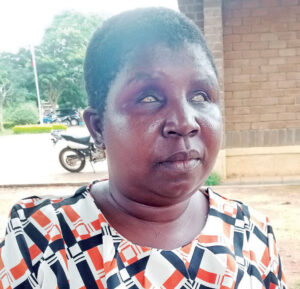
Malawi Union for the Blind Kasungu Chapter women representative, Victoria Phikani, echoes Banda’s sentiments, saying handling menses can be challenging for the people with visual impairments.
- Advertisement -
She recounts that some people take the scenarios as laughing matters, not knowing “their friends” do not do that deliberately.
“It is a sad reality that we face. Every human being, regardless of their status, needs some dignity and respect,” Phikani says.
Studies conducted to determine the menstrual health management practices of visually impaired women and those with other disabilities show that most of the women experience difficulties in managing their menstrual periods independently.
For example, a recent article in the British Journal of Visual Impairment on menstrual hygiene management among visually impaired women says the women depend on some indicators to realise the start and end of their menstruation.
- Advertisement -
- Advertisement -
It says about 25 percent of visually impaired women do not understand that their menstrual cycle has ended and 50 percent need support for many issues during menstruation.
“To manage their menstrual hygiene better, there is need for training. Their menstrual hygiene practices [are] not at desired level,” the article says.
According to United Nations Women, in normal situations, a woman in the reproductive age group menstruates 11 to 12 times a year for approximately 30 to 40 years with each cycle lasting two to seven days.
This means a woman spends at least 3,000 days of her life menstruating, and for people like Banda, this can translate to 3,000 days of shame, ridicule and difficulty.
However, there is a ray of hope for her and many other women and girls in Kasungu.
The coming of the ‘Quality Menstrual Health for People with Disabilities’ project in the district is expected to rewrite their stories in joyful tones.
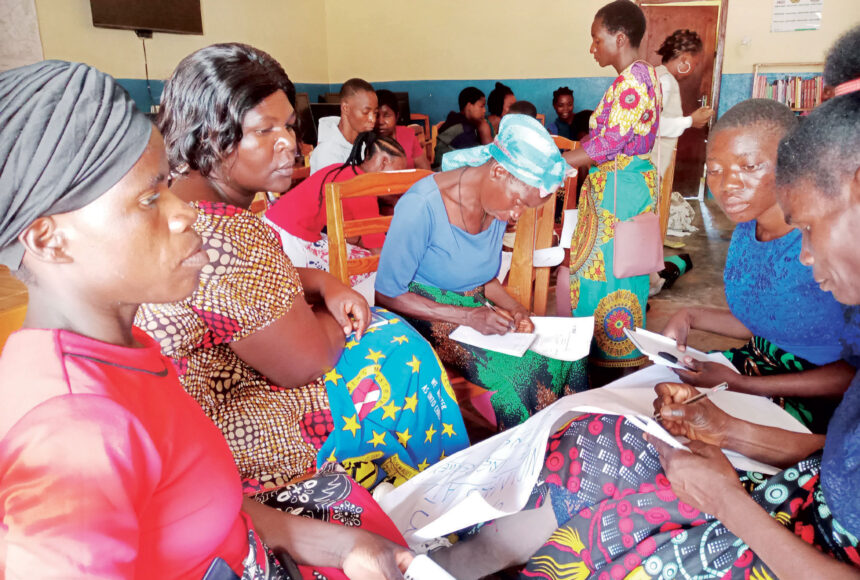
The project, which is being implemented by Nkhotakota-based Umunthu Radio, is designed to benefit at least 3,000 women and girls with various forms of disabilities in TAs Kaomba, Mwase, Lukwa, Wimbe and Chilowamatambe.
Funded by Amplify Change to the tune of about K130 million, it will run for 18 months up to mid-2025.
“In Kasungu, women and girls with disabilities face double stigma due to social norms around gender and menstruation and having a disability.
menstruation differently
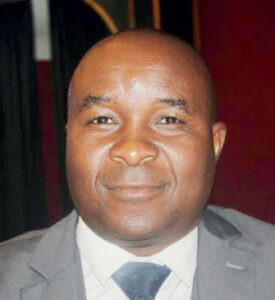
“Further, they experience menstruation differently and more negatively compared to those without disabilities,” Umunthu Radio General Manager Edward Kuwacha says.
He adds that due to low access to information and general poverty, most women and girls with disabilities use rags, usually torn from old garments, a practice that is responsible for illnesses and infections associated with female reproductive health.
“The majority of women and girls face a lot of discomfort during menstruation either in schools or public places due to the unfavourable conditions there,” Kuwacha says.
He adds that the goal of the intervention is to enhance the capacity and knowledge of the women and girls to access quality menstrual health management and sexual and reproductive health and rights (SRHR) information and services.
As part of the activities, Umunthu Radio has produced simplified vernacular versions of policy documents and laws governing SRHR, and reproduced them in Braille, audio and video formats and sign language interpretation.
They are being distributed to people with disabilities and the communities at large.
The initiative also seeks to facilitate engagements with duty-bearers, including health workers, teachers, members of Parliament and council members on inclusive SRHR information and services.
Health Promotion Officer for Kasungu District Health Office, Catherine Yoweli, says the initiative will help to increase the knowledge and capacity of women and girls with disabilities to challenge the existing stigma and discrimination.
“It will assist in making sure that there is inclusiveness in the activities which most of the times focus on other groups.
“It will also help to unearth the real issues that people with disabilities face in the management of their menstrual situations,” Yoweli says.
The initiative has also earned praise from Malawi Council for Disability Affairs, whose district manager for Kasungu, Wisdom Mseteka, says will help to treat women with disabilities with dignity.
Social Welfare Officer for Kasungu Harrison Thindwa appreciates the rareness of the intervention in that it is specifically tailored for women and girls with disabilities.
He says it complements government’s efforts of ensuring there is disability mainstreaming in interventions in communities.
At least 1.3 billion, or 16 percent of the world population, experience some form of disability, with figures said to be proportionally higher in poor countries like Malawi.