




At dawn along the Lilongwe River in Traditional Authority Malili, the sound of metal striking sand cuts through the morning calm.
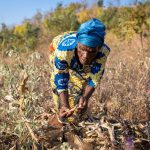
Moses Kalipano bends over the riverbank, shovelling sand into sacks destined for the city. On a good day, he says, the work earns him up to K100,000.
“These houses in Lilongwe are built with this sand,” he says, gesturing towards the slow-moving brown water.
What he does not say, but knows, is that the same sand mining, multiplied hundreds of times upstream, is helping to choke the river that keeps Malawi’s capital alive.
- Advertisement -

Charcoal kilns smoulder in nearby thickets. The charcoal will fuel kitchens in Lilongwe tonight. The sand will shape tomorrow’s upstairs. Together, these survival economies are quietly dismantling the city’s water lifeline.
- Advertisement -
When taps run brown or dry altogether across Lilongwe, officials often blame heavy rains and the water utility.
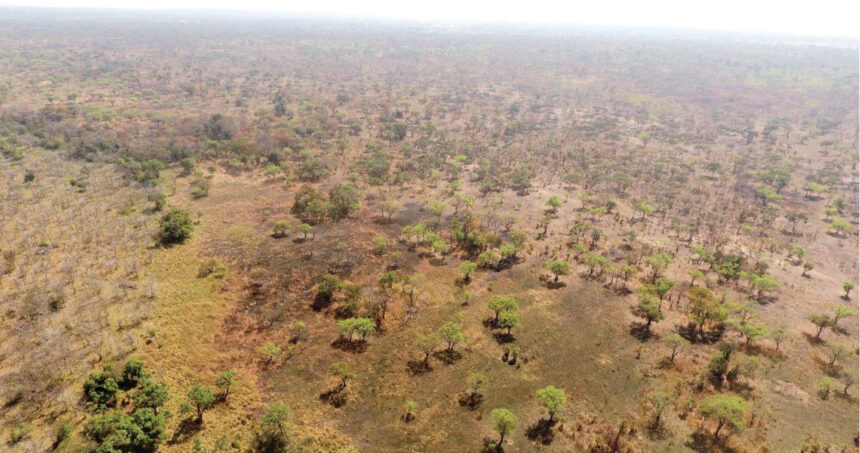
But a Daily Times investigation has found the crisis begins far upstream, deep inside the degraded Dzalanyama Forest Reserve, where unchecked deforestation for charcoal production, which is in high demand in the country, and rampant sand mining, among others, are undermining the Lilongwe River’s ability to supply safe water to more than a million people.
Government officials, engineers and environmental scientists now speak with rare unanimity: the destruction of Dzalanyama is no longer an abstract environmental concern. It is a direct threat to the capital’s survival.
Spanning more than 934 square kilometres along Malawi’s western border, Dzalanyama is one of the country’s most critical water catchments.
- Advertisement -
Streams rising in its hills converge into the Lilongwe River, which supplies more than 80 percent of Lilongwe City’s potable water.
But forestry data paints a grim picture. Malawi loses an estimated 33,000 hectares of forest every year, and Dzalanyama is among the hardest hit, ravaged by illegal charcoal production, agricultural encroachment and sand extraction.
“When trees are removed, the soil is left bare. During heavy rains, that soil is washed straight into rivers, increasing turbidity and sedimentation.
“The result is water so muddy that treatment systems struggle to cope. Environmental degradation is very high,” environmental officer at Lilongwe Water Board (LWB) Nelson Ngoma says.
Ngoma says the challenges now begin at the catchment itself.
“People are cutting trees, cultivating close to rivers and dumping waste. When we pump water, we cannot pump enough to satisfy city demand because both quality and quantity are compromised,” he adds.
The warning signs became impossible to ignore after widespread water shortages triggered public outrage.
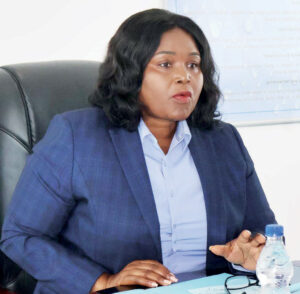
Minister of Agriculture, Irrigation and Water Development Roza Fatch Mbilizi toured Lilongwe Water Board facilities and confirmed that degraded catchments were overwhelming treatment systems.
“The increased sedimentation load has overloaded treatment works, leading to clogging and reduced production capacity,” Mbilizi said.
She warned that unless tree cutting along riverbanks and inside forest reserves stops, such crises will become more frequent and more severe.
LWB Acting Chief Executive Officer Maclenan Nyang’wa was blunt.
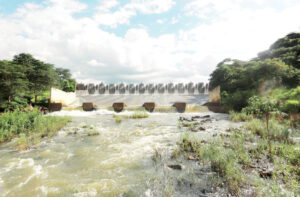
“The river level rose considerably, submerging some equipment and reducing pump efficiency. At the treatment plant, clogging affected operations, resulting in reduced production,” Nyang’wa said.
Engineers estimate that when turbidity spikes, treatment output can fall by 30 to 40 percent, just as chemical costs soar. The city pays twice: once through shortages and again through higher operating expenses.
In communities bordering Dzalanyama, residents admit the forest is under siege but insist poverty leaves them few choices.
Ida Lameki is one of the leaders working closely with the Lilongwe Water Board and informing the board of any environmental dangers surrounding Dzalanyama.
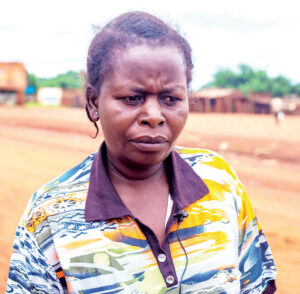
“People surrounding Dzalanyama know cutting trees is wrong, but they say people need to survive,” Lameki says.
Charcoal producer from Traditional Authority Malili Mathews Phiri says charcoal feeds their families because “there are no other jobs”.
Traditional Authority Malili points to weak enforcement.
“Forestry officers are being attacked. Even when they come, people just hide. The forest is slowly disappearing.
“I have been sensitising my subjects. Sometimes they listen, sometimes not. I am afraid that nowadays even trees at graveyards are being targeted,” Malili says.
The consequences ripple downstream. In Lilongwe’s Areas 25, 23, 22, Lumbadzi and Nathenje, the taps tell the story.
Senior Chief Kulamula from Traditional Authority Chitukula explains that they can stay two weeks without water.
“Water comes maybe twice a week, and when it comes, it is brown. We still pay bills, but we cannot drink this water,” he said.
The experience is the same in Area 23. Lefani Nthala, a businessman from Area 23, explains how his wife walks 10 kilometres from Area 23 to fetch water in the Biwi area when the taps run dry.
“It has been very difficult for women in our area to fetch water,” he said.
Public health expert Maziko Matemba warns that highly turbid water increases treatment risks and raises the likelihood of waterborne disease outbreaks if systems fail.
Water and sanitation experts say the crisis exposes years of neglect. Water, sanitation and hygiene (Wash) specialist Willies Mwandira warns that Malawi’s ambition to achieve universal access to clean water by 2030 is in jeopardy.
In his research paper, Scaling Climate-Resilient Wash Investments to Secure SDG 6 and 2063 Targets, Mwandira estimates the country needs annual Wash investments of K622 billion up to 2030. Current spending stands at about K285 billion, leaving a K337 billion gap.
“Water investment is largely donor funded, creating uncertainty amid donor fatigue,” he says. He adds that many rural water points washed away by recent floods remain unrepaired.
Civil society groups say Dzalanyama’s collapse has long been predicted. Civil Society Network on Climate Change Executive Director Julius Ng’oma warns that inaction has consequences.
“Dzalanyama has been sounding alarm bells for a long time. Now Lilongwe is paying the price,” Ng’oma said.
Activists like him are worried that despite laws protecting forest reserves, enforcement remains weak, even as charcoal demand in the capital continues to rise.
LWB spokesperson Chisimo Chibwana says the board is pursuing long-term solutions, including catchment protection programmes and studies to draw water directly from dams to treatment plants via conveyors, reducing reliance on polluted river flows during the rainy season.
Water Services Association of Malawi (Wasama) Executive Director Vitumbiko Mkandawire says Dzalanyama Forest and the surrounding river systems are critical water sources for Lilongwe.
Mkandawire warns that ongoing deforestation, sand mining and unregulated construction in these catchments pose a real risk to future water availability and treatment costs.
“As Wasama, we consistently flag these issues in our sector engagements and continue to advocate for stronger catchment protection, enforcement of environmental laws and coordinated action among responsible authorities.
“You cannot engineer your way out of environmental collapse. Forests are part of water infrastructure,” Mkandawire says.
Meanwhile, climate change is intensifying rainfall events. Lilongwe’s population is growing fast. Pressure on the Lilongwe River system will only increase.
Observers argue that unless there are alternative water sources for Lilongwe residents, or unless Dzalanyama Forest Reserve is protected and restored, water shortages may become the norm rather than the exception.