structures
By Kondwani Mhone:
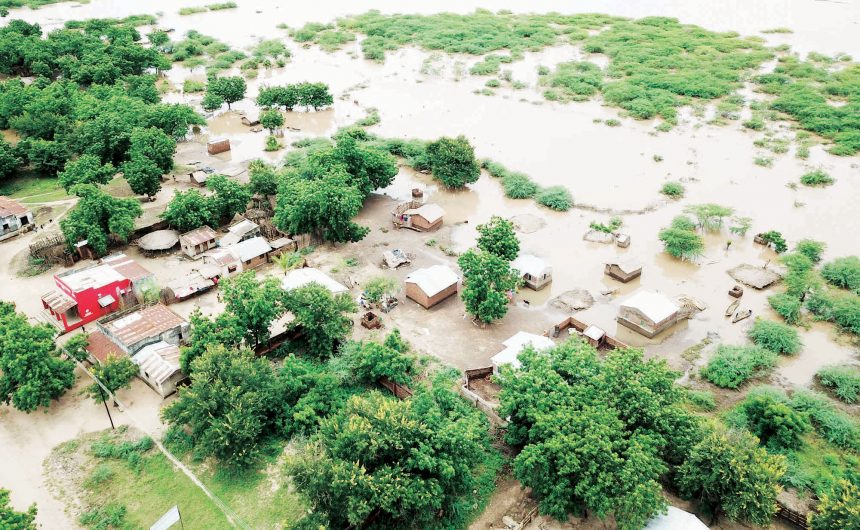
On March 13, President Lazarus Chakwera declared a state of disaster in the Southern Region following the devastation that Tropical Cyclone Freddy was causing in the region.
Most of the districts hit by Freddy, which the World Meteorological Organisation described as the strongest to hit the southern hemisphere, had been lashed by floods triggered by tropical storms Ana in 2022 and Idai in 2019.
Freddy, which is also on record as the longest-lasting storm, dumped onto Malawi in six days rain which should have normally fallen in six months.
“This is one of the darkest hours in the history of our nation,” Chakwera said of the destruction triggered by the cyclone.
- Advertisement -
The large air mass had initially diminished in February before cycling back to exact harsher pain on Malawi, Mozambique and Madagascar.
Malawi was the worst hit country, where at least 2.2 million people were affected out of which over 650,000 were displaced and 1,216 killed.
The disasters caused by Freddy sparked debates on Malawi’s preparedness for such eventualities which are predicted to get intense amid climate change.
Climate activist Julius Ng’oma charged after the cyclone that the country’s response to disasters had been haphazard.
- Advertisement -
- Advertisement -
Ng’oma warned that in the event that another disaster strikes, its impacts would still be immense because preparations have never been adequate.
“We were supposed to learn from storms Ana and Gombe, which previously hit the country. But even after the Department of Climate Change and Meteorological Services [DCCMS] issued an alert about Cyclone Freddy, authorities could not quickly take action,” he said.
He argued that one of the critical actions was to relocate people from disaster-risk areas.
“But the question remains: Where are these communities going to relocate to? We need to start looking at radical decisions including completely moving these people out of the disaster-prone areas,” Ng’oma said.
He was among activists who pushed for the tabling of the Disaster Risk Management Bill, which is billed to “significantly address” most disaster-related issues.
Still, there are concerns that the law alone may not be enough to address all problems brought about by disasters.
For instance, it is generally believed that moving everyone out of their disaster-prone locations may not be wholly practical.
That is why some stakeholders also push for adaptation and resilience building.
In Nsanje District, some rivers lost their course in the wake of tropical storms Idai, Gombe and Ana, rendering communities near them prone to flooding.
Department of Disaster Management Affairs (Dodma) spokesperson Chipiliro Khamula says Dodma, with technical expertise from the Department of Water Resources, is carrying out river dredging in the district.
“The work will see to it that running water does not find its way to people’s houses,” Khamula says.
Equally, Save the Children is working with government, through the Village Civil Protection Committees (VCPCs), to reduce the risk that disasters pose in parts of Zomba.
Through its Resilient Economic Development (Red) project, the child-centred organisation supports the VCPCs by training them so that they have the capacity to develop plans of managing disasters.
Red Resilience Coordinator Moses Kachitenji says before the intervention, most communities had little knowledge about causes and risks of disasters.
“They could not respond to disasters in time on their own. Now, we see them supporting each other in cases of the eventualities,” Kachitenji says.
With Dodma indicating that at least 56 percent of those affected by Cyclone Freddy were children, Save the Children says it is determined to reach such populations with the necessary support.
Kachitenji states that experience shows that when disasters occur, children are the worst affected.
“So, in the Red project, funded by Save the Children Italy, we are also teaching these children how they can stay safe when floods occur. By capacitating them, we hope we are building a generation that is being more resilient to disasters,” he explains.
Stuart Siza, a learner at Mlomba Primary School in Zomba, is among those who got drilled in the Red project in disaster management.
He boasts that he is well equipped with skills of staying safe and saving others in cases of destructive floods and storms.
“Our school is near a river and we are always alert such that in unfortunate cases that the river floods, everyone will be safe.
“We have whistles which we are supposed to use to alert all learners to move to safer assembly points,” Stuart says.
He also discloses that Save the Children supported his thirty-member group with tree seedlings which they planted around the school and along the river to keep strong winds and floods at bay.
As the Red project phases out next year, Kachitenji is satisfied that the progress registered so far will have lasting impacts on the targeted communities.
“There are strong local structures that will continue where we will stop. There is also strict ownership of the interventions,” he says.