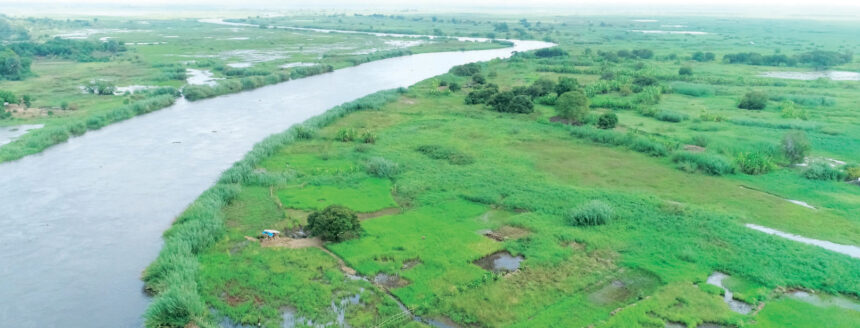
Gerald Chisaka had always farmed along the fertile banks of the Shire River in Chikwawa, where the soil was rich and the river’s annual flooding brought life to the land.
His village was a small but thriving community that depended on the river for their crops and livestock.
For years, Gerald grew maize, groundnuts and vegetables while his animals grazed on the lush pastures nearby.
But in 2015, everything changed. Unprecedented floods swept through Gerald’s village, flooding homes, washing away fields and drowning livestock.
The river, once a source of sustenance, became a force of destruction. For days the water remained high, covering acres of fertile land in muddy water and debris.
- Advertisement -
The devastation forced Gerald to make a difficult choice. He had to leave the riverbanks he had known all his life and seek higher ground where the floods could not reach.
With a heavy heart, he moved his family to a nearby area that was less prone to flooding. He hoped this new land would provide a fresh start.
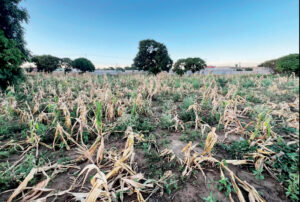
But the new land brought new challenges. Instead of floods, Gerald faced prolonged dry spells and irregular rainfall.
The soil, though higher and safer from floods, was much drier and less forgiving. The rains came late or stopped suddenly and the sun beat down harshly, cracking the earth and wilting young plants.
- Advertisement -
- Advertisement -
Across Malawi, smallholder farmers like Gerald face increasing uncertainty as the climate changes.
According to recent reports by the Department of Climate Change and Meteorological Services (DCCMS), the upcoming 2025 to 2026 rainfall season is expected to be highly variable.
From October 2025 to April 2026, several areas in Malawi are predicted to receive normal to above normal rainfall overall.
However, there is a high likelihood that rainfall will be normal to below normal during November and February.
The DCCMS has noted that the rainfall season will be influenced by neutral El Niño Southern Oscillation conditions in the tropical Pacific Ocean.
This means that the usual weather patterns will not follow predictable trends, making it difficult for farmers to plan their planting and harvesting activities.
DCCMS Director Lucy Mtilatila warned of the probability of flash floods and strong winds that could cause serious damage to property and infrastructure.
“The diversity of rainfall patterns will result in different natural disasters which will affect the agriculture sector and water resources among other sectors in the district,” Mtilatila said.
She urged farmers to prepare carefully by consulting agricultural extension workers, stressing the need to consider both the potential benefits of adequate rainfall and the challenges posed by dry spells.
“Farmers need to make informed choices on planting, crop selection and water management strategies to optimise their farming practices and mitigate risks,” Mtilatila said.

The Department of Disaster Management Affairs (Dodma) is also preparing for these uncertain weather conditions.
Dodma spokesperson Chipiliro Khamula says a national multi-hazard contingency plan is in place to respond to any disaster that may arise.
Relief supplies such as maize, tents and hygiene kits have been prepositioned in strategic areas.
Search and rescue teams consisting of the Malawi Defence Force, police, marine services and the Malawi Red Cross are ready for deployment if necessary.
“All this is aimed at protecting and preserving life and property,” Khamula says.
Malawi’s food security has been severely affected by erratic rainfall in recent years.
More than 6.8 million people, over a third of Malawi’s population, are currently facing difficulty meeting their basic food needs.
Of these, around 5.7 million are classified under IPC Phase 3, meaning they suffer from severe acute food insecurity and often resort to negative coping strategies to survive.
For Gerald, these figures are more than statistics. They represent neighbours and friends who struggle alongside him.
The forecast for the upcoming season fills him with a mixture of hope and worry. Every decision carries weight. A single dry spell could destroy young crops but heavy rains and floods could wipe out entire fields.
Determined to persevere, Gerald has begun to experiment with new farming techniques such as planting drought-resistant crop varieties and using conservation agriculture methods such as mulching and minimum tillage.
He seeks advice from agricultural extension workers whenever possible. Though the challenges are daunting, he believes adaptation is possible.