Every weekday morning, as he arrives at Kasimu Community Day Secondary School (CDSS), Traditional Authority Ngwerero, in Zomba District, Moses Solomon feels at ease.
For him, access to a functional toilet within the school campus is no longer a concern.
Opened more than a decade ago, Kasimu CDSS currently has two toilet blocks with about five rooms serving 115 boys, alongside several other toilets used by more than 100 girls.
“We come to school every day because we know we have classrooms and toilets readily available. This makes things easy for us, students.
“Attendance is good and teaching and learning improves every day. I am optimistic that my goal of becoming a nursing tutor will be achieved after completing secondary education here,” said the 21-year-old student.
- Advertisement -
However, the situation was very different about three years ago when Tropical Cyclone Freddy struck the area. The cyclone blew down the roof of the only boys’ toilet block at the school and damaged the structure, including the urinal fence.
“Some of us were easing ourselves in toilets that belong to Kasimu Primary School, which is some metres away from our school, while others were easing themselves in nearby maize fields.
“In Kasimu Primary School toilets, things were not ok because we had to scramble for the toilets with learners at the school. This prompted others to shun classes,” Solomon recalled.
Kasimu CDSS Deputy Head teacher Samuel Mbewe echoed Solomon’s sentiments, noting that although community members attempted to renovate the damaged toilet, the effort was insufficient.
- Advertisement -
- Advertisement -
“This was affecting education delivery as some students chose to use toilets back home or those found at other homes around the school. Some were choosing not to come to school, which culminated in boys’ enrolment dropping. We had a total number of 10 to 15 male students that were not attending normal lessons,” Mbewe explained.
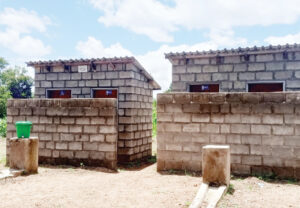
After nearly two years of facing the challenge, Oxfam in Malawi, in partnership with Evangelical Lutheran Development Services (ELDS), supported the school with the construction of an additional boys’ toilet block, increasing the number of facilities from one to two.
The support was provided through the Climate Just Communities Project, funded by Development Alternatives Incorporated and the Scottish Government.
Through this project, Oxfam in Malawi and its local partners are implementing interventions in several districts, including Salima, Zomba, Machinga, Phalombe and Karonga.
The project covers seven thematic areas: Disaster Risk Management (DRM), livelihoods security, loss and damage, resilient schools, water, sanitation and hygiene, advocacy, and gender equity and social inclusion.
Valued at£ 1.6 million (approximately K3 billion), the project aims to strengthen community resilience to the social and material impacts of extreme weather events and environmental disasters such as floods, prolonged dry spells and cyclones.
Beyond toilet construction, Oxfam in Malawi and ELDS also supported the establishment of a Disaster Risk Management Club (DRMC) at Kasimu CDSS.
Currently, the situation at the school has significantly improved.
“The coming in of this support [new toilets] has helped us a lot. As at now, we have seen that there is an increase in the number of students we are seeing. Many boys are now attending classes and finishing all lessons without shunning toilets,” Mbewe said.
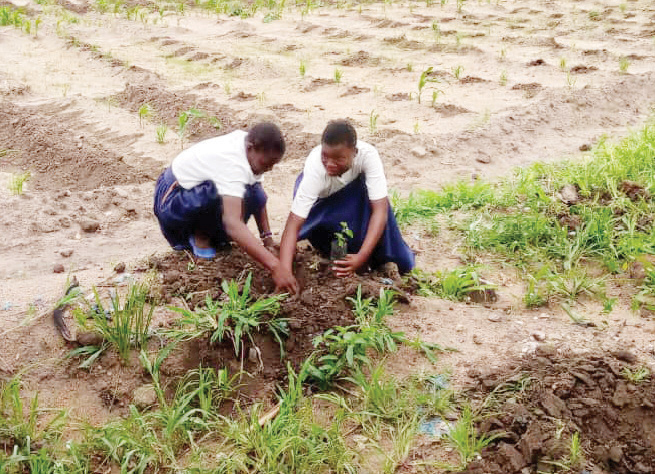
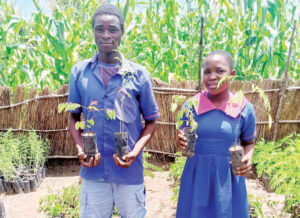
To mitigate future disasters, the school has embarked on tree-planting initiatives. Through the DRMC, 250 tree seedlings were planted during the current term alone to support environmental conservation efforts.
“Soon after Tropical Cyclone Freddy [made landfall in Malawi in March 2023], we discovered that our school was prone to heavy winds. As such, we started planting trees and the trees you see around the school are some of the trees we have planted [over the years].
“This school term, we have planted 250 trees and we plan to plant more tree seedlings. We do not want to see disasters happening again at our school,” he said.
Hundreds of kilometres away, Oxfam in Malawi is implementing similar interventions in at least 12 schools, including Ngokwe Primary School in Machinga District, in partnership with the Organisation for Sustainable Socio-Economic Development Initiative Malawi (Ossedi).
At Ngokwe Primary School, Tropical Cyclone Freddy destroyed the head teacher’s office and learners’ toilets, leaving staff without workspace and learners without sanitation facilities.
The two organisations supported the construction of new toilets and the establishment of a DRMC at the school.
Standard Eight learner Mussa Tayani recalled the difficulties learners faced after the toilets were destroyed.
“It was hard to ease ourselves after the toilets were damaged. This forced us to find alternative ways such as using girls’ toilets and other toilets around the school although it was not ideal. Things have improved; we have toilets that are readily available,” Tayani said.
Now a member of the school’s DRMC, Tayani enjoys training fellow learners and community members in environmental conservation issues, notably tree planting and care.
“After being trained in how we can conserve the environment, we are now training fellow learners and other people in our villages on the importance of planting and taking care of trees,” he said.
Fellow club member Bridget Chisanga, a Standard Seven learner, recalled how the collapse of the toilets forced learners to be using nearby maize fields.
“The damage to the toilets affected us a lot because when facing diarrhoea, it was taking us time to return to school because we needed to have toilets available at the school.
“Some learners like those in Standard One were even easing themselves in nearby maize fields, which was not good for the health of learners and surrounding communities,” Chisanga said.
She expressed optimism about continuing to promote tree-planting and care initiatives even after completing her primary education.
Community members, through the Ngokwe Primary School Management Committee (SMC), have since taken responsibility for sustaining the interventions, according to SMC chairperson Alefa Magesi.
“We are encouraging learners to observe hygiene practices when using the toilets so that we keep the toilets in good condition.
“We are also working with traditional leaders to ensure that we support the learners in tree planting and, specifically, care for the trees because we know the learners will go after completing their studies but the trees will require people to be looking after them,” Magesi said.
According to the Malawi 2023 Tropical Cyclone Freddy Post- Disaster Needs Assessment report, a total of 72 classrooms, 87 teacher houses, 986 toilets and other key school infrastructure were fully destroyed across the country. An additional 460 classrooms, 423 teacher houses, 542 toilets and other infrastructure were partially destroyed.
“Tropical Cyclone Freddy resulted into most classrooms being inundated and filled with debris flows (mudslides) and water as well as boulders, or their walls to collapse as water weakened structures. About 62 learners (29 female) and two teachers lost their lives during Tropical Cyclone Freddy,” the report states.
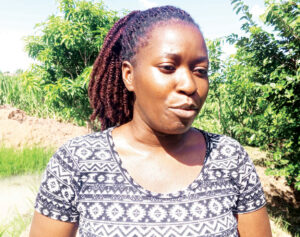
Ossedi Monitoring, Evaluation and Learning Manager Mphatso Zulu said he was encouraged by the transformation witnessed in the 12-supported schools.
“Tree planting is not only meant for the community environment committee. We believe young boys and girls have a critical role to play in tree planting and, so, that is why we felt dutybound to support them so that they can establish nurseries and sow tree seedlings,” Zulu said.
Oxfam in Malawi Livelihoods and Resilience Programme Manager Steve Kuliyazi expressed confidence that the interventions would be sustained due to strong local partnerships and capacity building.
“The project is working with local delivery partners and these are going to be there beyond the lifespan of the project.
“Secondly, the project is working closely with district councils so that the interventions we have can be handed over to district councils for them to continue implementing the project,” Kuliyazi said.
The community-driven interventions, supported by non-governmental organisations, align with the Sustainable Development Goals, particularly SDG 11, which promotes inclusive, safe, resilient and sustainable human settlements by reducing the exposure and vulnerability of vulnerable populations to disasters through resilient infrastructure and disaster-risk reduction.