





By Wezzie Gausi:
At dawn in Lilongwe, a line of vehicles snakes quietly into a filling station. Some drivers have spent the night in their cars, hoping the pumps will open before the queue runs dry. For many Malawians, fuel shortages are measured in hours lost, businesses disrupted and uncertainty that lingers long after supply returns.
For David Sapezeka, a minibus driver in the capital, the experience has been all too familiar.
“Sometimes you spend the whole night in a queue just to get fuel. When there is no fuel, we lose business because we cannot operate. Even when it becomes available, the cost affects how much we take home,” he said.
Yet behind every litre that reaches the pump is a long and fragile journey. One that begins far from Malawi’s borders.
- Advertisement -
Malawi’s fuel supply chain is often explained in fragments. foreign exchange shortages, transport delays or price changes. But taken together, these pieces tell a deeper story of how the country sources, moves and delivers fuel under constant pressure.
At the centre of this system is the National Oil Company of Malawi (Nocma),the institution mandated to import and manage the country’s strategic fuel reserves.
The journey begins at the coast
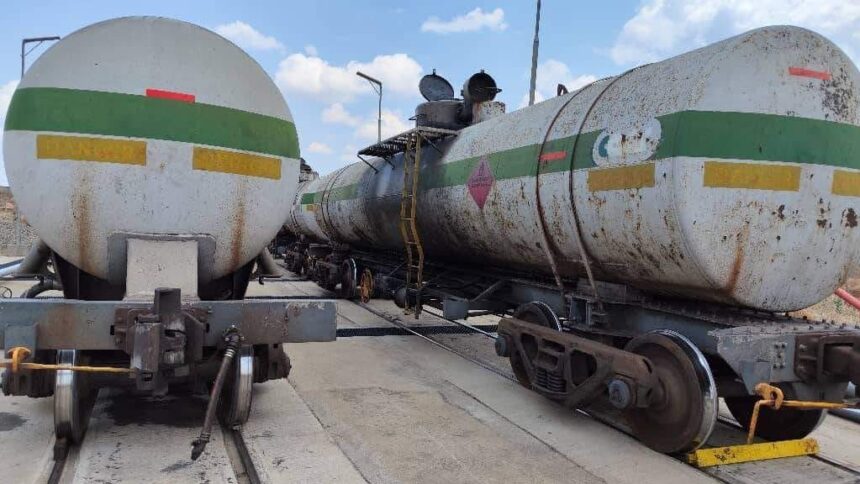
Most of Malawi’s fuel enters through Tanga Port in Tanzania, where it is offloaded and stored before being transported inland. The port has become a key entry point, particularly in recent years when supply routes have shifted.
- Advertisement -
- Advertisement -
According to Nocma Deputy Chief Executive Officer Micklas Reuben, Malawi currently relies on a single depot at Tanga for storage, a situation that presents both advantages and constraints.
“We currently use one depot at Tanga. The initial storage cost was about $15 per cubic metre per month, but we negotiated it down to around $12. However, because there is only one depot, it becomes difficult to negotiate further,” he said.
The lack of alternative depots means limited bargaining power. In other ports, competition between facilities can drive costs lower. At Tanga, the structure is fixed.
Fuel suppliers typically provide a consolidated price, covering storage, handling and transport, making it difficult to separate the exact cost of each stage.
The long road inland
Once fuel is loaded, the next stage begins. a journey stretching hundreds of kilometres into Malawi.
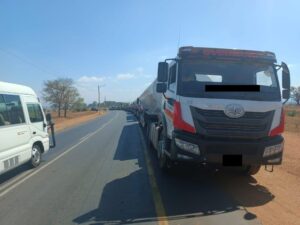
Transport remains one of the most fragile links in the chain. Not all Malawian transporters operate along the Tanga route, forcing reliance on foreign trucks to move fuel into the country.
“Not all local transporters are able to go to Tanga. As a result, we use a combination of Malawian and foreign trucks because we do not have enough capacity,” Reuben explained.
Even fuel destined for the Northern Region, where local transporters are preferred, often ends up being carried by foreign fleets.
Distance adds another layer of cost. Compared to other ports such as Dar es Salaam, Tanga is further away, making it the most expensive route for transporting fuel into Malawi.
“In terms of transport, Tanga is the longest route and therefore more expensive,” he said.
For tanker drivers, the journey is demanding. Long hours, border delays and unpredictable conditions shape each trip. For Malawi, every delay along this route translates into pressure at the pump.
This challenge speaks to Sustainable Development Goal 9, which calls for resilient infrastructure to support economic activity.
Efficiency amid constraints
Despite the cost, Tanga offers one key advantage. speed.
The depot is designed to handle large volumes, with multiple loading bays that allow several trucks to be filled at once. Within 30 to 40 minutes, trucks can be loaded and dispatched, keeping the flow moving.
“The depot has multiple loading bays and can load several trucks within a short period. It also has large storage capacity and efficient clearing systems,” said Reuben.
This efficiency helps offset some of the logistical challenges, ensuring that once fuel arrives, it does not sit idle.
Storage gaps at home
Back in Malawi, storage capacity remains a critical concern.
For years, the country has operated with limited fuel reserves, leaving little room to absorb shocks. Any disruption in supply quickly spills over into shortages.
This directly relates to Sustainable Development Goal 7, which emphasises reliable access to energy. Without adequate reserves, stability remains uncertain.
The final stretch to consumers
From storage facilities, fuel is distributed to filling stations across the country. This last stage determines who gets fuel and when.
In times of scarcity, distribution imbalances become more visible. Urban centres tend to recover faster, while rural areas often face prolonged shortages.

For consumers, the impact is immediate. Transport costs rise, businesses slow down and daily routines are disrupted.
This has wider implications for Sustainable Development Goal 8, as fuel shortages directly affect productivity, transport and livelihoods.
However, government says recent reforms are beginning to stabilise the sector.
Minister of Energy Jean Mathanga said authorities are implementing changes aimed at strengthening the fuel supply system and improving availability across the country.
“We are working on reforms in the energy sector to ensure a more stable and reliable fuel supply. Fuel reserves have now increased, and the situation has improved to the extent that we no longer have people queuing for fuel,” she said.
Mathanga added that the return of the automatic pricing mechanism has also brought more predictability to the sector.
“With the automatic pricing mechanism back in operation, Malawi Energy Regulatory Authority is now able to adjust fuel levies accordingly, which helps maintain balance in the market,” she said.
Energy expert Kossam Munthali welcomed the progress made so far but cautioned that deeper structural issues still need attention.
“There are notable strides in stabilising the fuel supply, and that is commendable. However, government must continue investing in fuel reserves and expanding storage capacity to ensure long-term security,” he said.
Munthali also stressed the need for transparency.
“There must be transparency and accountability in the way fuel importation is handled. This is critical in building public trust and ensuring efficiency in the system,” he added.
Legal and policy framework
Malawi’s energy sector is guided by the Malawi Energy Regulation Act, which mandates regulators to ensure efficient, reliable and sustainable energy supply while protecting consumer interests.
The law reinforces the need for transparency, accountability and efficiency, principles that remain central as the country works to strengthen its fuel systems.
A system under pressure
Malawi’s fuel chain is not defined by a single weakness. It is shaped by interconnected pressures. limited forex, long transport routes, constrained storage and uneven distribution.
Each stage depends on the next. A delay at the port affects transport. A shortage of trucks affects supply inland. Limited storage reduces the country’s ability to respond.
What emerges is a system that functions, but rarely with room to spare.
Recent improvements have brought some relief, but the underlying structure still demands careful management.
As Malawi continues to rely on imported fuel, the journey from port to pump remains a test of coordination, capacity and resilience.
And for drivers like Sapezeka, that journey is felt in every litre.