By Brenda Kayo:
The Government of Germany has provided $875,000 (K1.48 billion) to the World Food Programme (WFP) to support Malawians who are experiencing crisis-level food insecurity in the lean season.
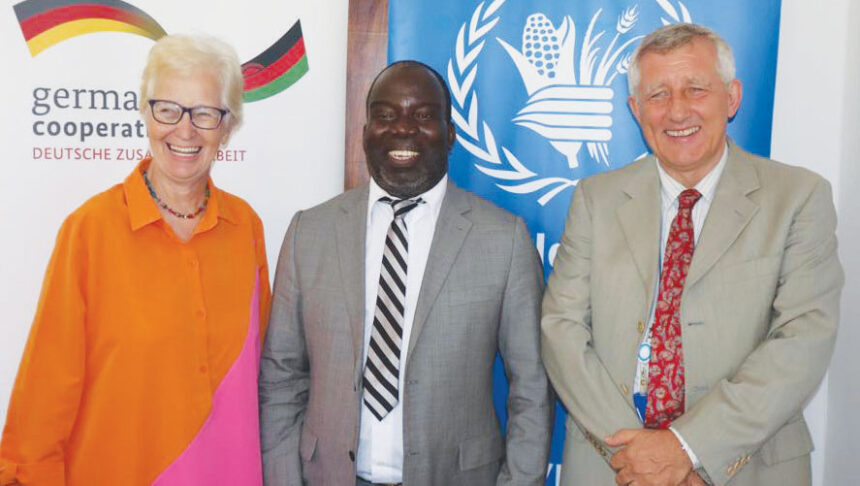
German Ambassador to Malawi Ute Konig told journalists in Lilongwe yesterday that her government has come up with the support following reports that 4.4 million Malawians are food insecure in the October 2023-March 2024 period.
Konig also said the German Government is committed to supporting Malawi in its endeavours to eradicate poverty.
“Escalating inflation and climate challenges have converged to create a pressing crisis in Malawi. We stand with Malawi through these crises; we recognise the imperative for long-term solutions. We believe that a world without hunger within planetary boundaries is possible,” she said.
- Advertisement -
WFP Country Director Paul Turnbull said the support from the German Government will reach vulnerable communities, especially those affected by the impacts of Cyclone Freddy.
The exceptionally long-lived, powerful and deadly storm, that made landfall in Malawi on March 13, lashed the Southern Region, killing at least 1,200 people and displacing over 650,000 others.
Turnbull said WFP has planned to reach out to around 1.2 million people from 260,000 households in Chikwawa, Nsanje, Mulanje and Phalombe districts.
“The contribution from Germany arrives at a crucial moment when we are racing against time to fill funding gaps and ensure that we can support people who are in need.
- Advertisement -
- Advertisement -
“I am pleased to report that the maize that this contribution made possible is already on the way from Beira,” he said.
Director of Disaster Preparedness and Response in the Department of Disaster Management Affairs Moses Chimphepo hailed Germany for the support.
“[It] will reach many people, most likely in Nsanje. WFP is procuring maize that will go out to people, so we are very grateful,” he said.
A Malawi Vulnerability Assessment Committee annual food security assessment report published in August indicated that an estimated 4.4 million people would likely face hunger in the 2023-24 consumption period, representing 22 percent of the country’s population.