Parliament rose sine die last week priding itself for having passed a number of bills. One of those bills they passed is unlawful and can be challenged.
Among the bills, the MPs unanimously passed the Political Parties Amendment Bill, which empowers the State to, on quarterly basis, provide funds to a political party represented in the National Assembly.
The funding is intended to cater for that political party’s day-to-day activities including election expenses.
Currently, the State only provides funds to political parties which amassed more than one tenth of the national vote and which are represented in the august House.
With the current bill, that threshold is now being removed.
- Advertisement -
Once assented to by the President, “even the smallest parties represented in Parliament would start receiving funds from the State depending on the size of their representation,” according to Ministry of Justice and Constitutional Affairs spokesperson, Frank Namangale.
‘Unconstitutional law’
But that law is inconsistent with the Constitution and is not supposed to stand.
In response to our questions, the Malawi Law Society (MLS) said in its current state, the political party’s amendment Act is inconsistent with the Constitution.
- Advertisement -
- Advertisement -
And MLS president Patrick Mpaka has since cautioned President Lazarus Chakwera against assenting to the bill.
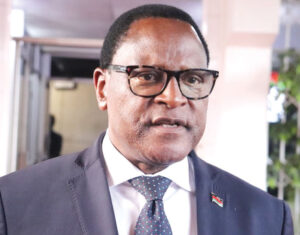
“That law as passed by Parliament can easily be declared unconstitutional and invalid in the current state of the Constitution and it would be advisable for the President, given his constitutional responsibility under section 88(1) of the Constitution, not to assent to that bill.
“That’s because Section 40(2) [of the Constitution] in its current state does not recognize political party funding to any political party which has less than one[1]tenth of the national vote and any law that is inconsistent with the Constitution is invalid under Section 5 of the Constitution,” he said.
Section 40(2) reads: “The State shall provide funds so as to ensure that, during the life of any Parliament, any political party which has secured more than one-tenth of the national vote in elections to that Parliament has sufficient funds to continue to represent its constituency.”
‘Representing yourself’
Mpaka further explained that the amendment of the bill by Parliament also runs contrary to the Constitution in the sense that if a party does not have 10 percent representation then it falls short to represent people, hence no need for taxpayers to fund it.
“The authority to govern derives from the people through universal and equal suffrage according to Section 6 of the Constitution. So if, as political party, you cannot get even one-tenth of the electorate representing the voice of the people, who are you representing?
“You are representing yourself and your clique of friends and family. A political party must have some national presence and acceptance seems to be the idea behind such laws. You cannot be getting the people’s money to fund your family business disguised as a political party. That is the spirit of Section 40(2) of the Constitution. The amendment to the Political Parties Act made by Parliament clearly runs contrary to that constitutional spirit,” he said.
‘Need for referendum’
Garton Kamchedzera, Associate Professor at the University of Malawi (Unima), said the Constitution is clear on the 10 percent threshold and that a referendum must be done to amend it for bills like the one passed recently to stand.
“The 10 percent is actually in the Constitution. It says that during the life of a Parliament any political party which has secured more than one tenth of the national vote in elections [can get state funding]. So one goes back to the vote that they actually secured then they would be supported. So yes it would require a referendum,” he said.

‘We have another bill’
When contacted, Leader of the House Richard Chimwendo Banda could not comment on our specific questions on the spirit behind this bill.
According to him, Parliament is yet to pass another bill which he said will complement the one in question. “I cannot comment on your inquiry because there is another bill that is yet to be passed,” he said.
‘Passed without hurdles’
Leader of Opposition Kondwani Nankhumwa said the bill passed without hurdles.
“The bottom line is that the 10 percent representation bracket was good but Parliament has decided. The majority decided to remove the bracket to accommodate even smaller parties. Some MPs raised concerns but others said let us move on because democracy is not cheap.
“Even when you look at the angle that it will breed other political parties because they will receive money, majority MPs did not think along those lines. The bill actually passed without any hurdles,” he said.
Parliament’s Principal Public Relations Officer Ian Mwenye said they are yet to send the bills to Chakwera for assenting.
In an interview when the bill passed, Zomba Ntonya lawmaker Ned Poya who brought the Private Member’s Bill described the development as a great day for democracy in the country.
Currently, only two major parties of MCP and DPP are the ones that tap from the funding, with the biggest party getting K80 million and the other getting K70 million per annum.