


Malawi’s Red Cross built 45 homes funded by a suspected Nigerian fraudster, which residents of Mchenga village say are unsafe. Raphael Mweninguwe and Joe Lo write.
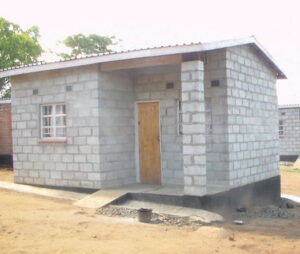
After Cyclone Freddy ravaged the Malawian village of Mchenga last year, the Red Cross worked with Nigerian businessman Dozy Mmobuosi to rebuild homes for 45 of the victims, at the request of Malawi’s government.
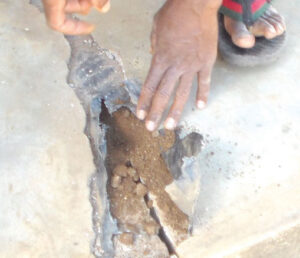
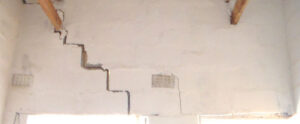
A few months later, the US government accused Mmobuosi of fraud over his business dealings. Climate Home News visited Mchenga this month and found the new homes have cracks in the walls and floors, with residents scared they will collapse.
Emma Jeremia, a pregnant woman living in one house, said it would have been better to die in the storm than be killed by her house collapsing on her. Simon Mweyeli, who liaised with the Red Cross on behalf of Mchenga’s residents, said the homes can “fall anytime”.
This unsafe housing for cyclone survivors in Malawi, funded by a suspected fraudster, shows why governments need to get the new UN loss and damage fund up and running with decent resources and quality control, climate campaigners told Climate Home.
- Advertisement -
International climate justice activists said the local testimonies show why funding for disaster victims should come from the governments that have predominantly caused the climate crisis rather than unaccountable benefactors – and recommended that affected people should be involved in designing and building their new homes.
After last year’s devastating cyclone—with the loss and damage fund not yet up and running— the cash-strapped Malawian government went looking for financial help around the world. According to national media, ex-president Bakili Muluzi approached Nigerian businessman Dozy Mmobuosi.
The day after promising to build the homes—and the same day he was accused by short-selling firm Hindenburg Research of operating a scam company – Mmobuosi received a Malawian diplomatic passport, which is usually reserved for senior politicians, national media reported.
“Such instances highlight why we need a loss and damage fund that empowers affected communities to lead recovery and reconstruction efforts, and not allow politicians or corporations to further their own interests,” said Harjeet Singh, a climate activist who has long advocated for the fund.
- Advertisement -
- Advertisement -
In 2022, governments finally agreed at the COP27 climate talks to set up such a fund to channel money from wealthy nations to people in developing countries who have been harmed by climate change. The fund’s board hopes it can start distributing money next year.
Cyclone Freddy strikes
In March last year, Cyclone Freddy travelled from the west coast of Australia across the Indian Ocean over Madagascar and into southern Africa, where it caused floods and mudslides that killed more than 1,000 people in Malawi.
The village of Mchenga, in Malawi’s Southern Region district of Phalombe , was among the worst-hit. Its 72-year-old headman Laften Nangazi told Climate Home that 80 people died there in a single day.
He said he saw men, women and children being swept away in despair. “I cried when I saw children dying,” he said, “I saw about 40 people in a tree, and they were there for three days waiting for the water levels to go down.”
When the waters eventually receded, 176 of the village’s families were left homeless – a problem repeated across the country’s south.
Looking for funds
Malawi is the world’s tenth poorest country, so government money to rebuild housing was scarce. The international fund for loss and damage, meant to address disasters like this, had just been agreed at COP27 but was not yet up and running.
President Lazarus Chakwera invited his three living predecessors for a meeting. Two of them – Bakili Muluzi and Joyce Banda – showed up and were made “Goodwill Ambassadors of Tropical Cyclone Freddy”, national media reported.
To meet this challenge, Bakili Muluzi turned to Mmobuosi, a Nigerian businessman and founder of mobile banking company Tingo Group, who was then in the news for trying to take over English football club Sheffield United.
On June 6, Mmobuosi, Muluzi and Banda travelled to Mchenga to launch construction work on new houses, posing with a foundation stone bearing their names. On Facebook, Banda said the houses “will be made possible because of a generous contribution” from Mmobuosi, who she called “a distinguished son of Africa” and “good friend” of Muluzi.
The next day, according to the Platform for Investigative Journalism, Mmobuosi met with Muluzi and President Chakwera at the president’s home. The Nigerian was unusually quickly granted a diplomatic passport, usually reserved for top Malawian politicians and their spouses.
“Exceptionally obvious scam”
But on the same day Mmobusi was in Mchenga, Hindenburg Research, which specialises in “forensic financial research”, accused his Tingo Group – which says it provides mobile banking to farmers – of being “an exceptionally obvious scam with completely fabricated financials”.
Hindenburg was short-selling Tingo Group shares, so it stood to profit if the share price of the firm – listed on the Nasdaq stock exchange in the US – went down.
Hindenburg accused Mmobuosi of inventing much of his backstory, of settling out of court with Nigerian authorities over alleged bad cheques in 2017, of photo-shopping Tingo logos onto planes to claim the company had an airline, and generally exaggerating the company’s assets.
In December 2023 the US Securities and Exchange Commission (SEC) sided with Hindenburg. They accused Mmobuosi of a “staggering” fraud against Tingo’s investors.
The SEC’s 72-page complaint included images of what it said was a real and an edited Tingo bank statement. The edited one had several zeros added to the balance.
US authorities charged Mmobuosi with security fraud and froze his assets. His whereabouts are reportedly unknown. If found guilty, he faces up to 20 years in prison.
On October 6 – after Hindenburg’s complaint but before the SEC’s – the former president and Mmobuosi went back to Mchenga village in Malawi to hand over the first batch of 17 houses.
Muluzi thanked Mmobuosi for the funding and said he had “committed to buy beds, mattresses and furniture for the households and also to bring solar electricity to the area”. In December, another 28 houses were handed over.
Charles Macheso, who climbed a mango tree to save himself from the cyclone but lost all his possessions, said village coordinators told the Malawi Red Cross that more cement was needed. But, he said, the Red Cross officers “were so defensive”. Mweyeli said he called the Red Cross to report the cracks and the aid organisation came to take pictures.
“Not aware”
After a two-day journey from Lilongwe to the village, Climate Home contacted Washon again and was told by email that “we are not aware of any report about cracking of houses in Phalombe [the district that covers Mchenga]”.
Washon said the Red Cross had a contract to build the homes with Muluzi rather than Mmobuosi. “We never received any money from Dozy [Mmobuosi] – direct from Dozy,” he said by phone. “Malawi Red Cross Society has no other links or contracts with Dozy,” he added.
Climate Home News emailed the contact address listed on the Dozy Mmobuosi Foundation’s website, but the email bounced.
Mmobuosi told Arise News in February that he was “taken aback” and “shocked” by the SEC’s allegations about Tingo Group. He said he had not run Tingo directly for seven years, adding that his lawyers were “on top of” responding to the SEC charges and that Tingo was conducting its own internal investigation. Mmobuosi is not currently listed as a member of the company’s board of directors.
In Mchenga, village headman Nangazi told Climate Home that 131 families are still without a home and called on national organisations like the Catholic Development Commission – that has provided iron sheets – to help build more accommodation.
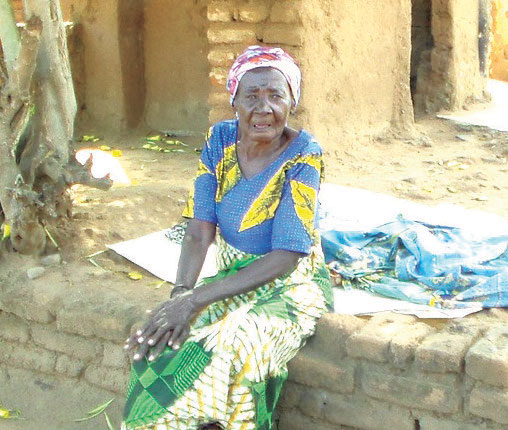
Ida Mayilosi, 75, is one of those who missed out. “I wished I had also been assisted,” she said. “This house I am living in was built by some relatives but it took time.”
Mattias Söderberg, climate lead for Danish charity DanChurchAid, which is currently building homes in Nepal after landslides there, said support for communities to rebuild after extreme weather that causes loss and damage “should be done so that they are more secure and robust to face the next climate-related disaster”. “Investments which are not adapted risk being lost,” he added.
Singh – who fought to solve similar problems in India’s Andaman and Nicobar Islands following the Indian Ocean tsunami in 2006 – said he had seen “firsthand how involving communities not only places them in the driving seat but also ensures accountability”.—Climate Home.