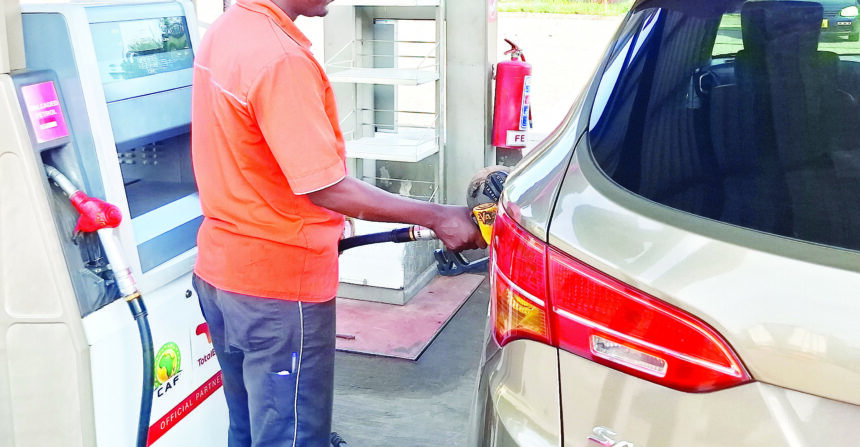
The Malawi Confedartion of Chambers of Commerce and Industry (MCCCI) has called for the removal of some government-imposed fuel levies to lower prices.
The call follows last week’s upward adjustment of fuel price announced by the Malawi Energy Regulatory Authority (Mera).
Petrol price increase by 34 percent from K4,965 to K6,672 per litre, while price for diesel rose by 35 percent from K4,945 to K6,687 per litre.
The hike comes barely few months after Mera effected a 41 percent fuel price increase in January, driven by the reinstatement of the Automatic Pricing Mechanism.
In an interview on Tuesday, MCCCI Chief Executive Officer Daisy Kambalame said businesses are already feeling the strain, as the latest price adjustment has led to an increase in cost of production.
- Advertisement -
Kambalame said although Malawi has limited control over global supply chain challenges, there is a need to adopt alternative measures to cushion the economy from fuel price shocks.
“If you unpack the cost of fuel and what we pay in the end, there are certain components that we can look at, like fuel levies, that can provide immediate relief for now until these supply chain issues have been addressed,” she said.
She also said there is a need for long-term alternatives to reduce pressure on the energy sector, including investment in electric vehicles.
“The key issue now is how to cushion the population from the negative impacts. We also need to look at alternative routes of bringing our fuel into the country like rail transport,” Kambalame added.
- Advertisement -
- Advertisement -
National Small and Medium Enterprises National Coordinator Williams Mwale said small and medium enterprises (SMEs) are struggling with high transportation costs.
Currently, the government collects close to K2,000 per litre in taxes and levies, including a K521 road levy, K207 rural electrification levy and K350 under- recovery y levy.
Speaking during a recent press briefing on the fuel price update, Minister of Energy Jean Mathanga said the K350 levy was introduced to help the government settle outstanding debts owed to fuel suppliers.
Mathanga said it could take up to five years for the government to fully clear the arrears.
Meanwhile , Minister of Transport and Public Works Jappie Mhango also assured the nation that fuel prices will stabilise once the global fuel market improves.