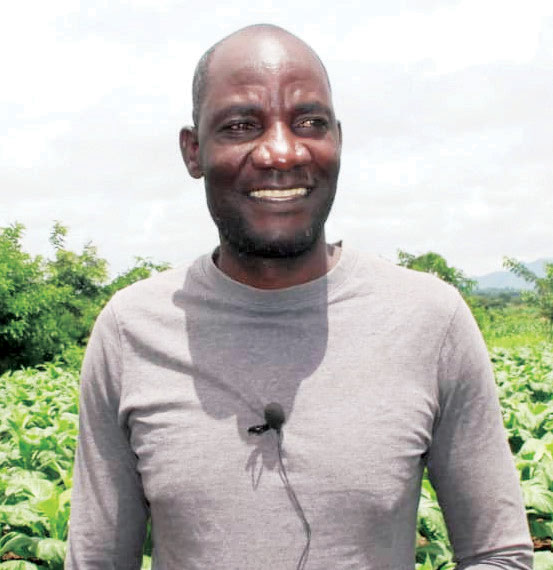
In the bustle and hassle of life at Mponela Trading Centre in Dowa District, one man stands out.
He is none other than Lemani Mafioni, 45, whose gait has changed— and, in his own words, “for the better”— since he embraced Integrated Tobacco Production (IPS), commonly known as contract farming, in 2021.
“Before that time [2021], one could tell from the way I was stepping on the ground that here was a man who was not so sure about himself; [a man who seemed unsure] about his next step in life.
“As you know, when a tobacco farmer cultivates the crop without having a contract with tobacco companies, there is no assurance that things will pan out well at the auction floors. In fact, there is no guarantee that one would sell the tobacco he cultivated, irrespective of the heavy investment made in production. And that can have a toll on an individual; I am talking about stress and the like. I am beyond that stage. I am a man who is so sure about himself that I can sometimes manage to take my thoughts off tobacco and think about other things in life,” Mafioni, from Mzika Village, Traditional Authority (TA) Chakhaza, in the Central Region district says.
Who can blame him?
- Advertisement -
For the first time in his life, he sold a kilogramme of tobacco at $3.97 at the auction floors last year.
To put the icing on the cake, he generated record income, cementing the love affair with IPS, which he embraced just less than four years ago.
“During last year’s tobacco growing season, I generated K26 million.
“I am happy with strides I am making under IPS because I can count the gains. For instance, I have bought a car and constructed two houses, which I let out to people and generate the much needed income. My plan is to cultivate more tobacco and generate more income while things are working out well for me—and other farmers,” Mafioni points out.
- Advertisement -
- Advertisement -
So self-reliant is the farmer that he manages to bypass fertiliser, which Alliance One Tobacco, the tobacco-buying company he is contracted to, provides on loan to enable farmers to shore up production.
The company, through is sister company Pyxus Agriculture, also provides famers with groundnuts.
“I buy fertiliser on my own. Of course, this year [2024], I have received firewood from the company, which encourages us to plant trees to restore tree cover,” he points out.
He is not the only one singing praises of IPS.
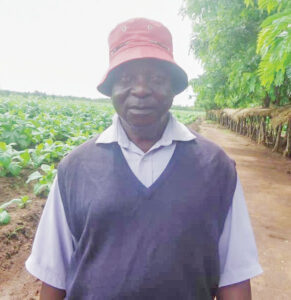
Lameck Amon of Mtanila Village, TA Chakhaza, also in Dowa District, has just bought a vehicle at K18 using proceeds of tobacco.
He is into barley and flue-cured tobacco.
“I am contributing to the development of this country, in terms of job creation, for example, because I employ nine people. I also contribute to health, education and other public sectors because I pay taxes which the government uses to finance its socio-economic programmes.
“I would not have been in a position to do that had I not embraced tobacco cultivation under IPS,” says Amon, who generated K34 million from tobacco cultivation in the just-ended tobacco growing season.
He says, had he known, he would have embraced IPS long ago.
“I am saying so because I have come to realise that, under IPS, all the tobacco is bought at the auction floors. This is not surprising because we get all the support, technical and otherwise, from leaf technicians.
“Through tobacco cultivation, I have managed to educate four children, most of whom have now secured employment. I have bought cattle and goats. I also cultivate maize and grounds, all of which I sell or use to supplement nutrients in the body. As I am speaking, I am remaining with 16 bags of maize [weighing 50kg each], which means I do not run the risk of facing hunger,” Amon emphasises.
“I am happy that, through IPS, hunger has become a thing of the past at household level, as I am guaranteed a good harvest of tobacco, maize, groundnuts, and what have you, all the time,” he adds.
The only problem he faces are delays to sell his tobacco at the auction floors.
“This is because there is a little bit of congestion at the auction floors, which culminates in us selling the tobacco a bit late. I am not a fan of patience,” Amos says.

According to Ben Kaonga, who is Alliance One Tobacco’s Corporate Affairs Officer, tobacco farmers are, year in year out, smiling all the way to the bank because they follow principles that the corporate sector player has laid out for contracted farmers.
“For instance, we ensure that they follow Labour Practices (LPs). Some of the principles include the need to ensure that tobacco farmers are not employing children and that they are providing fair wages to those that help them in tobacco production. We are happy that farmers are adhering to the principles.
“That is why, when district labour officials pay random visits to estates and fields where our farmers are cultivating tobacco, they do not find issues. No wonder, government officials are satisfied with the way we are doing things,” Kaonga, who promises farmers that “we will be with them all the way to the tobacco auction floors”, explains.
Kaonga says farmers who are under IPS rest assured, since they know that, “all their tobacco will be bought”.
He adds that, on its part, Alliance One will continue to give back to the community, so that both farmers in particular and community members at large continue to get a share of the tobacco cake.
“That is why we have been drilling boreholes to ease access to potable water. We have been either rehabilitating or constructing school blocks because we want children to be in school, and not in tobacco fields. We also support school feeding programmes, where we help community members cultivate crops they later offer to learners.
Kaonga adds that they are also taking care of natural resources.
“As Alliance One and Pyxus [Agriculture], we have the second largest forest in Malawi. We have live bans. We practice what we call ‘growing trees’ because we give back to not only communities but nature, too,” he said.