It has been a long day coming for Katamba Community Day Secondary School (CDSS) students in Zomba District.
For years, they have had no modern laboratory structure, let alone apparatus for use in the laboratory.
Indeed, they have been lagging behind, in terms of the acquisition of information, communication and technology (ICT) knowledge, as they have had no facilities to facilitate the acquisition of such knowledge.
“Due to such problems, we were condemned to having a litany of lessons that dwelled on theories, a development that disadvantaged us in national examinations.
“This was the case because urban area-based candidates could do better than us in national examinations,” says Gertrude Sande, one of the female students at the academic institution.
- Advertisement -
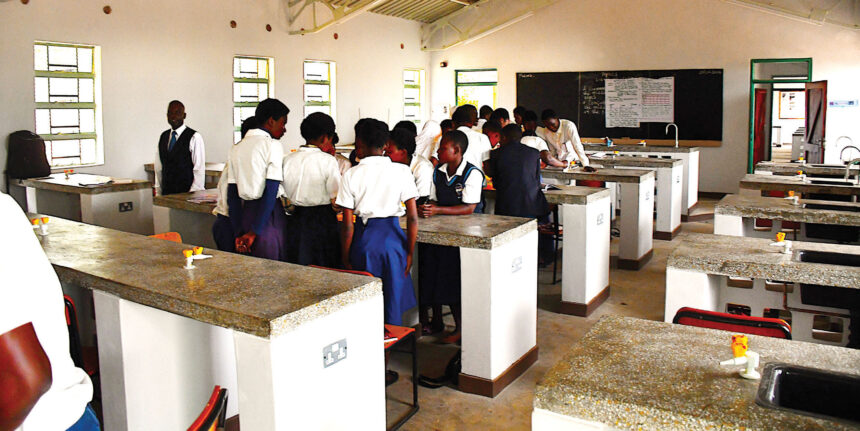
No wonder, the students have already started using a partially completed laboratory block, all in the hope that form 4 candidates will be passing national examinations with flying colours.
“We are leaving no stone unturned,” the student adds.
Who can fault her? Katamba is one of the schools that are benefitting from the Malawi Government and World Bank project whose product are structures that are sprouting all over the country.
In the division where Katamba is [that is, South East Education Division], construction works are taking place at 16 sites, 10 in Zomba and six in Balaka District.
- Advertisement -
- Advertisement -
The initiative is being implemented after the realisation that infrastructure development, which is one of the things touted in the Malawi 2063 vision, remains a challenge in most sectors, including the education one.
To improve the situation in secondary and CDSSs, the government, which is working hand-in-hand with the bank, has been utilising funds made available through the Equity with Quality Learning at Secondary School (Equals) Project.
The development has elated Shire Highlands Education Division Planner Blessings Pensulo, who has seen quality infrastructure being constructed at Migowi CDSS, Mulanje Secondary School and other schools.
The division covers Mulanje, Phalombe, Thyolo and Chiradzulu districts.
“The good thing about the project is that through the construction of ICT laboratories, students are poised to be getting first-hand experience through laboratory experiments, unlike in the past when they were just being taught about things through theories,” Pensulo said.
He is not the only one who is impressed with how things are panning out.
South West Education Division Planner Nelson Lipenga says there has been a facelift at the 17 construction sites in his jurisdiction.
“The Equals Project is being implemented in Chikwawa, Neno and Mwanza, with schools benefitting through the construction of ICT, science laboratories and, in others, toilets.
“This is more than welcome because most CDSSs could not afford to construct such infrastructure on their own,” Lipenga points out.
One of the students at Nchalo CDSS, vice head girl Sophie Harawa, explains that the new structures would reduce the distance that students cover to laboratories in nearby schools, which are basically a long distance away.
“At first, we could learn about things that require experiments without conducting the actual experiments. This will change, following the construction of infrastructure such as ICT and science laboratories at our school,” Harawa said.
The project is premised on promoting infrastructure development in secondary and CDSSs in 103 centres across the country.
In the Northern Region, new structures stand imposingly over dilapidated infrastructure that Wilore CDSS students call classrooms in Karonga District.
Head teacher for the school, Anastazia Chitete, says they wish quality structures that are yet to be handed over to them could have been erected at the school long ago.
“The school, which was established in February 2018, has been lacking requisite infrastructure. Just imagine, we started with one school block. There was no laboratory, no library and no access to quality education.
“Now things are shaping up and, with this new infrastructure, we know that students, especially the girl child, will be enticed to come to school,” Chitete emphasises.
Yusuf Nzariwa, who is the Chief Planning Education Officer for the Northern Region, must surely be the happiest man in Malawi.

He says the Equals Project is being implemented in all the education districts except Likoma.
“We want students to be using modern structures, which will put them in a better position to meet their education goals,” he indicates.
On her part, Yvonnie Akonda Sundu, who is Equals Project Communications Specialist, says they want to ease access to education at designated sites.
“The Government of Malawi, through the Ministry of Education, continues to leave no stone unturned in its quest to make education accessible to all children of Malawi and the Equals Project is one such venture.
“The classroom blocks, science laboratories, ICT facilities, libraries and toilets that have been completed in some cases will go a long way in contributing to that goal. Education is a right for all and that is what we have [achieved] and continue to achieve through the project,” Sundu indicates.