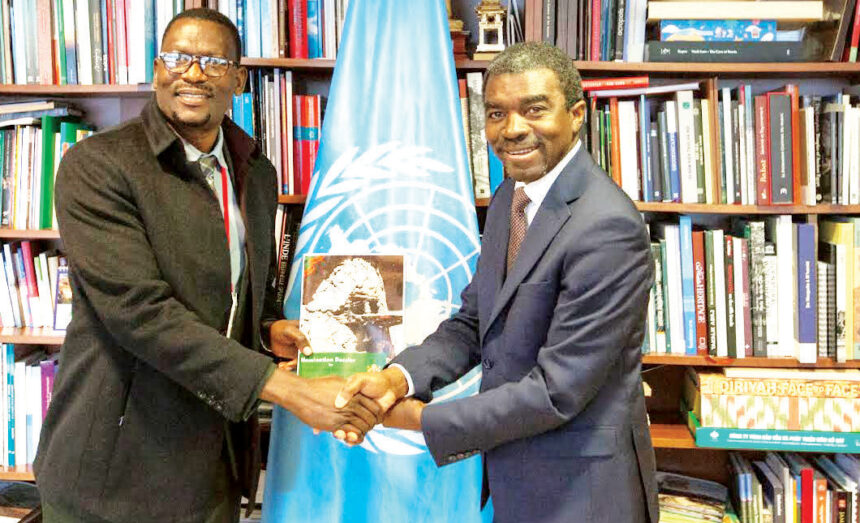
The country has submitted a nomination dossier on Khulubvi and the associated Mbona Sacred Rain Shrines for possible inscription on the World Heritage List.
Director of Museums and Monuments in the Ministry of Youth, Sports and Culture Lovemore Mazibuko presented the nomination dossier to Unesco headquarters in Paris, France, recently.
The submission follows the successful inscription of Mulanje Mountain Cultural Landscape as a World Heritage Site.
Mulanje Mountain Cultural Landscape was inscribed on the Unesco World Heritage Site on July 11, 2025 at its 47th Session of the Committee Meeting of the 1972 Convention for the Protection of the World Cultural and Natural Heritage.
Mazibuko said on Friday that, for the past two years, the Department of Museums and Monuments, acting on behalf Malawi, has been working on the nomination dossier for Khulubvi and the Associated Mbona Sacred Rain Shrines for possible inscription on the Unesco World Heritage List.
- Advertisement -
“The department completed the preparation of the full nomination dossier, together with the Site Management and Conservation Plan, in accordance with the requirements of the 1972 Unesco World Heritage Convention and its Operational Guidelines,” he said.
Mazibuko said the nomination represented a milestone in the country’s efforts to preserve its living heritage and Indigenous Knowledge Systems and Practices, especially those related to rainmaking, environmental stewardship and cultural landscapes.
He said placing a site on the World Heritage List had its advantages, among them raising awareness on the importance of the sites, leading to a general rise in the level of the protection and conservation given to heritage properties.
“A country may also receive financial assistance and expert advice from the World Heritage Committee to support activities for the preservation and restoration of its sites, as well as capacity building initiatives,” he said.
- Advertisement -
- Advertisement -
Mazibuko added that this brings international attention to sites.
“Again, this brings tourists to a site, with its accompanying economic benefits to the host country and local area, as well as the promotion of national and local pride in the natural and man-made wonders of a country,” he said.
Mazibuko also said other benefits would come to Malawi.
“A World Heritage Site is also protected, under the Geneva Convention, against destruction or misuse during wartime,” he said.
Mazibuko went on to say that a site on the World Heritage List places an obligation on countries that signed the Convention to agree to conserve not only the World Heritage sites situated in their territories, but also to protect their national heritage for future generations.
“These countries also have access to a World Heritage fund, which provides money annually to “assist state parties in identifying, preserving and promoting World Heritage sites”.
In line with Unesco procedures, Malawi is required to officially submit and hand over the completed nomination dossier to the World Heritage Centre.
The Africa World Heritage Fund, which is based in South Africa and whose mandate is to support the conservation and protection of natural and cultural heritage of outstanding universal value in Africa, funded Mazibuko’s trip.